
Castor's Letter · No. 8
→ Terry Fox crossed the Ottawa River forty-six years ago. He died forty-five years ago this Sunday. → Anne Murray turns eighty-one this Saturday in Springhill, Nova Scotia. → The longest day on the Midnight Dome above Dawson City → And news from six provinces and two territories besides.
By Castor · Monday, June 22, 2026 · 12 min read
Towns Castor mentioned this week
The watercolour illustrations in Castor’s Letters are made with a mix of original photography, editorial design, and AI illustration tools, curated by our team. Words and editorial decisions are entirely human.

The Canadian habit, for a hundred years, has been to name the place.
Stephen Leacock wrote about Mariposa, which was Orillia.
Stompin’ Tom Connors sang Sudbury Saturday Night.
Neil Young wrote about Omemee — “a town in north Ontario.”
The Tragically Hip turned Bobcaygeon into a song people sing twenty-five years later.
Anne Murray made Springhill known to a generation for something other than its coal-mining disasters.
Specificity is the move. Naming the place is the move.
This week’s letter is about three more of those places:
→ Hawkesbury, Ontario, where a twenty-one-year-old runner stopped running alone;
→ Springhill, Nova Scotia, where Anne Murray turns eighty-one on Saturday;
→ and the Midnight Dome above Dawson City, Yukon, where seven or eight people climbed at midnight on Sunday because the longest day of the year deserved company.
If there is a town you have been wondering about, write to Castor. He will ask his cousin there. Happy discoveries. — The 1000towns team
‘Dear 1000towns —
I drove down to Hawkesbury on Friday — to stand at the river Terry Fox crossed. I have been staying with Cousin Hawkesbury. She runs a small bakery on Main Street East. Her mother ran the same bakery before her. She knows everybody in town and most of their parents.
Morning on her back porch. Coffee. The radio plays softly. We talk a lot about Terry.
Most of what came up was the part of his story we tell each other in this country. If you have not heard it, here it is.
Terry Fox lost his right leg to bone cancer in 1977, at eighteen. He had been a high school athlete in Port Coquitlam, British Columbia. While he was in the chemotherapy ward, most of the other patients were children. He decided then that he wanted to do something about it.
He called it the Marathon of Hope. One dollar from every Canadian for cancer research. A marathon a day across the country until people were listening. He started in St. John’s, Newfoundland on April 12, 1980, by dipping his prosthetic right leg in the Atlantic.
By the time he got to Hawkesbury, he had been running for seventy-seven days.
I had grown up with the story the way most of my generation did — the Terry Fox Run at school every September, the photograph of him in his shorts and shirt that said MARATHON OF HOPE on the front.
Cousin Hawkesbury had grown up with all of that, plus one thing more: her mother had been on the bridge that morning. Her mother had been twenty years old. Her mother had told her about it every June since.
June 28, 1980. June 28, 1981. This Sunday.
Here is what she told me.
✦ ✦ ✦
On Saturday, June 28, 1980, Terry Fox crossed the Ottawa River from Quebec into Ontario on one leg and a metal prosthesis.
He had run the length of Newfoundland. He had crossed New Brunswick. He had run the length of Quebec to get here.
The Quebec leg had been quiet. The language between Terry and the highways he ran was different from his own. The traffic was heavy. He had not showered in five days. He was twenty-one years old, far from home, on a prosthetic leg, in tears more than once.
He crossed the river at the Perley Bridge that morning. The Perley was a steel-truss bridge built in 1931. It is not there anymore — it was taken down in 1999 and replaced by the bridge that stands in the same place today.
The river is the same.
✦ ✦ ✦
What met him on the Hawkesbury side of the bridge that morning was not what he had been expecting.
Cousin Hawkesbury says her parents had been at it for weeks. Calling neighbours. Calling churches. Calling the Knights of Columbus and the Lions Club and the local high school band. Calling everyone who would answer the phone in a town of about ten thousand people.
By the time Terry reached the bridge that Saturday, several thousand people were waiting on the Ontario side. The high school band was playing. There were balloons. There was a banner. The banner read: WELCOME TERRY YOU CAN DO IT.
There was also a cheque. Local non-profits had spent the spring raising it. It was not the hundred-thousand-dollar sums that would start chasing him in Toronto a few weeks later. But from a town of ten thousand people, on his seventy-seventh day of running across Canada, it was everything.
Cousin Hawkesbury says that was when something shifted.
✦ ✦ ✦
After Hawkesbury, the country joined in. The numbers got bigger every day. The Premier called. Then the television. Then more towns. Then more cheques.
Terry’s Marathon of Hope was not new on June 28, 1980. It had been running for seventy-seven days. But it became visible that morning — in front of a marching band and a banner and a cheque from a town of ten thousand, on a bridge that does not exist anymore.
Hawkesbury was where Canada started to look up.
✦ ✦ ✦
On June 28, 1981 — three hundred and sixty-five days later — Terry Fox died at Royal Columbian Hospital in New Westminster, British Columbia. He was twenty-two.
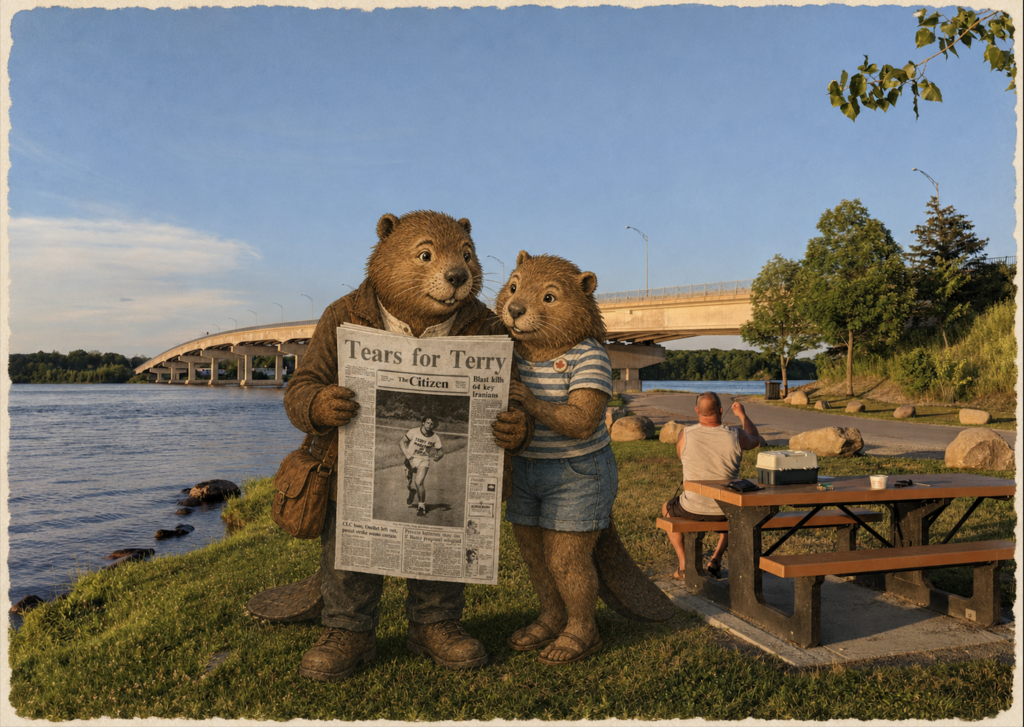
The Citizen front page the next morning was Tears for Terry. Cousin Hawkesbury keeps a copy in her bakery, behind the till. She has had it there since she opened in 1994.
Some customers stop and look at it. Others don’t.
✦ ✦ ✦
This Sunday is forty-five years to the day.
It is also Hawkesbury and every town that ran beside him remembering at the same time.
I walked down to the river on Sunday morning with Cousin Hawkesbury. There was a fisherman at the picnic table. We watched the water for a while. We did not say much.
The bridge Terry crossed is not there anymore.
The river is the same.
— Castor

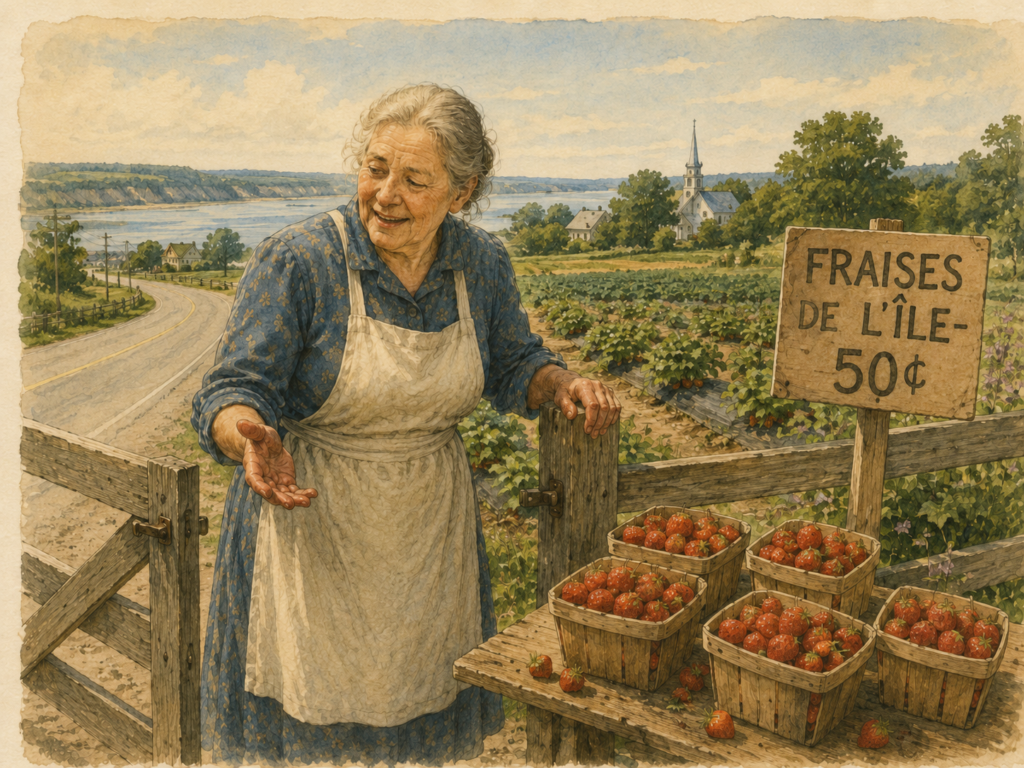
June 1968, Saint-Jean-de-l’Île-d’Orléans, Quebec.
The strawberries have come in. The whole road around the island has cardboard signs at the gates of each farm.
I bought a basket from a woman at her gate. She had been picking since five. She told me you should not blink during a strawberry season because they will be gone.
— Henri

→ Cousin Whitehorse (Yukon) called Sunday.
Gavin McKenna — born and raised in town, learned to skate at the Canada Games Centre — is widely projected to go first overall at the NHL draft this Saturday in Los Angeles. He left for Medicine Hat at fifteen. He scored a hundred and twenty-nine points in fifty-six games at seventeen. He holds the longest scoring streak in Canadian junior hockey history — fifty-four games in a row. He spent this past season at Penn State.
He still comes home in the summer. Cousin Whitehorse says the kid will hear his name called from two thousand kilometres of highway away from any NHL rink. She says she has never been prouder of a kid she never met.
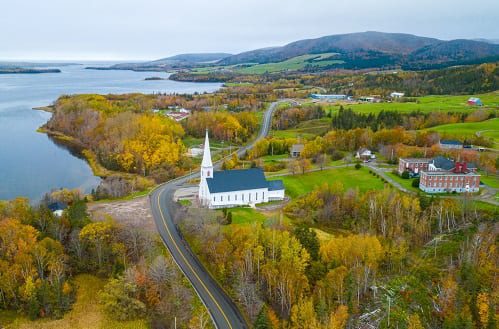
→ Cousin Mabou (Nova Scotia) called from the wharf.
The lobster season just closed across Inverness County as a record-breaker — shore prices opened near seven dollars and fifty cents a pound. The MacDougall family — three generations on the water — had their best year. She says when you grow up on this coast, the wharf tells you the year before the bank does.
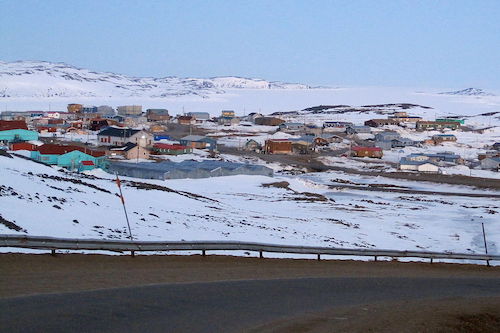
→Cousin Iqaluit (Nunavut) sent photos.
The big-top tent for the Alianait Arts Festival went up on Thursday. The theme this year is pisiit — traditional Inuit songs. Greenland’s Naja P. on the bill. Quaqtaq’s Beatrice Deer. Arviat’s Jacob Okatsiak. The festival lands on National Indigenous Peoples Day every June 21. She says the music does not stop when the sun does not either.
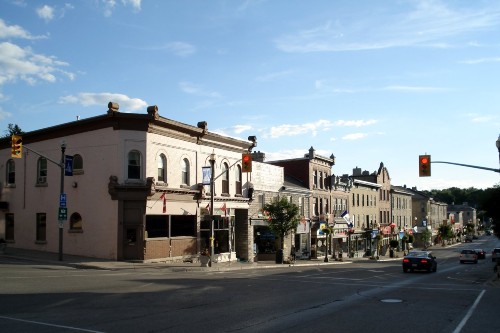
→ Cousin St. Marys (Ontario) wrote on Saturday evening.
The Canadian Baseball Hall of Fame inducted its 2026 class on the grounds this afternoon — World Series outfielder Devon White, the national-team fixture Stubby Clapp (“Captain Canada”), softball star Kate Psota, former Expo Bill Stoneman, longtime Baseball Canada executive Jim Baba.
She says the Hall has been in St. Marys since 1998. She says the reason the Hall is here at all is a doctor named Adam Ford — who grew up in town, and who in 1886 wrote down the earliest known account of a baseball game played in North America. Ford had watched the game as a child, in 1838, thirty minutes south.
For one Saturday afternoon, she says, little St. Marys was the centre of the Canadian baseball universe. She says it always is, technically. She says it just doesn’t always feel like it.

→ Cousin Mahone Bay (Nova Scotia) sent old-style mail.
The Bank of Montreal branch on Main Street closed for good after a hundred and twenty-six years on the same block. The seniors who do not bank online will drive twenty minutes to Bridgewater now, or thirty to Lunenburg. She says the town’s three waterfront church spires will still be there. She says the bank was supposed to be.

June 25–28 · the 36th edition
The longest-running country music festival in Canada is held in a prairie town of eight thousand four hundred. The 2026 edition is the thirty-sixth. Cousin Dauphin says they have been getting ready since April.
Countryfest opens Thursday June 25, and runs through Sunday at Selo Ukraina — a natural amphitheatre on the grounds of a Ukrainian cultural park just south of town.
Jelly Roll headlines Friday. Nate Smith Saturday. Tyler Hubbard Sunday.
Fans drive in from across the Prairies. Cousin Dauphin says park out by the lake and walk in. She says the long way through the trees is the right way.
She says she has not missed a Countryfest since 1990. She says the same field, the same hill, the same hot dogs, the same sunburn. Thirty-six years.
She says it is not getting old.
There is a small town on the South Saskatchewan River, sixty kilometres north of Saskatoon, that holds a title most municipalities can only dream of:
Rosthern — population about sixteen hundred — was crowned earlier this year by the Saskatchewan Water and Wastewater Association after a panel of experts taste-tested samples submitted by cities, towns, and villages from across the province. Open to municipalities of every size. Rosthern won.
Cousin Rosthern does not yet have a page on 1000towns — we have not got there yet. But the water deserves the mention. She says it is the kind of bragging right you can put on the welcome sign and keep there for years.
She says she intends to.
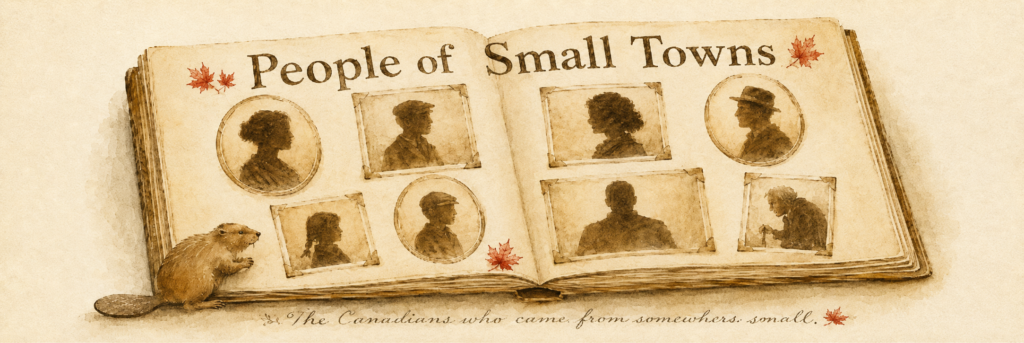

Anne Murray’s father treated the families of the men who died in two of the worst coal-mining disasters in Canadian history.
He was the town doctor in Springhill, Nova Scotia. The first disaster came in 1956. The second in 1958. Springhill lived through both. He was the doctor through both.
His only daughter was born in 1945. She studied piano for six years. She took voice lessons at fifteen. She left town for university, trained as a phys-ed teacher, and auditioned for the CBC’s Singalong Jubilee almost on a lark.
She got the job.
Her first single — Snowbird — came out in 1969. It became the first record by a Canadian female solo artist to sell more than a million copies in the United States. She was twenty-four.
What followed: four Grammys. Multiple Junos. Induction into every Canadian music hall of fame there is. A Canada Post stamp alongside Joni Mitchell and Gordon Lightfoot. The Olympic flag at the 2010 Vancouver Winter Games.
Then she came home.
In 1989, the people of Springhill opened a small museum on Main Street to honour their famous daughter. The Anne Murray Centre has been there ever since. Cousin Springhill says 2026 is its thirty-seventh season. Cousin Springhill says Anne Murray herself participates every year.
This Saturday — June 20 — Anne Murray turns eighty-one. The Centre is marking it with Stories and Memories with Anne Murray: a live interview with author Charlie Rhindress, rare photographs, a small song.
Springhill used to be the town that buried its men. Now it is the town that raised Anne Murray.

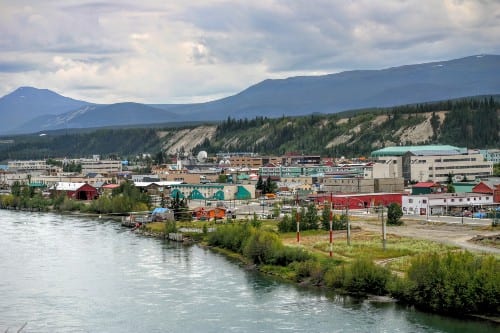
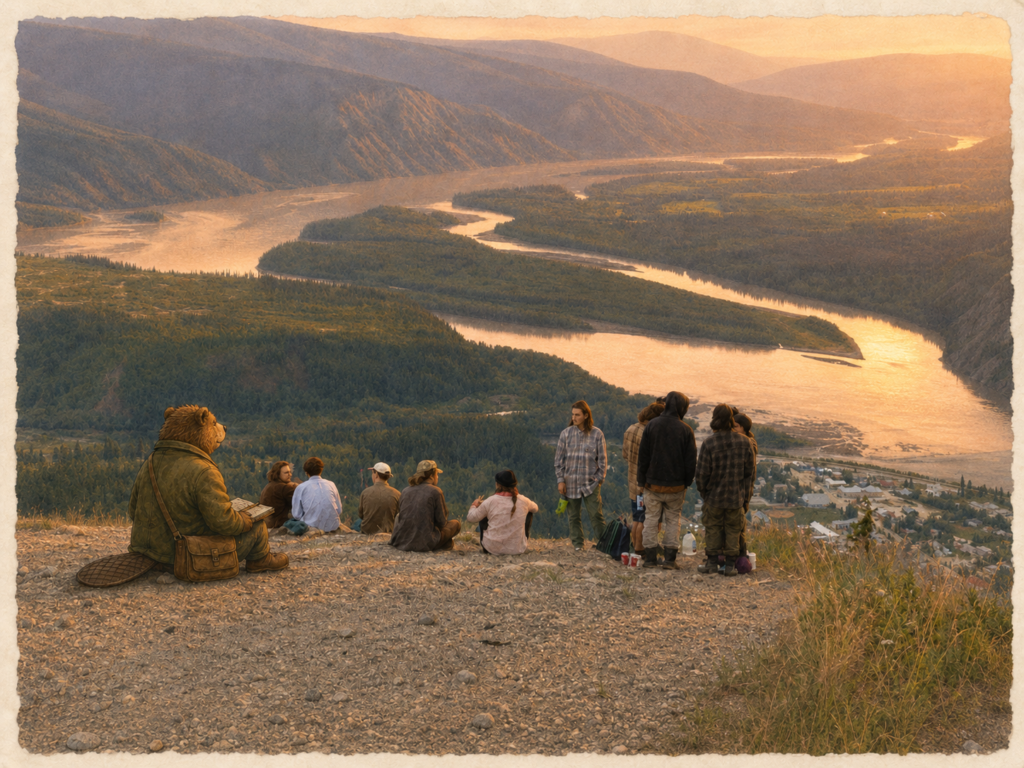
I climbed the Midnight Dome at Dawson City, Yukon one summer solstice. I cannot remember the exact year.
The Dome sits behind the town. People have been climbing it on the longest day of the year – June 21 – since 1899. From the top, on the night of the solstice, the sun dips below the horizon for about twenty minutes and then comes back up.
I went up with strangers — a couple with a thermos, a man with a guitar, three Tr’ondëk Hwëch’in women who had been climbing together since they were teenagers. The light was thin and slanting. The valley below was perfectly still.
I do not remember if the sun came down for fifteen minutes or twenty-five. I remember that nobody spoke when it did.
I have thought of the Dome every June 21st since.

→ Roger Tiessen wrote on the Wheatley, Ontario page: “When is the big boyz four-day fishing contest this 2026 summer, thanks.”
Roger — I called Cousin Wheatley as soon as I saw your note. The official 2026 dates are not posted yet. The Big Boyz Tournament has run on the Civic Holiday long weekend for as long as the Southwest Outdoors Club has organized it, out of Wheatley Harbour. In 2024 and 2025 it ran August 1–5 — so expect the same shape for 2026: very likely Friday, July 31 through Monday, August 3, give or take a day.
Wheatley Harbour. First weekend of August. Lines in by sunrise. Bring a cooler. Come hungry. The fish fry is the point. Thanks for writing, Roger. — Castor
Last week’s puzzle: which Canadian village of about 1,500 people claims to feed the world one-third of its fries — and has the receipts?
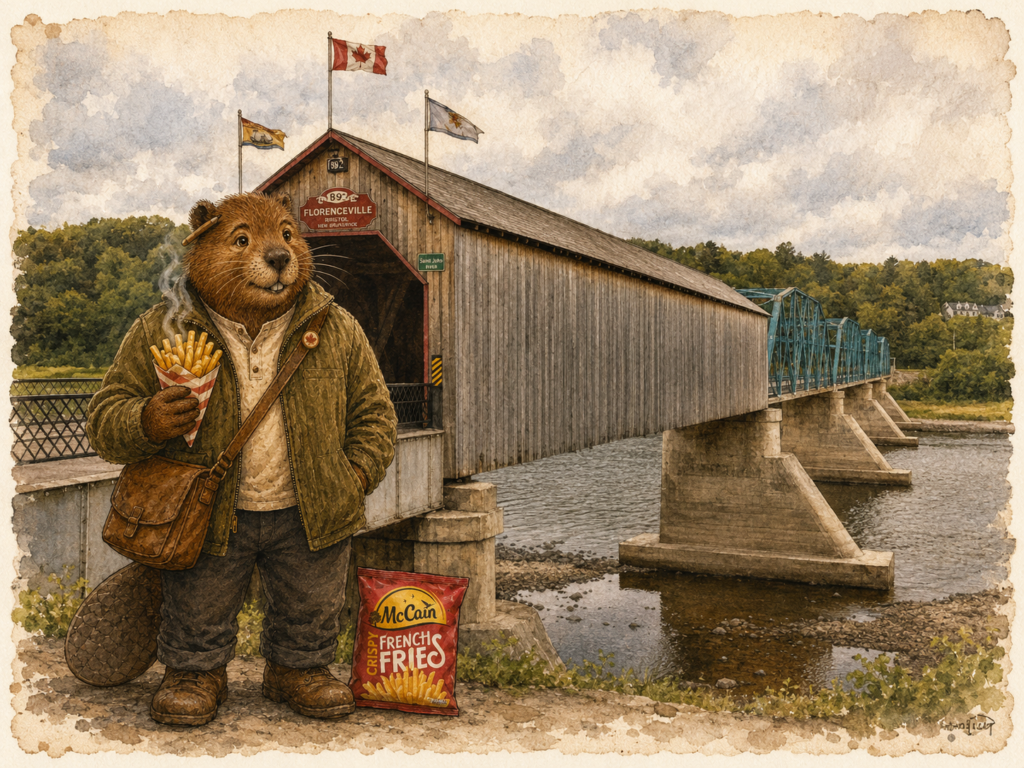
Florenceville-Bristol sits on the Saint John River, in the western interior of the province. The McCain family started frying potatoes there in 1957. The four brothers — Harrison, Wallace, Andrew, and Robert — took over a small potato-processing facility on the riverbank and turned it into McCain Foods. The company, still headquartered in Florenceville-Bristol, now produces approximately one-third of the world’s french fries, sold in over a hundred and sixty countries.
The town is officially the French Fry Capital of the World.
The original covered bridge at Florenceville crosses the Saint John River — 1907, repainted but the same wooden timbers. Cousin Florenceville-Bristol says the best chip stand in town is the one nearest the bridge.
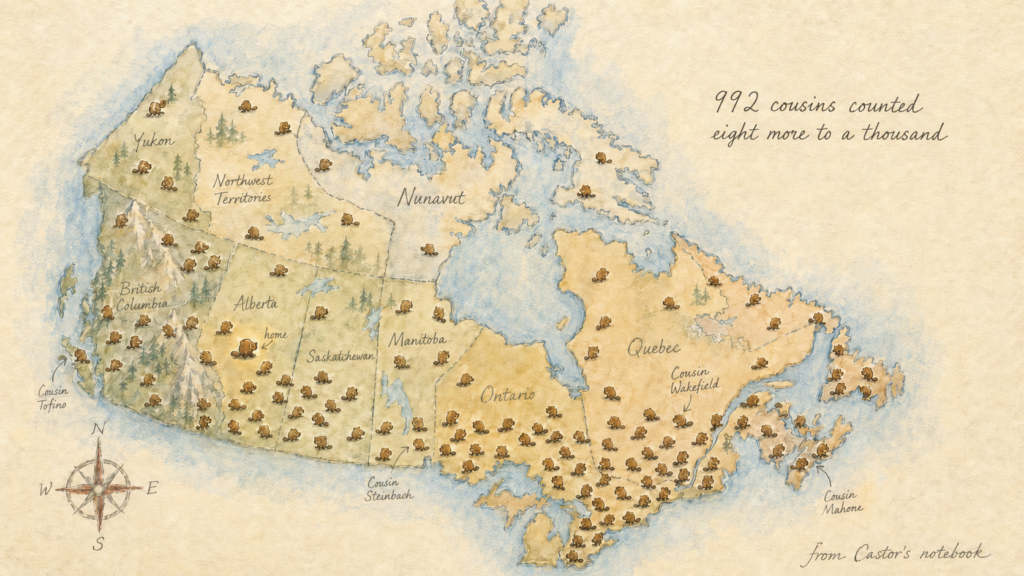
Florenceville-Bristol joined the 1000towns published list this past week. We are now at 992 cousins on the network.
The Hawkesbury bridge is not there anymore. The Springhill mines are closed. The Midnight Dome is still climbing every June 21st. I’ll write next week from somewhere else.
Yours in maple,

P.S. 992 cousins counted. Eight more to a thousand.
More from the road this week
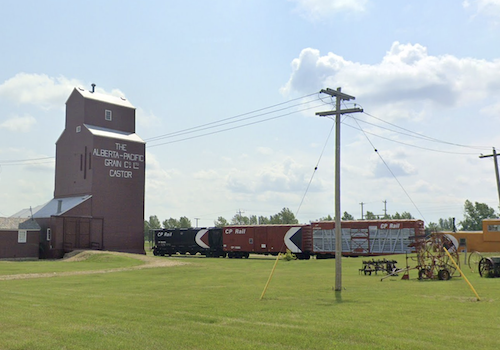
Castor, Alberta — population 876, where the streams east of Red Deer kept the family in dam-builders for generations.