

From: Nanaimo, British Columbia
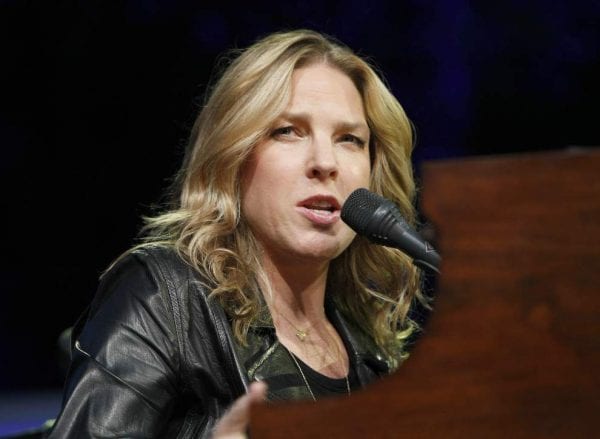
Diana Jean Krall is a jazz pianist and singer — the only jazz artist to have nine albums debut at number one on the Billboard Jazz Albums chart.

Born in 1964 in Nanaimo, British Columbia
Diana Krall’s story begins in a living room on Vancouver Island. Her father, Jim Krall, was an accountant by day and a stride pianist by night, with what Diana once described as every recording Fats Waller ever made. Her mother, Adella, was an elementary school teacher. Growing up in Nanaimo, Diana learned piano from age four, studied classical music, sang in a church choir — and spent evenings trying to learn every Fats Waller song in her father’s collection.
By fifteen, she was playing jazz professionally in a local Nanaimo restaurant. It was the kind of gig that only happens in a small city — a teenager performing standards for regulars who knew her family. That visibility led to a Vancouver Jazz Festival scholarship to Berklee College of Music in Boston.
But it was Nanaimo that brought the decisive moment. After returning from Berklee, Krall was playing a set in town when legendary bassist Ray Brown happened to hear her. He convinced her to move to Los Angeles and introduced her to pianist Jimmy Rowles, who encouraged her to develop her vocals alongside her piano. The rest became jazz history.
Krall has sold more than 15 million albums worldwide. She has won five Grammy Awards and eight Juno Awards. She received the Order of British Columbia in 2000, specifically recognized as a cultural ambassador for the province. She was inducted into Canada’s Walk of Fame in 2004.
Through it all, she has consistently acknowledged Nanaimo as the place where it started — the father’s record collection, the restaurant gigs, the chance encounter with Ray Brown. In her own words, she “frequently acknowledges her roots in Nanaimo where she began.”
Nanaimo is a city on the east coast of Vancouver Island, known as “The Harbour City.” Once a coal-mining centre, it is now Vancouver Island’s second-largest city and a gateway to the Gulf Islands, the Sunshine Coast, and some of British Columbia’s finest coastal landscapes.

The City was previously known as the “Hub City” which has been attributed to its original layout design where the streets radiated out from the shoreline.