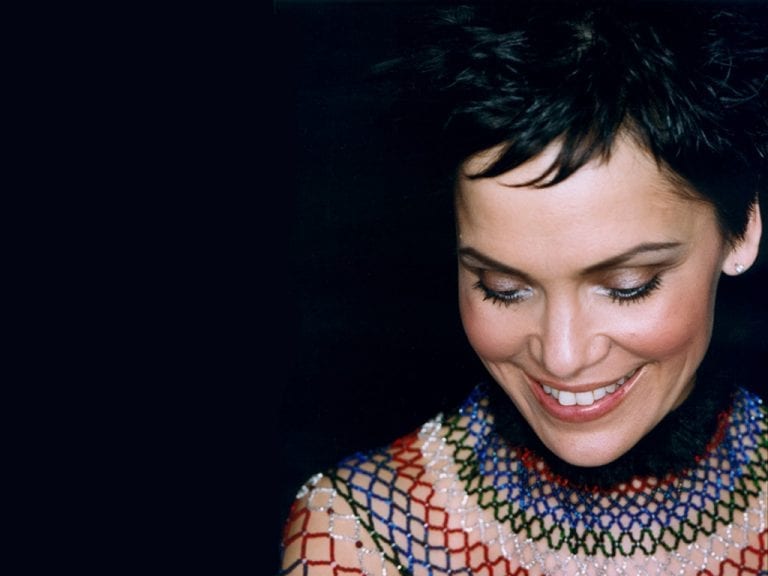


📍 The First Person Born in Manitouwadge — and the Woman Behind Some of Canada’s Biggest Broadcasts
Before Manitouwadge had a hospital, before it had paved roads, before it was even officially a town — it had Liz Pettapiece-Phillips.
“I told you I was the first person born in the town,” she says, “at one of the mine’s safety offices — before there was a hospital.”
It was the mid-1950s. Manitouwadge was a brand-new mining camp carved out of the boreal forest in Ontario’s Superior Country, 50 kilometres north of the Trans-Canada Highway. Two weekend prospectors had staked copper claims in 1953, and the Ontario government was building a model community from scratch around the Geco and Willroy mines. Families were arriving. Life was beginning. And Liz was its very first chapter.
She grew up in a place where everyone knew your name and the wilderness started at your back door. Manitouwadge — from the Ojibwe “Manidoowaazh,” meaning “Cave of the Great Spirit” — was small, remote, and close-knit. At its peak, it was home to about 4,000 people. The kind of place where kids played hockey on outdoor rinks, explored the boreal forest after school, and learned early that community matters.
It was not, by any standard measure, the kind of place that launches broadcasting careers.
But Liz found her way. A degree in Communication Studies from the University of Windsor led to a job at the Canadian Broadcasting Corporation in Toronto — and a career that would span 36 years.
In the mid-1980s, she landed a role as Associate Director on The National, the CBC’s flagship newscast. She thrived in the fast-paced, high-stakes environment of live news, building close relationships and contributing to a team that shaped how millions of Canadians understood their country.
That role led to something she’s especially proud of: developing a training program for news associate directors. “I really enjoyed helping colleagues who were working toward that career,” she has said. “Years later, I am still connected to many of these former students and am excited by their success.”
Certified in Project Management, Liz moved into organizing the logistics behind some of the CBC’s most complex productions. Her portfolio reads like a greatest-hits list of Canadian broadcasting: Dragons’ Den, The Fifth Estate, Marketplace, Canada Day specials, and other large-scale live events.
And then there was the night of August 20, 2016 — The Tragically Hip’s final concert in Kingston, Ontario. Watched by nearly 12 million Canadians, it was one of the most-viewed broadcasts in CBC history. Liz was part of the team that made it happen.
“I was incredibly lucky to be working alongside industry professionals and on-air talent,” she says — though anyone who’s worked in live production knows that luck has very little to do with it.
After retiring from the CBC, Liz didn’t slow down. She returned to southwestern Ontario to teach at St. Clair College’s Mediaplex, passing on decades of knowledge to the next generation of media professionals.
She also took on a volunteer mentoring role with the Toronto Region Immigrant Employment Council, helping newcomers to Canada build professional networks and find their footing — work that clearly echoes her own experience of leaving a small northern town for the big city.
“Whether it’s mentoring students or new immigrants, being part of a family, a church community, a volunteer organization or a circle of close friends,” she says, “I am motivated by the positive interactions that are a product of these relationships.”
Her advice to young people is the same counsel she gave her three daughters: find something that combines your strengths and your interests, and you’ll naturally excel.
“As a young person, I hadn’t realized that matching my skill set, strengths and interests could result in a career that I would be passionate about,” she reflects. “It often isn’t obvious and may take a lot of legwork to get there.”
And then the line that says it all:
“If anyone had told me as a young girl growing up in the small town of Manitouwadge, Northern Ontario, that I could have such an interesting and varied career, I probably wouldn’t have believed them.”
Manitouwadge today is a town of about 2,000 people. The mines that built it have largely closed, but the community endures — resilient, welcoming, and surrounded by some of the most spectacular wilderness in Ontario. It’s the kind of place that shapes people quietly, deeply, and for life.
Liz Pettapiece-Phillips is proof that the first chapter of a remarkable story can begin anywhere — even in a mine safety office, in a town that didn’t yet have a name on the map.