
Castor's Letter · No. 10
→ Forty-two summers ago this week, in Rimouski, Quebec, small-town Canada built a circus. → Sid the Kid grew up shooting pucks against the family dryer in Cole Harbour NS. → A reader in Highland Grove writes about the smallest museum in Haliburton County. → Potato fields about to bloom in O’Leary PEI. → And news from seven provinces and one territory besides.
By Castor · Monday, July 6, 2026 · 12 min read
Towns Castor mentioned this week
The watercolour illustrations in Castor’s Letters are made with a mix of original photography, editorial design, and AI illustration tools, curated by our team. Words and editorial decisions are entirely human.

We have begun to suspect that Canadians are keepers.
We keep stories. We keep buildings. We keep newspapers. We keep old jokes, old roads, old festivals, old grievances, old friendships, and sometimes even old circuses.
This week’s stories span twelve thousand five hundred years. They begin with a spearhead in what is now Ontario and end with a municipal resolution passed in Quebec last month. In between are shipyard workers, pilots, journalists, and town councillors — all doing what Canadians have always done: deciding that something is worth keeping.
This week, Castor is at the pier in Rimouski.
If there is a town you have been wondering about, write to Castor. He will ask his cousin there. Happy discoveries. — The 1000towns team
‘Dear 1000towns —
Grandfather Henri used to say that when Canadians don’t know how to solve a problem, they build something. Forty-two years ago this week, in Rimouski, Quebec, they built a circus.
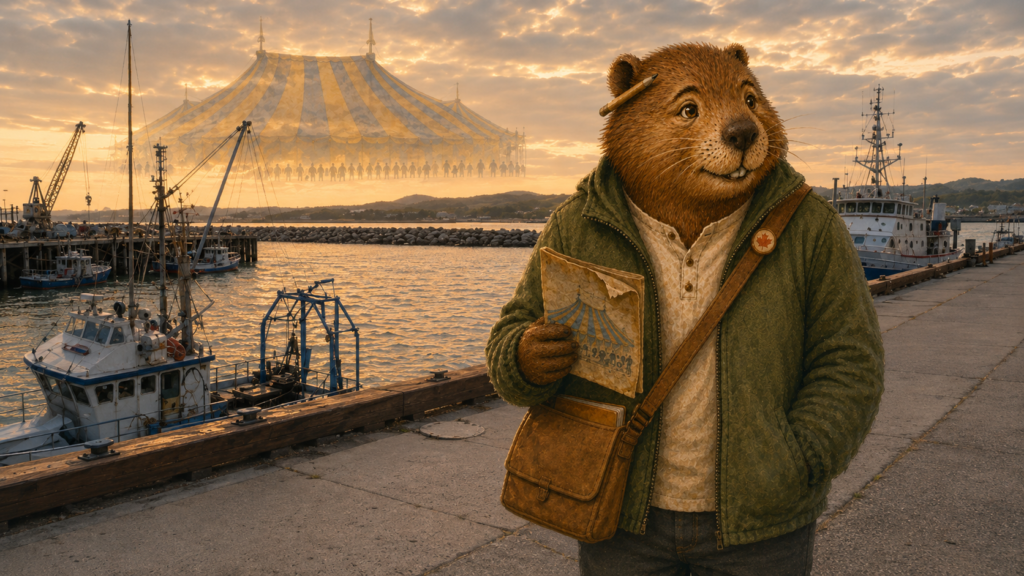
I am at the pier in Rimouski this Sunday afternoon. The St. Lawrence is wide here, wide as a sea. The wharves are mostly empty. A few small fishing boats are coming back in.
What happened here in July 1984 saved the Cirque du Soleil. It also put Baie-Saint-Paul — the small Quebec town where the circus was born — on the world’s map.
What surprises me, standing here now, is that almost every place that saved the cirque was a small town.
Which means that this is not really a story about a circus.
It is a story about what small towns build when they decide that something is worth saving.
✦ ✦ ✦
To tell this story properly, I have to go back to where it began. To Baie-Saint-Paul, three hundred kilometres west of here along the river.
Three people built the cirque: a fire-breather, a businessman, and a man willing to walk ninety kilometres on stilts.
Gilles Ste-Croix ran an inn at the edge of town — Le Balcon Vert. It filled every summer with young street performers passing through Baie-Saint-Paul. Two of them stayed: Guy Laliberté, a fire-breather from Europe, and Daniel Gauthier, who handled the business. The three of them decided to make a troupe. Cousin Baie-Saint-Paul says they used to practise on the wharves.
✦ ✦ ✦
In the spring of 1980, Gilles Ste-Croix did something that would later become a story about the start.
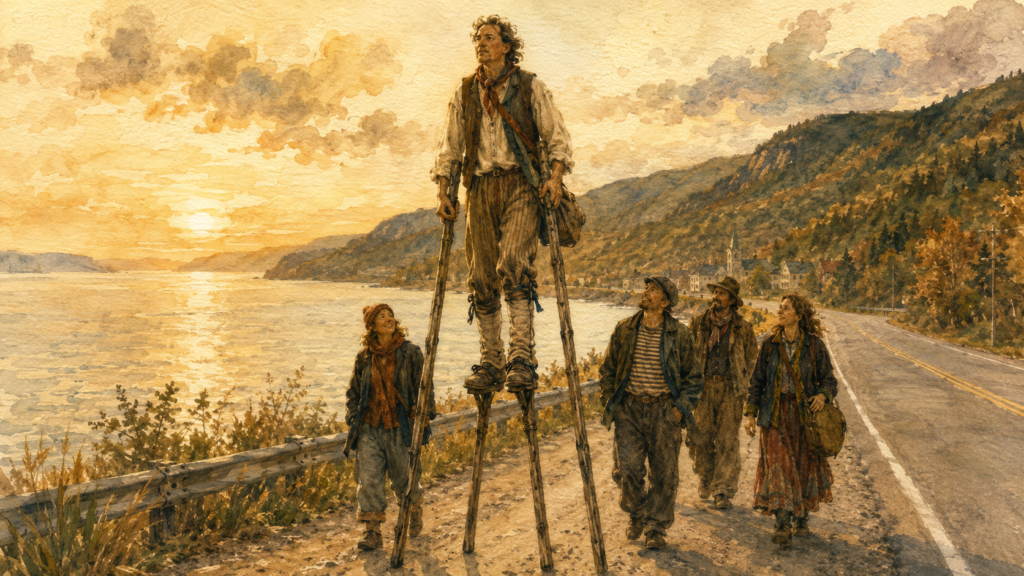
He walked from Baie-Saint-Paul to Quebec City on stilts. It is ninety kilometres along the Côte-de-Beaupré, beside the river.
He did it to get the attention of the province. He needed funding for his troupe. Some of his friends thought he was crazy. Some of them walked beside him for stretches. The province took notice.
It funded them.
That summer, they took their first show on the road. They called themselves Les Échassiers de Baie-Saint-Paul — the Stilt-Walkers of the Bay. They toured small Quebec towns. They came back broke anyway.
✦ ✦ ✦
That winter, they needed money.
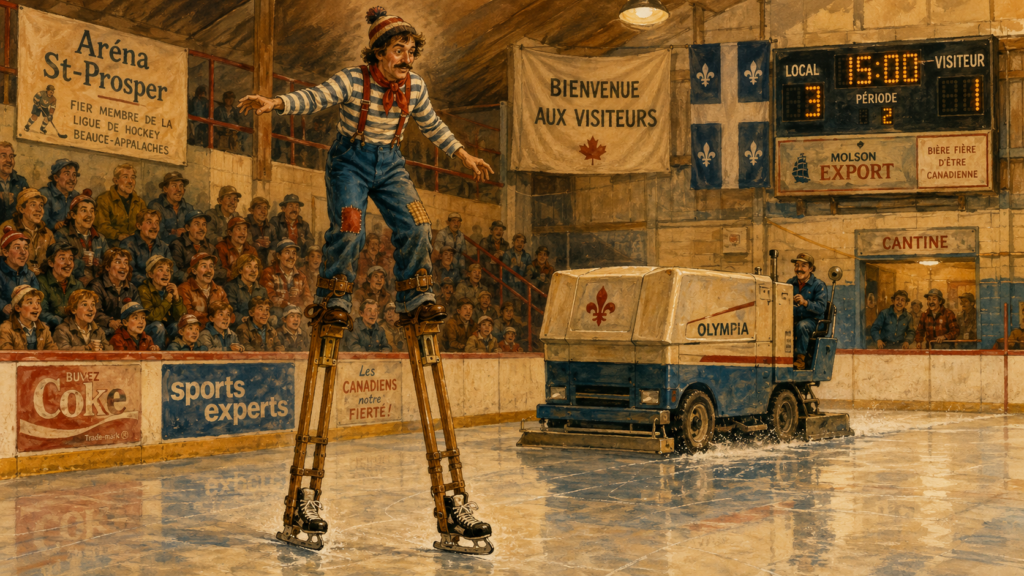
So they attached their stilts to hockey skates and performed during intermissions.
Nobody knew what to make of them.
They got paid.
✦ ✦ ✦
In 1982, they tried something different. They held a festival in Baie-Saint-Paul. La Fête Foraine. It was modelled on the medieval street fairs of Europe, where the saltimbanques, the travelling acrobats and jugglers, once performed. Stilt-walking lessons in the morning, juggling at noon, fire-breathing at dusk. Some of the locals complained. Most of them came anyway.
By 1983, the troupe had a new idea: a circus. A real one. With a big top.
The next summer would mark the 450th anniversary of a landing. Jacques Cartier, the French explorer, planted a cross at Gaspé in 1534 and claimed the land for France. Quebec was looking for a flagship act to mark the anniversary.
The province agreed to fund the circus. One and a half million dollars.
They called it the Cirque du Soleil.
The name had come to Guy Laliberté on a beach in Hawaii. He had been watching the sun set into the Pacific. He wanted a name that suggested energy and youth.
✦ ✦ ✦
The tour opened in Gaspé on June 16, 1984 — the same peninsula where Cartier had planted his cross four hundred and fifty years earlier.
Eight hundred seats. Twenty performers from Quebec, Belgium, Switzerland, Argentina. A big top made in Italy.
That was the plan.
Something was against them. Three weeks before opening, during rehearsals in Sainte-Thérèse — a town north of Montreal — a storm came through. Rain accumulated on the canvas. The weight bent the masts underneath. The big top folded in.
They opened anyway. They borrowed a tent from the federal government and drove it to Gaspé. On a Saturday evening, June 16, in a tent that did not belong to them, the Cirque du Soleil performed its first show.
Meanwhile, they sent word to a shipyard in Rimouski: build us new masts. Fast.
The shipyard said: three weeks.
The Quebec government, which had paid for the project, was not amused.
✦ ✦ ✦
I drove the route this past week.
I started in Gaspé, where the country broadens out at the end of the peninsula. The wharves there remember the borrowed tent.
Then I drove up the North Shore to Baie-Comeau, the tour’s second stop in late June. Cousin Baie-Comeau says the line went around the block anyway.
Then west across the Saguenay to Alma, in the Lac-Saint-Jean region. Deep green and quiet interior of Quebec.
The federal tent had been on the road since June. Pitched in Gaspé. Taken down. Driven up the North Shore. Pitched in Baie-Comeau. Taken down. Hauled west. Pitched in Alma.
Three raisings. Three lowerings. A thousand kilometres of highway. The rope was fraying. The seams were tired. It smelled like the road.
✦ ✦ ✦
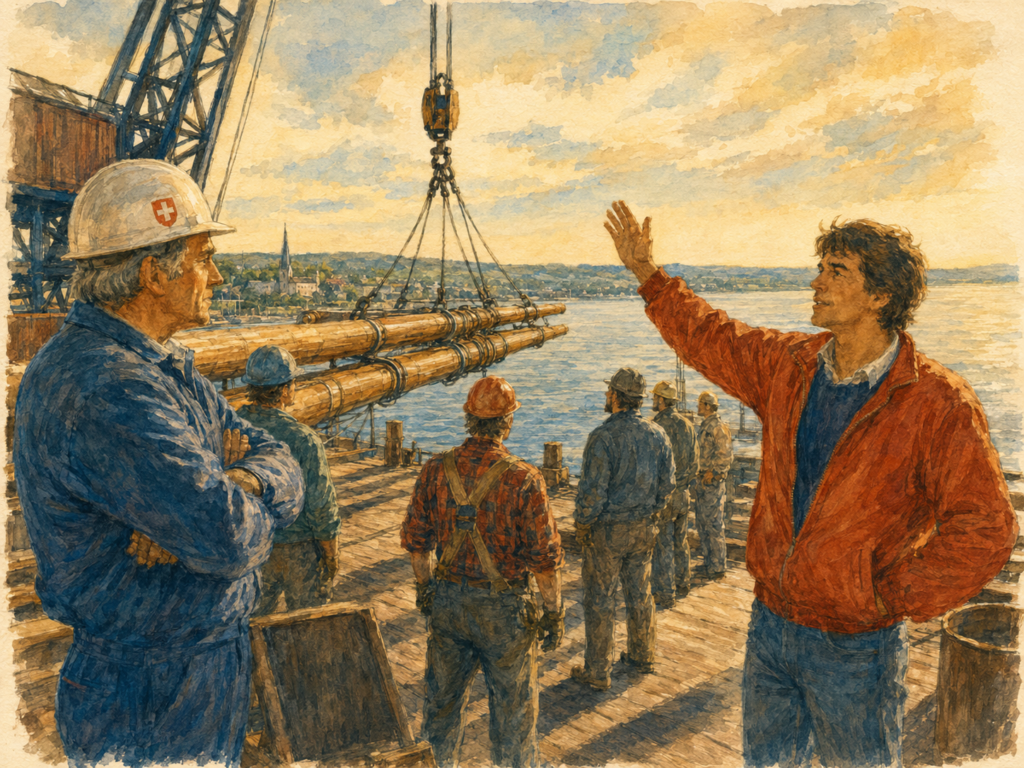
Then to this pier in Rimouski.
Forty-two summers ago this week, on this pier, the new masts arrived.
The shipyard had built them. They were enormous. Ten times as solid as the Italian ones. The engineer who had designed them stood beside them, proud.
The Swiss foreman — the Italian company’s own expert, sent to assemble the original masts — said no. He said the new structure was too heavy. He said it was dangerous.
Jean David — the tour manager, thirty years old, hired three months earlier — fired him in front of everyone.
They raised the new masts.
They held.
✦ ✦ ✦
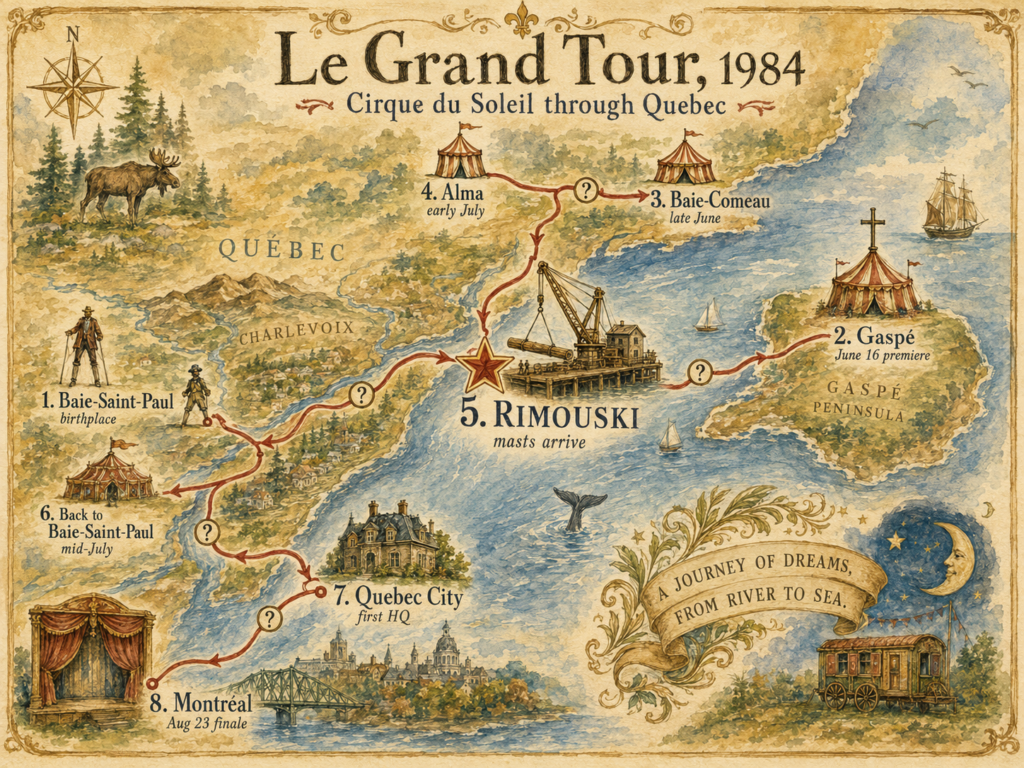
From here, the tour went west toward Baie-Saint-Paul, the home town. The cirque would play there in mid-July, under its own masts for the first time. I will go there next.
Then to Quebec City, where the troupe set up its first headquarters a few weeks later. Then to Montréal, where they closed on August 23 — with the Quebec government applauding from the stands.
Eleven towns in thirteen weeks. Seven we can name. Four we cannot. Even Jean David’s memoir does not list them all.
✦ ✦ ✦
Two years later, the cirque came west. Henri took my mother to see them in Calgary. She was a kit.
She still has the program. She still remembers a man on stilts walking out into the audience, towering over them, smiling at her until she laughed.
✦ ✦ ✦
Forty-two years later, the Cirque du Soleil performs in Las Vegas and Tokyo and Macau. It has put on thirty-two productions worldwide. It is one of the largest entertainment brands on earth.
But standing at this pier on a Sunday afternoon in Rimouski, beside the St. Lawrence, it occurred to me that one of the largest entertainment companies on earth was once saved by a shipyard crew in a small Quebec town.
The crew built the masts.
The masts held.
The rest followed.
✦ ✦ ✦
Tomorrow I drive west along the river. Baie-Saint-Paul first.
Cousin Baie-Saint-Paul says the Fête Foraine, which the founders held in their hometown every summer, eventually became something else. It became Le Festif!, which opens in three weeks. She says she will save me a seat.
I will be there. So will the children whose grandparents juggled on the wharves in 1982.

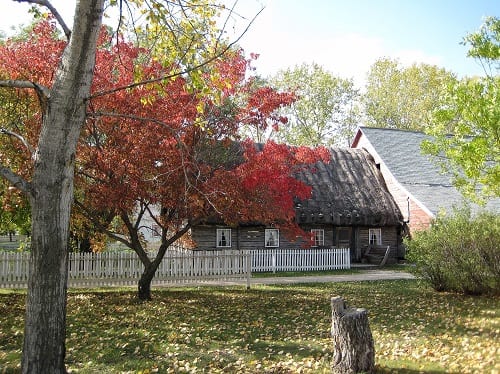
→ Cousin Steinbach (Manitoba) called from the courts.
Steinbach hosted the Manitoba 55+ Games in June — about a thousand players over four days. Pickleball took over. The newly-opened Southeast Event Centre had to put down extra courts. Cousin Steinbach says pickleball is the fastest-growing sport in Canada. The small-town rec centres can’t pour concrete fast enough to keep up.
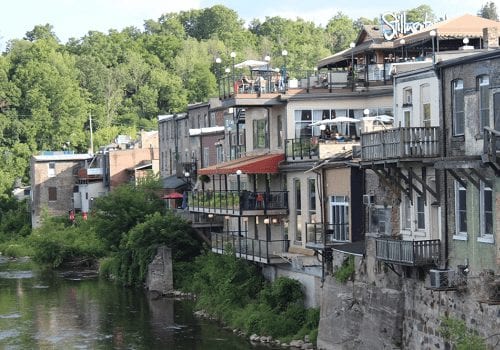
→ Cousin Paris (Ontario) sent something worth stopping for.
Mike Vellenga was driving his ATV across the family cornfield when the wheel struck something hard. He and his wife Laura got down and dug. What came up was two pieces of a stone spearhead.
They took it to Christopher Ellis, an archaeologist at Western University. He dated it. Twelve thousand five hundred years old. The chert was not from Ontario. Ellis traced it three hundred kilometres south, to Ohio. Someone had carried the spearhead up here at the end of the Ice Age and put it down in a place that would eventually be a cornfield.
Cousin Paris says the field has been in the family for four generations. She says the spearhead was there first.
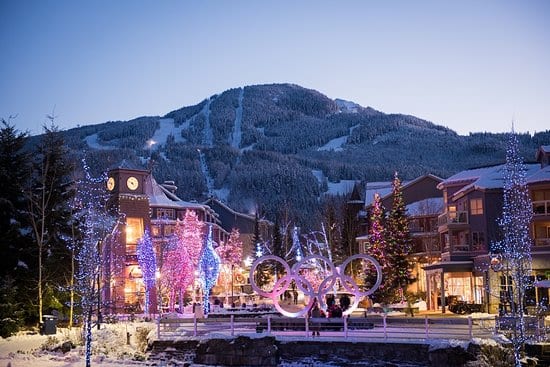
→ Cousin Whistler (British Columbia) called on Wednesday.
Two cougars had closed the top of the mountain over the weekend — after conservation officers watched them stalk hikers and bikers above the Roundhouse Lodge. Whistler Blackcomb shut the Peak Express chairlift, the Cloudraker Skybridge, the Raven’s Eye Lookout, and every trail above the mid-mountain. Cousin Whistler says the cats reminded the mountain who lived there first.
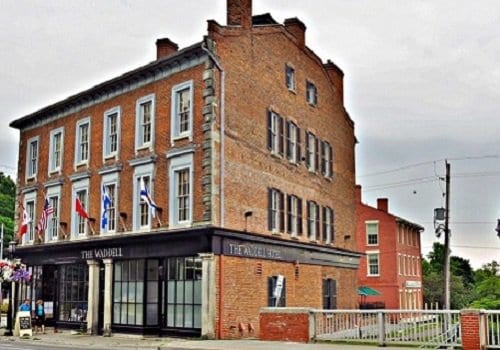
→ Cousin Port Hope (Ontario) wrote on Saturday.
The municipality purchased a hundred-and-seventy-five-year-old heritage building at 39 Pine Street — spending public money to save a landmark rather than let it be torn down. The town has one of the best-preserved nineteenth-century streetscapes in Ontario. Cousin Port Hope says most towns tear down what is old to build what is new. She says her town bought what was old and kept it.
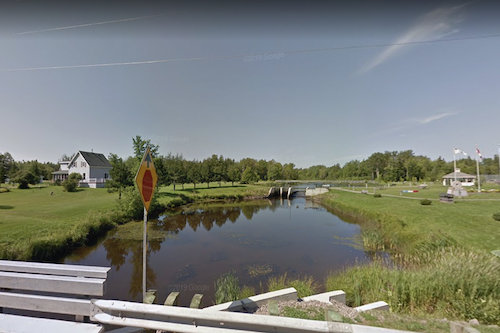
→ Cousin Wellington (Prince Edward Island) wrote on Acadian-blue stationery.
La Voix acadienne — the Island’s only French-language newspaper — marked its fiftieth anniversary in the Island’s Évangéline region. Longtime director Marcia Enman, on staff since 1978, is preparing to retire once a successor is named. Cousin Wellington says a francophone voice on an English-majority island survives because one woman would not let it die in the 1990s.
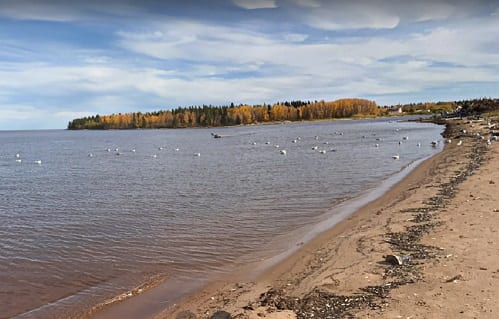
→ Cousin Hay River (Northwest Territories) sent a photograph.
Athletes from more than a dozen NWT communities descended on Hay River for Track and Field 2026, billed as the largest outdoor athletics meet in the country. Kids flew in from fly-in communities and drove in from down the highway. Cousin Hay River says a town of about three thousand people hosts what is, on paper, a genuine national superlative. He says it is also, mostly, a family reunion.

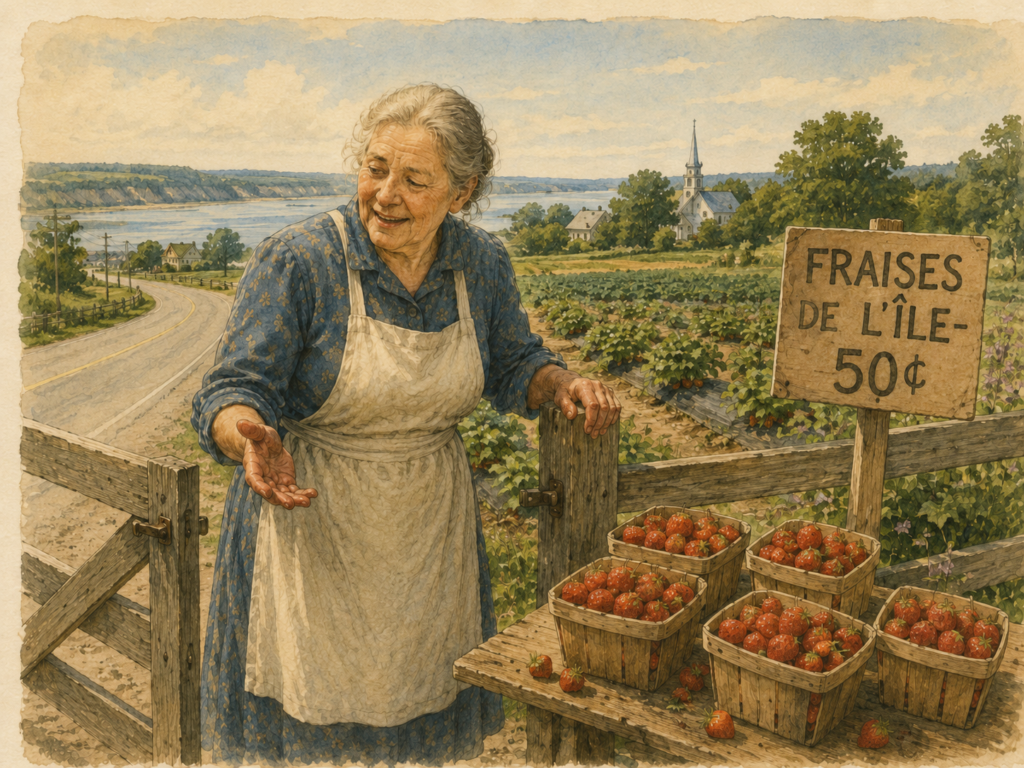
June 1968, Saint-Jean-de-l’Île-d’Orléans, Quebec.
The strawberries have come in. The whole road around the island has cardboard signs at the gates of each farm.
I bought a basket from a woman at her gate. She had been picking since five. She told me you should not blink during a strawberry season because they will be gone.
— Henri
In June, the council of Terrasse-Vaudreuil — a town of about two thousand people west of Montreal — passed a resolution declaring trees living beings with the right to life, to natural growth, to integrity, and to regeneration.
It is the first town in Quebec to sign the Universal Declaration of the Rights of the Tree. The first town anywhere in Canada.
The declaration is not enforceable law. It is a statement. The town has pledged to review its bylaws so that trees are protected — or replaced — when cut. It has pledged to expand its canopy.
The bigger cities are watching.
A town of two thousand told a country of forty million that the tree has a right to grow.


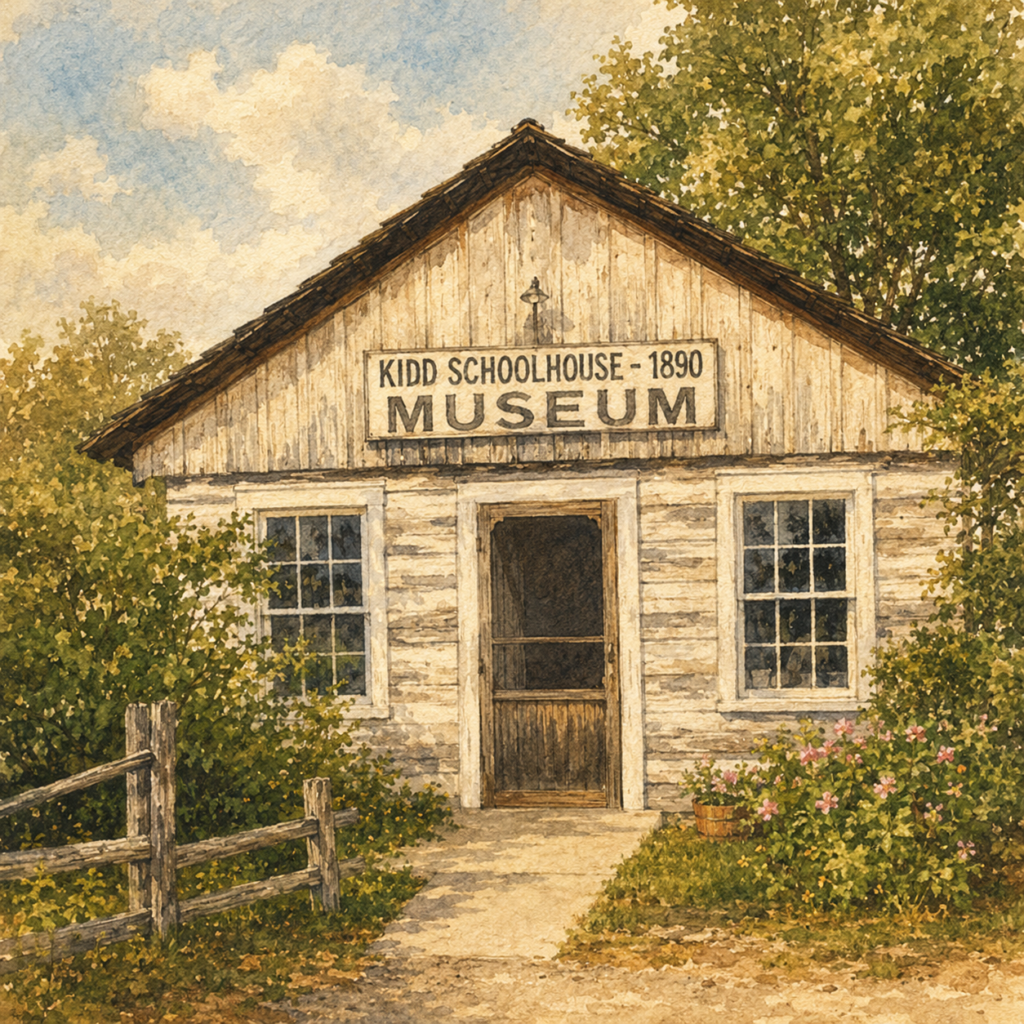
→ Michael Kidd wrote on the 1000towns Kidd Schoolhouse Museum page on June 25:
“I am writing to see if the museum is still open? My great, great grandfather was Walter Kidd.”
Michael — I called Cousin Highland Grove as soon as I saw your note. Here is what she said.
The Kidd Schoolhouse Museum on Loop Road is open. Saturdays and Tuesdays, one to three in the afternoon, through Thanksgiving. A short list of hours, but a real one. The door opens twice a week.
The museum is run by Joanne Burroughs, executive director of the Highland Grove Historical Society. Cousin Highland Grove says she is a welcoming host.
Walter Kidd, your great-great-grandfather, built the original schoolhouse in 1890. It taught children until the 1920s, then sat empty for the better part of a century. People used it as a hunt camp. The township used it as an information booth. In 2004 it was moved to its current site on Loop Road. In 2010 it reopened as a museum and a genealogy resource.
A building that kept finding reasons to stay.
Cousin Highland Grove mentioned something I did not expect.
Michael’s daughter is teaching riding this summer at Camp Ponacka, on Baptiste Lake, down the road from the schoolhouse. The building Walter Kidd put up in 1890 is open the same summer his great-great-granddaughter is teaching children to ride twelve minutes away.
The country sometimes lines things up like that.
Thanks for writing, Michael. Joanne will be expecting you. — Castor
P.S. Cousin Highland Grove wrote back on Wednesday. Michael and his family had come on Canada Day. Joanne had walked them through Walter Kidd’s schoolhouse.
The great-great-grandson stood inside.

There is a clothes dryer at the Hockey Hall of Fame in Toronto. It came from a basement in Cole Harbour.
The Crosbys had no backyard rink. They had a basement. Their son shot pucks against the dryer from the age of three. By the time it was retired, it looked like it had been through a war.
The dryer went to Toronto.
The son went to Rimouski at fifteen — before Pittsburgh, before the gold medal — to play major junior for the Océanic. The press there called him Sid the Kid. Twenty years later, they still do.
He comes home to Cole Harbour every summer. The rink that taught him is still there.

Three towns. Three festivals. One season.
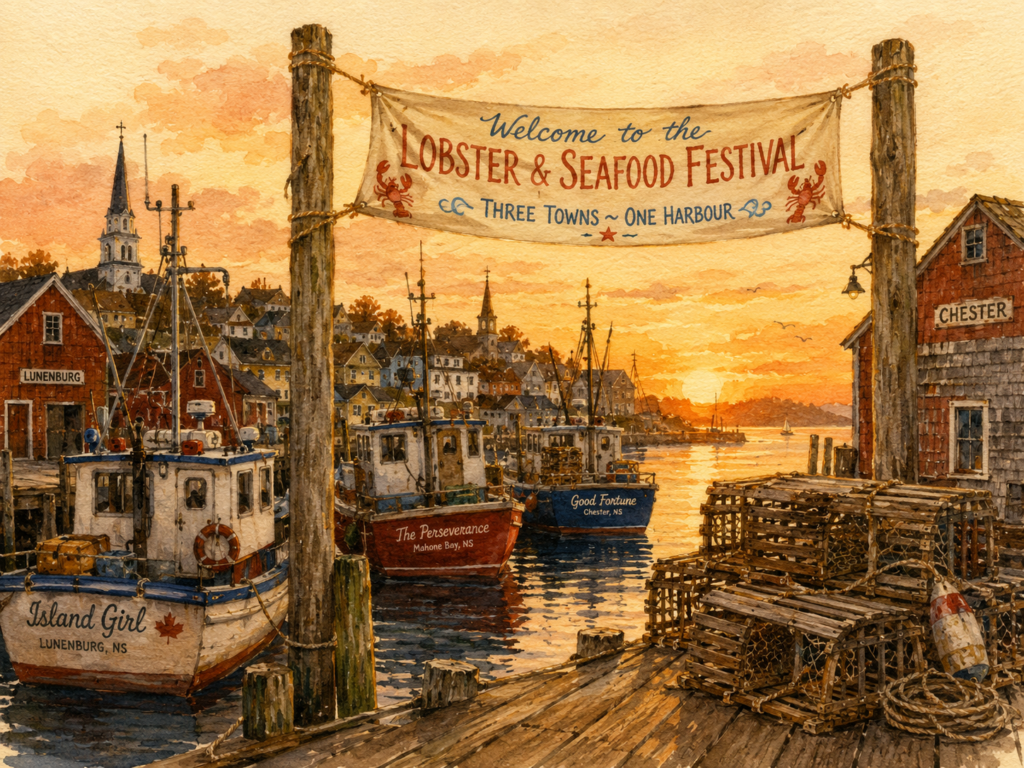
Shediac, New Brunswick • July 4 to 12
June 25–28 · the 36th edition
The Shediac Lobster Festival has run since 1949. Nine days of Acadian music, midway rides, lobster-eating contests, and a six-hundred-guest outdoor lobster dinner on Main Street. Shediac calls itself the Lobster Capital of the World.
Cousin Shediac says the town’s oldest party is also its noisiest.
Pictou, Nova Scotia • July 3 to 5
The Pictou Lobster Carnival has run since 1934 — the end-of-season blowout on the Northumberland Strait. A Mardi Gras parade, lobster-boat races, fireworks over the waterfront, and more than a dozen musical acts. The 2026 lineup is headlined by the Crash Test Dummies, Classified, and Jimmy Rankin.
Cousin Pictou says the boats race like they mean it.
Summerside, Prince Edward Island • July 15 to 18
The Summerside Lobster Carnival is the biggest festival of the year in Summerside. Parade, midway, a cardboard boat race, a lobster-trap challenge, community suppers.
Cousin Summerside says the trap challenge draws a crowd. She says the cardboard boat race draws a bigger one.
***
Drive to any of the three. Drive for the parade. Drive for the boats. Drive for a plate of lobster in a town that has been serving it for ninety years.

Cousin O’Leary called last summer, in the middle of July. She said the potato fields on the western side of Prince Edward Island go white and purple for one week in July, when the plants flower. Most of the year, the fields are green. For those seven days, they are not.
The town of O’Leary times its PEI Potato Blossom Festival to the flowering week. This year it runs July 13 to 19. The Canadian Potato Museum is in town. So is a giant potato sculpture at the museum entrance.
Cousin O’Leary says most people do not know that potato plants blossom. She says the fields go white first, then purple. She says the wind moves through them like they are breathing.


I am at an old air base in the Prairies.
Forty-three summers ago, an Air Canada Boeing 767 that had run out of fuel over northwestern Ontario glided down and landed here. The pilots had converted fuel measurements between metric and imperial units incorrectly on takeoff. They landed on the disused runway anyway. The town was hosting a Sunday-afternoon drag race on that runway when the plane came in.
Nobody was hurt.
Where am I?
Answer next Monday.
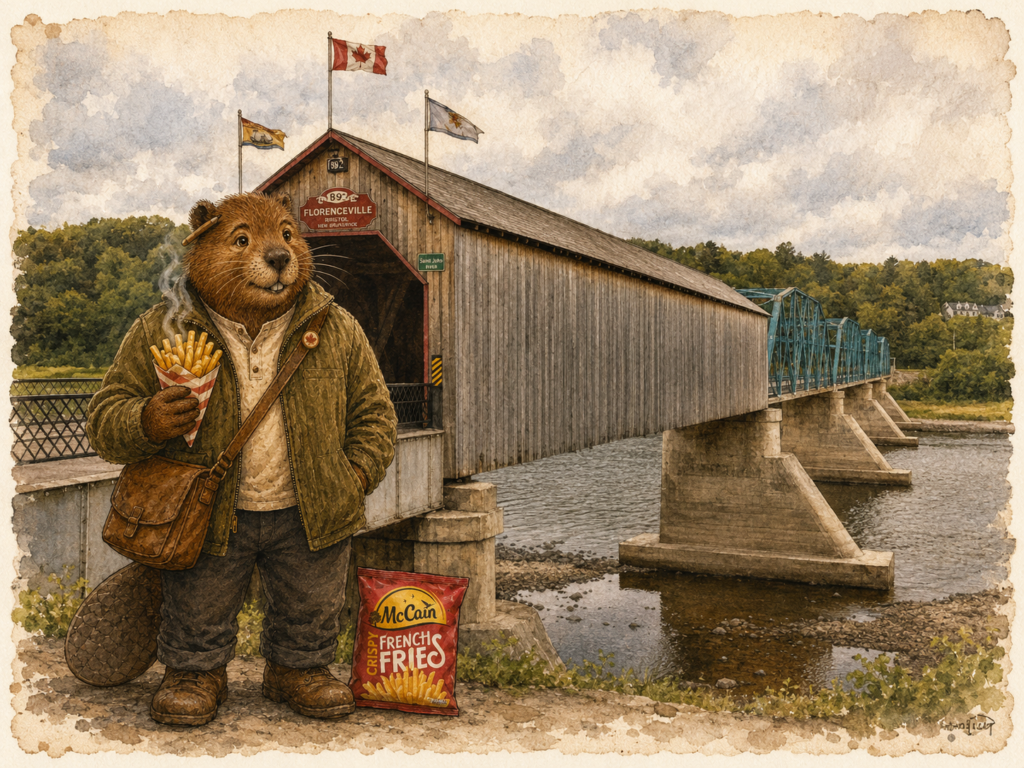
Florenceville-Bristol sits on the Saint John River, in the western interior of the province. The McCain family started frying potatoes there in 1957. The four brothers — Harrison, Wallace, Andrew, and Robert — took over a small potato-processing facility on the riverbank and turned it into McCain Foods. The company, still headquartered in Florenceville-Bristol, now produces approximately one-third of the world’s french fries, sold in over a hundred and sixty countries.
The town is officially the French Fry Capital of the World.
The original covered bridge at Florenceville crosses the Saint John River — 1907, repainted but the same wooden timbers. Cousin Florenceville-Bristol says the best chip stand in town is the one nearest the bridge.
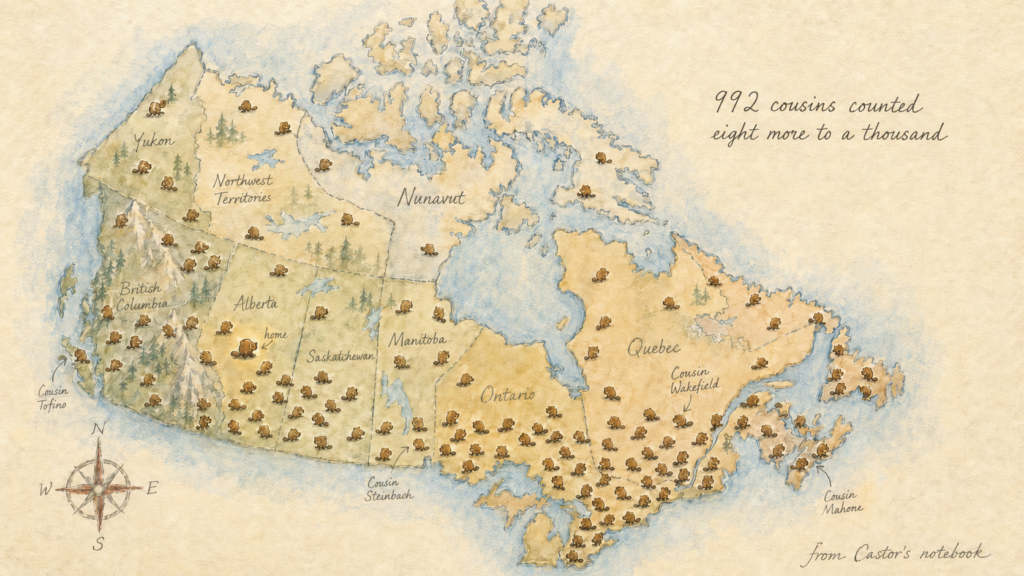
Florenceville-Bristol joined the 1000towns published list this past week. We are now at 992 cousins on the network.
The wharves in Baie-Saint-Paul are quiet tonight. Cousin says the banners for Le Festif! are already going up.
Forty-two years ago, a group of performers from a small Quebec town decided that a circus was worth building. A shipyard crew in Rimouski decided it was worth saving.
The masts held. The rest followed.
Grandfather Henri’s notebook is on the passenger seat beside me. Some things survive because somebody keeps coming back.
I’ll write next week from somewhere new.
Got a town in mind? Write to me. I’ll ask the cousin there.
Yours in maple,

P.S. 992 cousins counted. Eight more to a thousand.
More from the road this week
Castor, Alberta — population 876, where the streams east of Red Deer kept the family in dam-builders for generations.