


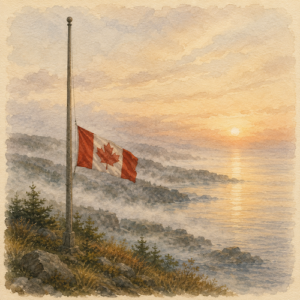
 One Canada Day morning, I was in Ferryland. In Newfoundland, July 1 is two days at once.
In the morning, the flag is at half-mast. It is Memorial Day — the day Newfoundland remembers the soldiers of the Newfoundland Regiment who advanced at Beaumont-Hamel, in France, on the first day of the Battle of the Somme. Of about eight hundred men, sixty-eight answered roll call the next morning. That was July 1, 1916.
At noon, the flag rises to full mast. The afternoon is Canada Day.
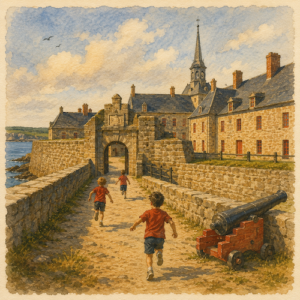 One Canada Day, I was in Louisbourg. The French built this fortress town on Cape Breton Island in 1713 — more than a century and a half before Canada became a country in 1867.
The walls of the fortress had been warm since morning. Children in red shirts ran through streets where French soldiers once marched.
A place older than its country was celebrating its country.
One Canada Day, I was in North Lake, on the eastern tip of Prince Edward Island.
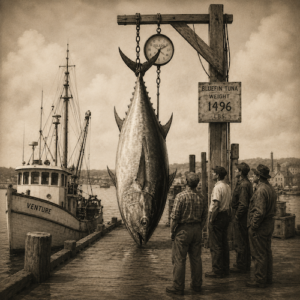
A fisherman pointed toward a photograph on the wall of the wharf building. The tuna hanging beside the boat looked impossible. Bluefin tuna can weigh more than a thousand pounds. Bigger than a piano. Bigger than some small cars.
The fisherman looked at the picture and shrugged. It wasn’t even the biggest one, he said.
The harbour calls itself the Tuna Capital of the World.
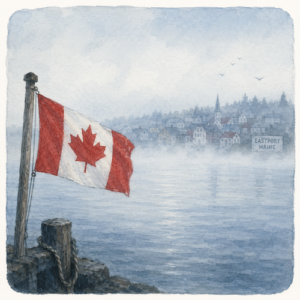 One Canada Day morning in Saint Andrews, the fog had not lifted. I sat on a bench by the water and waited.
When the fog lifted, Maine was right there across the bay — close enough that I could see the houses in Eastport, the American town on the other side. Two countries shared the same shoreline.
The trees were the same. The gulls were the same. The flag on my side was red and white. The flag on theirs was red, white, and blue.
 One Canada Day, I was on the Île d’Orléans — the long farm island in the St. Lawrence just downstream from Quebec City.
Saint-Jean-Baptiste Day — Quebec’s national holiday, named for its patron saint — had been a week earlier, on June 24.
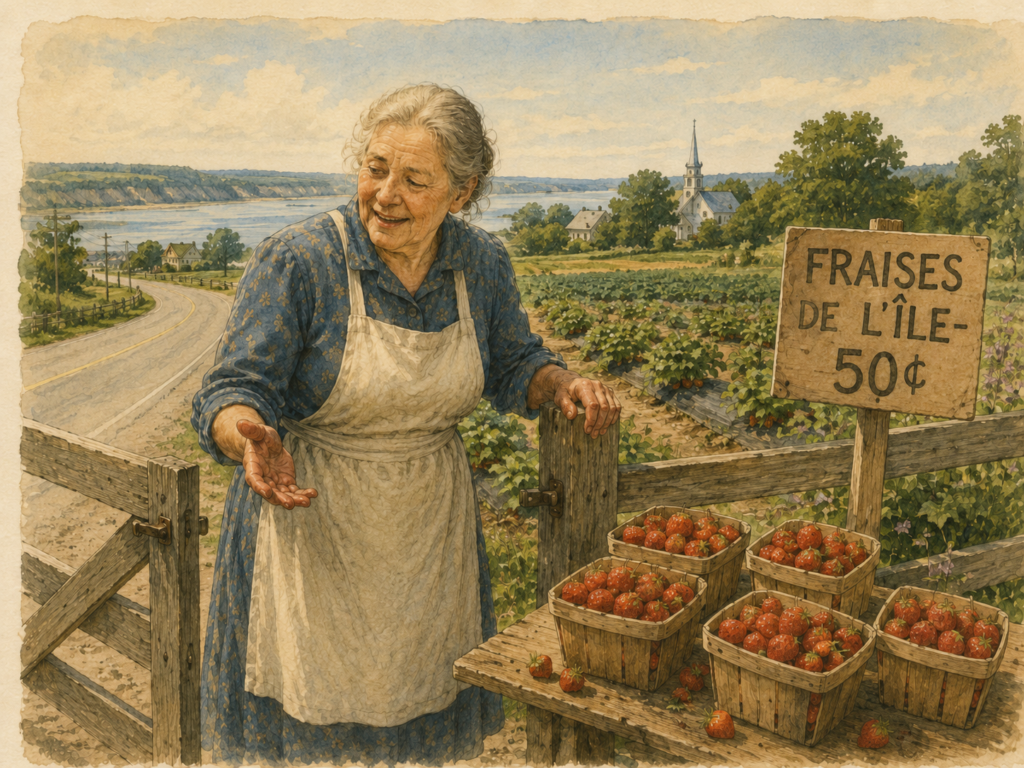
The strawberry fields had been red for Saint-Jean. They were still red for Canada Day. The best berries had ripened in between.
Two celebrations a week apart. Two identities. One island in the river.
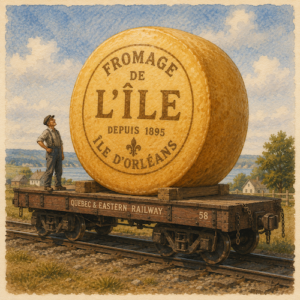 One Canada Day, I stopped in Perth. They keep a replica of a cheese.
In 1893, twelve cheese-makers using the milk of ten thousand cows made a single wheel of cheddar that weighed twenty-two thousand pounds.
They shipped it to Chicago for the World’s Fair. It fell through the bottom of the railcar. Canadian Pacific built a metal-reinforced flatcar — possibly the first one — to carry it the rest of the way. It won a bronze medal.
A tea magnate named Thomas Lipton bought it for four thousand dollars and shipped it to London.
The replica is in Perth. I stood beside it that afternoon.
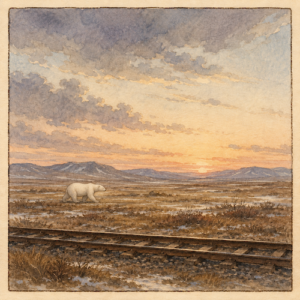
One Canada Day, I was in Churchill, the Polar Bear Capital of the World.
The bears were not there. The sea ice was gone. The town was waiting.
There is no road to Churchill – train or plane only. Churchill spends part of every year waiting for things to return: the ice, the bears, the belugas, the trains.
Some towns are built around arrival. Churchill is built around patience.
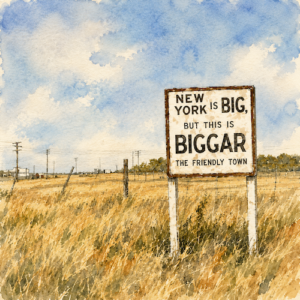 One Canada Day morning, I drove through Biggar. At the edge of town there is a sign with the town’s famous slogan: NEW YORK IS BIG, BUT THIS IS BIGGAR.
A railway surveying crew painted it on a signpost in 1914 — the story says they had been drinking.
The town kept the joke. In 1954, the town council made it the official motto.
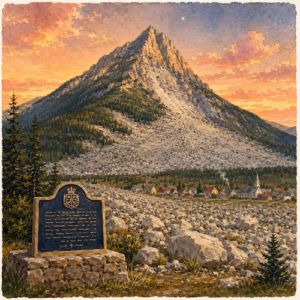
From Henri’s notebook, Dominion Day, July 1, 1968:
“Sixty-five years ago today, just after four in the morning on April 29, 1903, the east face of Turtle Mountain broke off. Eighty million tonnes of limestone slid into the valley and buried part of the town of Frank. About seventy people died, give or take. The slide took ninety seconds.
The mountain still leans toward the town. The road around the rubble is narrow. The marker is here.”
I was in Frank one Canada Day. The mountain still leans. The road is still narrow. The marker is still there. The day used to be called Dominion Day.
Some things change. Some things don’t.
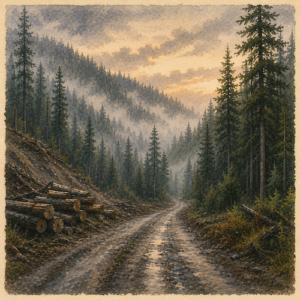
One Canada Day, I drove to Bamfield. The town sits at the end of an eighty-kilometre gravel logging road from Port Alberni — winding switchbacks through rainforest, no cell service, no other towns along the way.
Bamfield is not on the way to anywhere else. You don’t pass through Bamfield. You drive to Bamfield because you decided to come. So had everyone else who was there that day.
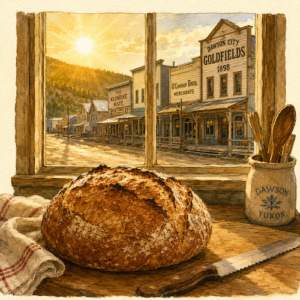
One Canada Day, I was in Dawson City. The starter was older than everyone in the room.
A sourdough starter carried over the Chilkoot Trail in 1898 is still alive — kept by Yukoners ever since. I had it on a pancake at a kitchen counter on Front Street.
That night the sun did not set.
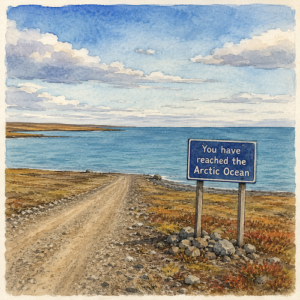
One Canada Day, I drove to Tuktoyaktuk. Before 2017, you could not. For most of the country’s history, no one could.
The road ends at the Arctic Ocean. The ocean does not.
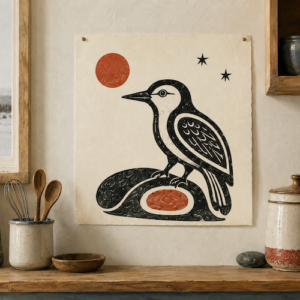
One Canada Day, I flew into Kinngait — there is no road.
The Co-op studio has been pulling prints since 1959. The work is in galleries in New York and Tokyo and Berlin.
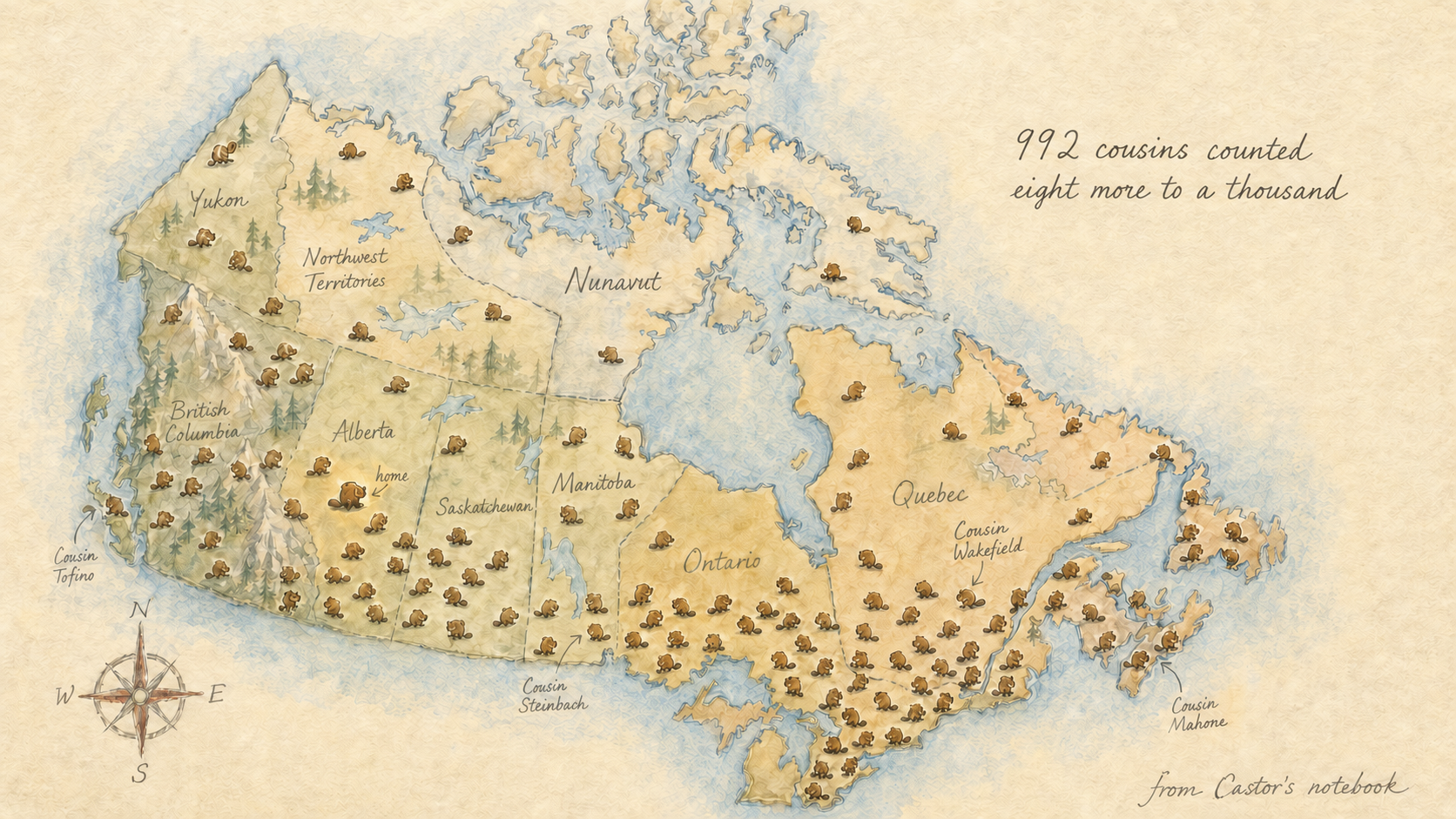
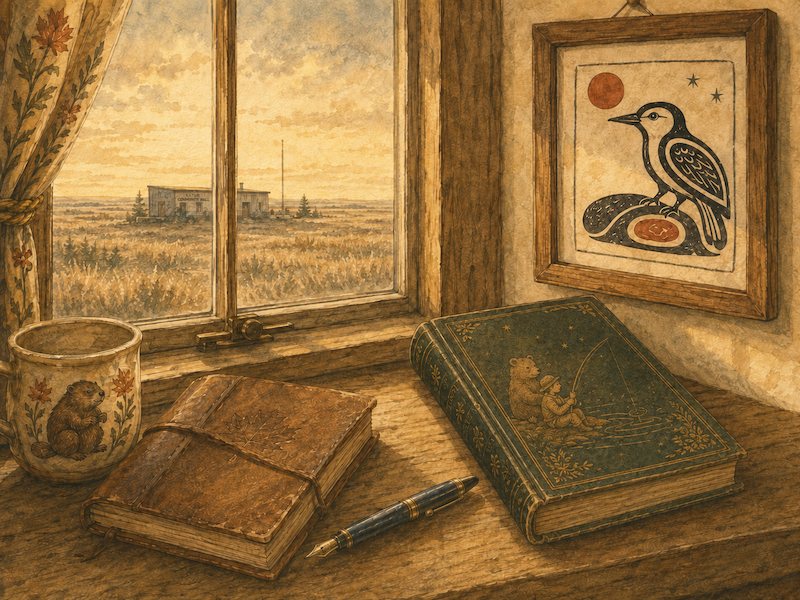
I bought a small print of a bird that day. It is on the wall in the kitchen here in Castor.



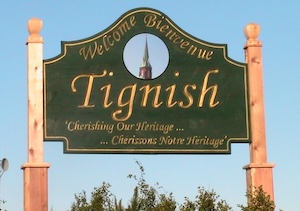 → Cousin Tignish (Prince Edward Island) wrote on Acadian-blue stationery. The Irish Moss Festival is on through Saturday, July 4 — nine days of music and seafood at the Island’s far northern tip.
Irish moss is a red seaweed once gathered along the shore by horse-drawn rake — combed off the sand at low tide. She says her grandfather kept the horse. She says the moss is still there. So is the festival. The horses are not.
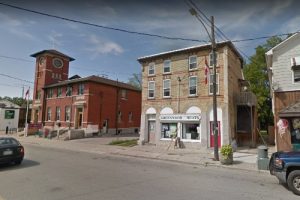 → Cousin Burford (Ontario) called on Sunday evening, voice tired and proud. Wienerfest brought eight thousand people and a thousand dogs to a village of about a thousand, this past weekend. Canada’s largest breed-specific dog festival, officially. The Dachshund Race is the marquee. The costume contest and bobbing-for-wieners draw the crowd in between. He says it is mostly dachshunds, but all dogs are welcome.
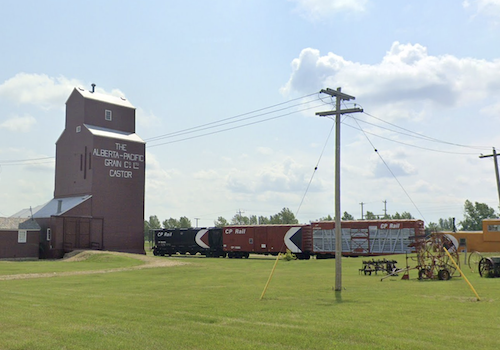
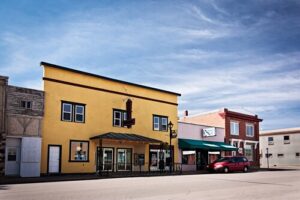 → Cousin Gravelbourg (Saskatchewan) wrote on Sunday. The Museum cut a ribbon at the base of a wooden grain elevator on Saturday afternoon. A live band played. Wooden elevators were once the tallest things for miles in any direction on the prairies — the punctuation of the prairie sky. There are fewer every year. He says Gravelbourg is keeping one of theirs.
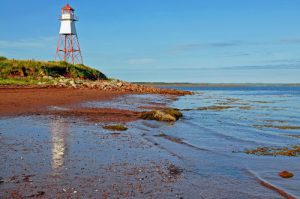 → Cousin Pugwash (Nova Scotia) writes from the Cumberland County coast. The Gathering of the Clans takes over Pugwash on Wednesday — Highland Games, bagpipes, and sword dancing on the lawn beside Northumberland Strait. The PEI Carnival Company brings a full Kids Zone across the water this year. Cousin says she has been hearing the pipes practise all week.

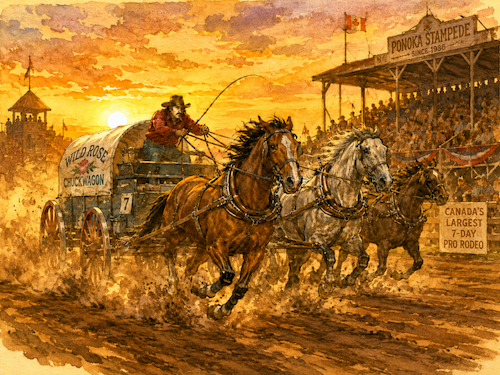
The man who composed O Canada served in the American Civil War.
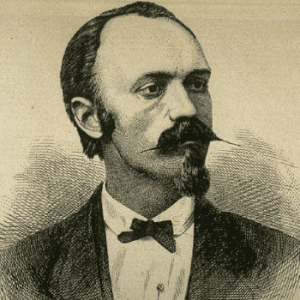 Calixa Lavallée was born in Verchères, Quebec in 1842. His father taught him organ. By thirteen he was playing piano concerts in Montréal. At fifteen he moved to the United States and settled in Rhode Island. When the Civil War came, he served as a band musician in the Union Army.
In the 1870s he came home to Montréal. In 1880, the Lieutenant Governor of Quebec asked him to set music to a patriotic poem written by judge Adolphe-Basile Routhier. The poem was for Saint-Jean-Baptiste Day — not Canada Day.
He wrote O Canada.
It premiered in Quebec City on June 24, 1880. Exactly one hundred and forty-six years ago this week.
The song was Quebec’s song first.
It became the official national anthem of Canada by Act of Parliament in 1980 — a hundred years after Lavallée wrote it.
He died in Boston in 1891, at forty-nine. He never heard it sung as the anthem of his country.