

By Castor Date: Monday, June 1, 2026 Reading time: 7minutes
Towns Castor mentioned this week
Some Canadian towns are not their main street. They are their wharf, or their grain elevator, or their station platform.
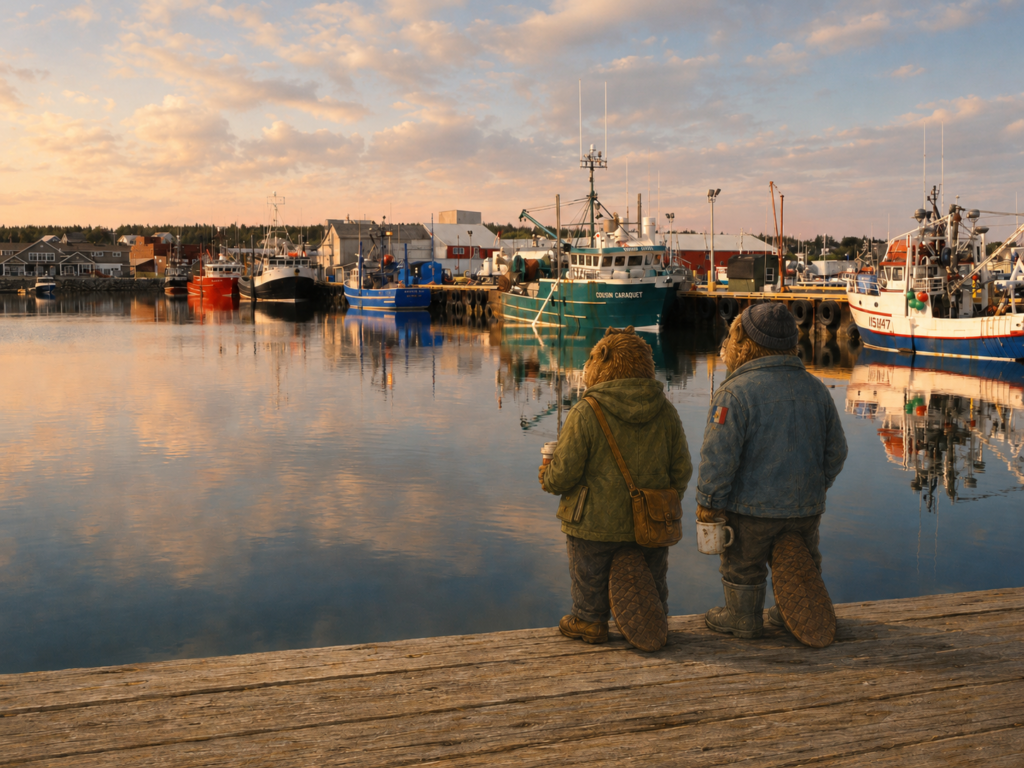
Castor is in one of those this week — at the wharf in Caraquet, New Brunswick, at first light, with Cousin Caraquet beside him.
Also this week: we are launching People of small towns — a weekly profile of one Canadian whose work made their hometown proud. We start with Megan Oldham, Parry Sound, just back from the Milano-Cortina Olympics.
If there is a town you have been wondering about, write to Castor. He will ask his cousin there.
Happy discoveries. — The 1000towns team
Castor and Cousin Caraquet at the Caraquet wharf, New Brunswick — Monday morning, June 1.
The first morning of June. I am at the Caraquet wharf (New Brunswick) with Cousin Caraquet, watching the boats come in.
The first one was back by five-thirty. The last one pulled up just after seven. They go out at three. They are back by seven.
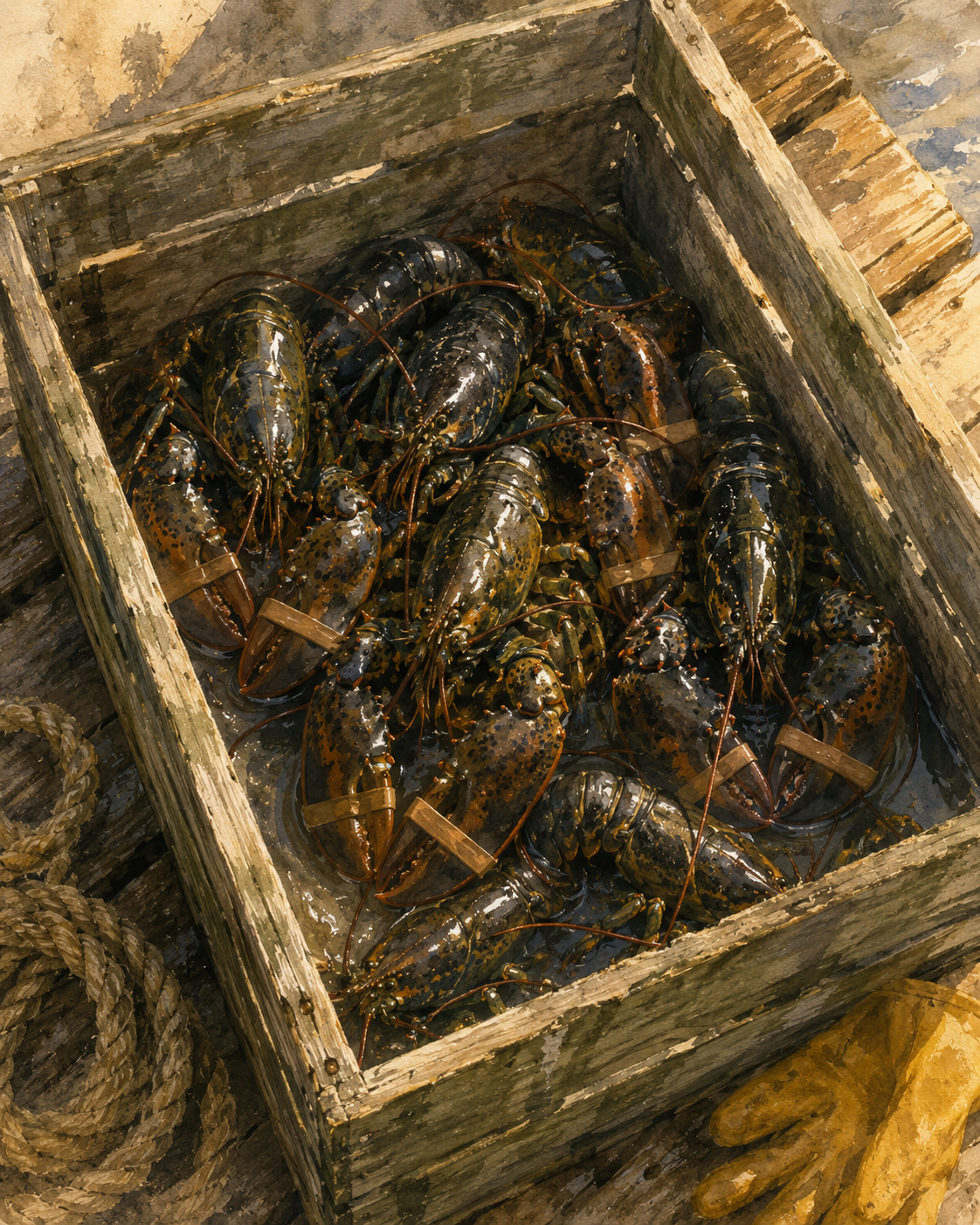
In between, they pull traps off the bottom of the Bay of Chaleur and do it again and again until the boat is heavy with lobsters and the captain says we are done.
Cousin Caraquet (wool toque, denim jacket, Acadian flag patch on the sleeve, enamel mug of coffee) has been at this wharf since before the boats went out. He says the spring season opened on the third of May and closes on the third of July. He says we are at the middle today.
He says they have been doing it this way for two hundred years. That last part is not quite true, and we both know it…
Boats have changed, motors have changed, the traps have changed, the rules have changed. But you understand what he means. The shape of the morning is the same. The work is the same shape. The Bay is still the Bay.
The wharf is dressed for the season. Acadian flags on every post: the red, the white, the blue, the small gold star. The boats come back with names painted in French, mostly. Some in English. Some in both at once.
The unloading is fast and not loud. People mean it.
I came down because cottage country did not call me this week, and a beaver should see the ocean now and then. Also because I had not seen the morning haul at Caraquet, and a column about Canadian small towns that has not seen a Maritime wharf in lobster season is not a column. So.
After the boats came in, Cousin Caraquet walked me across the street to a small place where a woman in a wool jacket asked me, in French, what I was writing. I told her: a letter. She nodded the way people nod when you say you are writing a letter — like you have given an answer that does not need a follow-up question.
Then she went back to her own.
Tonight at seven, down the road at the community hall in Bas-Caraquet, the new Caraquet council will be sworn in. I came for the morning.
The boats are tied up now. The trucks are leaving for Shippagan and Tracadie. The wharf goes quiet for a few hours.
In seventy-five days, on August 15, this whole Peninsula will go very loud. Acadian National Day. Tintamarre — every pot and pan and bicycle bell out at once, the streets full.
In 1755, colonial authorities deported the Acadians from these shores. The voyages were hard. Most who left never came back. The ones who did rebuilt the wharves. August 15 is the day they celebrate that they are still here at all.
That is then. This is now. The boats are tied up. The Bay is still the Bay. Cousin Caraquet finishes his coffee and goes home to sleep.
— Castor
Castor’s grandfather, on small-town Canada — entries from the 1960s and 70s
May 1958.
“The Souris ferry, on Prince Edward Island‘s east end, left an hour late. The crowd at the wharf was patient because there was nothing else to be.
A boy walked east to Basin Head. The sand there squeaks underfoot when it is dry. Coming back, he shouted to his mother that the sand was working today. She said it always works in late spring.
The ferry pulled in at eleven. Everybody got on quietly.”
May 2026. White River
“The flies started Saturday. They will be out two weeks, give or take.
Wear pale colours. DEET works; picaridin works; lemon eucalyptus oil works and smells better.
Cover the back of the neck — that is where they will find you.
Walk where the wind is steady.
Dawn and dusk are the worst hours; the middle of a hot afternoon is often quite tolerable.
The Canadian songwriter Wade Hemsworth — surveying on the Little Abitibi River in the summer of 1949 — wrote a song called “The Black Fly Song.”
The National Film Board made an animated short of it in 1991 (called “Blackfly,” by Christopher Hinton). Both are on YouTube. Listen once before Canada Day. It will help.
The season ends. It always ends.”
What Castor’s cousins are seeing in their towns this week
→ Cousin Wikwemikong (Ontario, Manitoulin Island) called Sunday evening. Today is the first day of National Indigenous History Month. The Wikwemikong Cultural Festival, one of the biggest powwows in Canada, runs in early August. She says they are getting ready. She says the dancers know what they are doing. She says come in August.
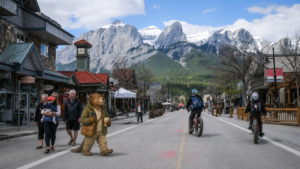
→ Cousin Canmore (Alberta) called. A mother bear and her cub came down 7th Avenue on Saturday afternoon, just after two. Wildlife officers and the RCMP responded. The cub was tranquillised. The mother left on her own terms. He says nobody was hurt. He says it is the kind of Saturday afternoon Canmore does that nowhere else quite manages.
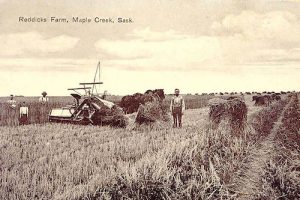
→ Cousin Maple Creek (Saskatchewan) wrote on the back of a livestock receipt. Calving is done. The herd is on grass. The first riders went out to the hills on Sunday. He says spring this year was easier than most. He says you can tell by how much the cattle are walking.
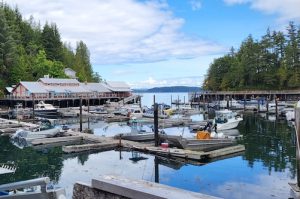
→ Cousin Telegraph Cove (British Columbia) sent a video. The orcas are back in Johnstone Strait. The first tour of the season went out Saturday morning. He says the run was quiet for the first hour, then they came around the point. He says the whole boat went quiet. He says May is when the resident pod returns.
Where to go this weekend, with a tip from Castor’s cousin there
→ Festival du Cheval, Princeville, Quebec — June 4–7
I called Cousin Princeville to ask what I should write about Quebec this week. He said: come down for the Festival du Cheval.
Princeville sits in the Centre-du-Québec region, about two hours south of Quebec City. In June, it holds its annual Festival du Cheval — the Festival of the Horse. Draft horses — Belgians, Clydesdales, Percherons, each one close to a ton — pull weighted sleds across a measured strip while their teamsters watch. It is a competition rooted in the work that built farms before machines did.
He says it is astonishing to watch.
He says go for the Saturday afternoon pull. He says bring kids. He says stay for supper.
He says: ne manquez pas ça. Do not miss it.
Photo: princeville.quebec
Things Castor has picked up on the road
Named after Count Pál Esterhazy — a Hungarian noble (or self-styled noble; historians disagree) who had watched his countrymen working dangerous coal mines in Pennsylvania and decided they belonged on the Canadian prairie instead.
He convinced Ottawa to give him land. In 1886, he led about thirty-five Hungarian Catholic families to a stretch of Saskatchewan grassland and named the settlement Kaposvar, after a town back in Hungary.
The settlement worked. The descendants are still here. Beneath their feet now is one of the largest potash mines in the world.
Cousin Esterhazy says you can stand on the prairie and not know there is a secret city under you. He says the prairie is good at keeping secrets.
You could not drive to Killarney until 1962. Before that, it was boats.
After 1962, it was a thin road blasted through Georgian Bay’s pink quartzite — Highway 637, which is still the best way to get there and the only way that has ever existed.
Cousin Killarney says some of the older boatmen never quite forgave the road. They did not stop using the boats. They just had something new to complain about.
The Canadian habit is to come from somewhere small. Anne Murray, Springhill, Nova Scotia. Stompin’ Tom Connors, Skinners Pond, Prince Edward Island. Gordon Pinsent, Grand Falls, Newfoundland. Bobby Orr, Parry Sound, Ontario.
The list is long. I will not be done with this section for years.
Here is what I have noticed about small towns. They remember. A town of seven thousand keeps the name of someone who left it sixty years ago. A town has more memory than the people who live in it.

This week, Megan Oldham. She grew up in Parry Sound, Ontario, on the shore of Georgian Bay. In February she came home from the Milano-Cortina Olympics with gold in big air and bronze in slopestyle. The town threw her a street party on James Street — the same streets Bobby Orr played on as a kid.
Cousin Parry Sound says the town is just as proud of Megan today as it was of Bobby sixty years ago. He says that is saying something.
A memory from another town
I was in Iqaluit, Nunavut, the summer the sun did not set.
It was the third week of June. The light came in through the window at three in the morning, and the light went on through the window at three in the afternoon. I had been awake for I do not remember how long.
I went outside to walk around.
A man on a snow machine was driving along the side of the road. He was towing a small boat. He was not in a hurry. He waved. I waved back.
A few days later the bay opened. The boats went out. The sun stayed up.
I have thought of him every late spring since.
You write Castor. Castor asks the cousin there.
→ Roger Tiessen wrote on the 1000towns Wheatley, Ontario, page on May 21: “When is the big boyz four-day fishing contest this 2026 summer, thanks.”
Roger — I called Cousin Wheatley as soon as I saw your note. Here is what he said.
The official 2026 dates are not posted yet. The Big Boyz Tournament has run on the Civic Holiday long weekend for as long as the Southwest Outdoors Club has organized it, out of Wheatley Harbour.
In 2024 and 2025 it ran August 1–5 — four days centred on the holiday Monday. He says to expect the same shape for 2026: very likely Friday, July 31 through Monday, August 3, give or take a day depending on when the club locks the calendar.
He says the club posts the official dates on their site when they have them. He says we will repost the moment they do.
He says: Wheatley Harbour. First weekend of August. Lines in by sunrise. Bring a cooler. Come hungry. The fish fry is the point.
Thanks for writing, Roger.
— Castor
A puzzle this week. The answer is in next week’s letter
A town in Canada, four clues:
→ There is an octagonal town square at the heart of town — the only one of its kind in North America.
→ Queen Victoria is said to have called this place the prettiest town in Canada.
→ Beneath the town is one of the largest salt mines in the world, extending far under Lake Huron.
→ Population: about seven thousand. On Highway 21, between Sauble Beach and Bayfield.
Where am I?
The answer is in next week’s letter. Write to me if you have a guess. I’ll keep score.
The boats are tied up. The wharf is quiet. The Bay is still the Bay.
I’ll write next week from somewhere else.
Yours in maple,
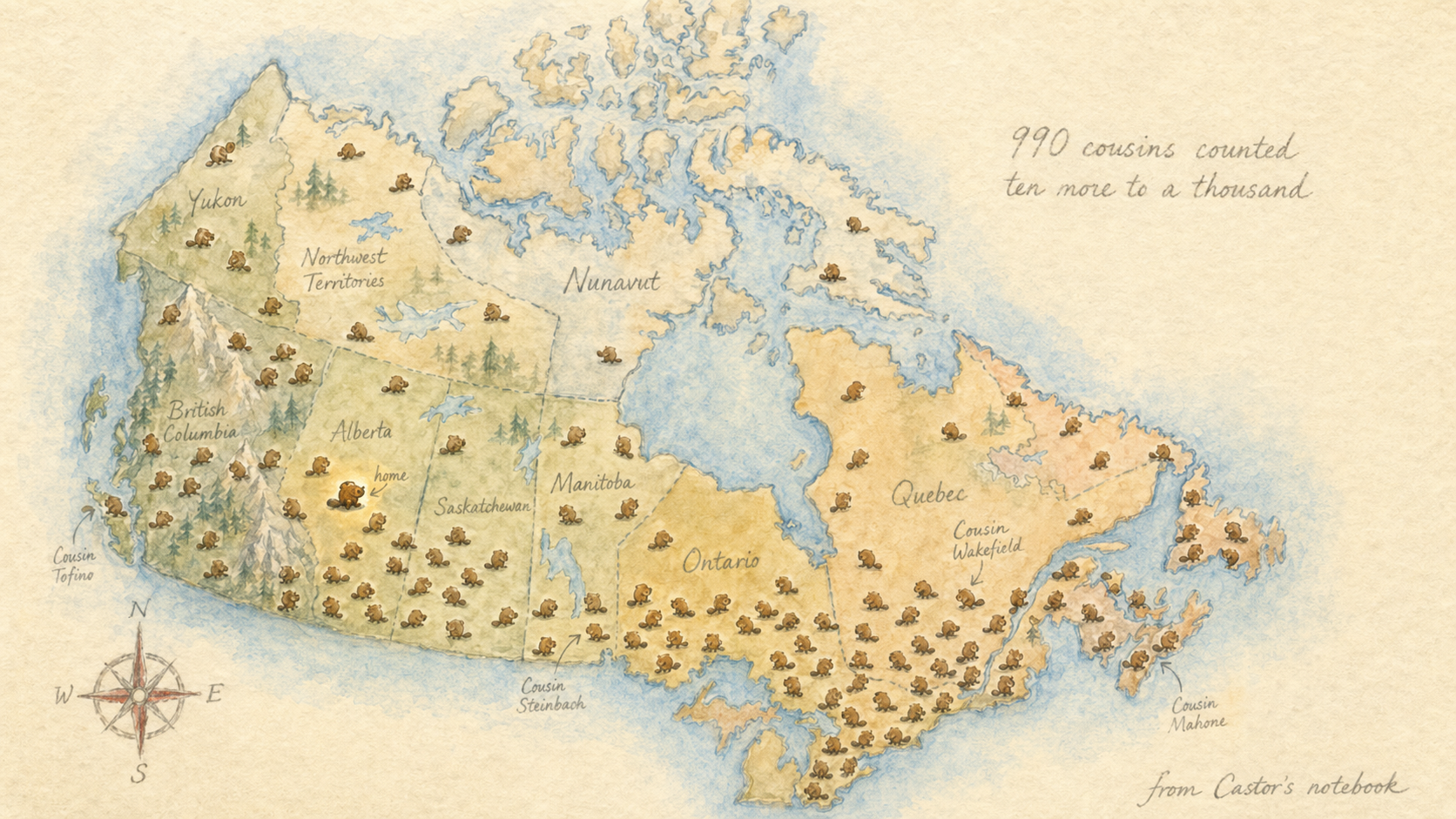
P.S. 990 cousins counted. Ten more to a thousand.
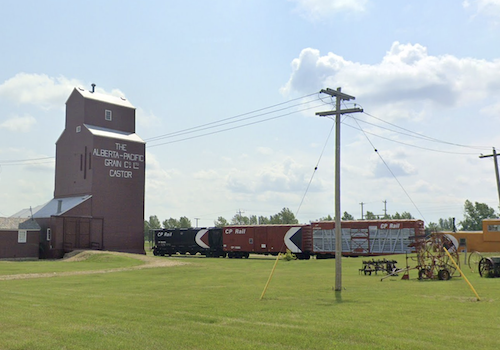
Castor’s hometown is Castor, Alberta — population 876, where the streams east of Red Deer kept the family in dam-builders for generations.
Subscribe to Castor’s Letters
Castor writes the Castor’s Letters column for 1000towns. New letters arrive and are published each week — and a day earlier in your inbox if you’re subscribed.
You have successfully joined our subscriber list.