
Castor's Letter · No. 13
→ The small towns that made Canada’s most famous painter. → The farm boy from Alliston who solved diabetes on a hot July morning. → The Royal Canadian Legion at 100. → And news from nine provinces besides.
By Castor · Monday, July 27, 2026 · 12 min read
Towns Castor mentioned this week
The watercolour illustrations in Castor’s Letters are made with a mix of original photography, editorial design, and AI illustration tools, curated by our team. Words and editorial decisions are entirely human.

Every trip begins with a map. Most maps get you there. Some tell you what to look at when you arrive. The best ones make you slow down.
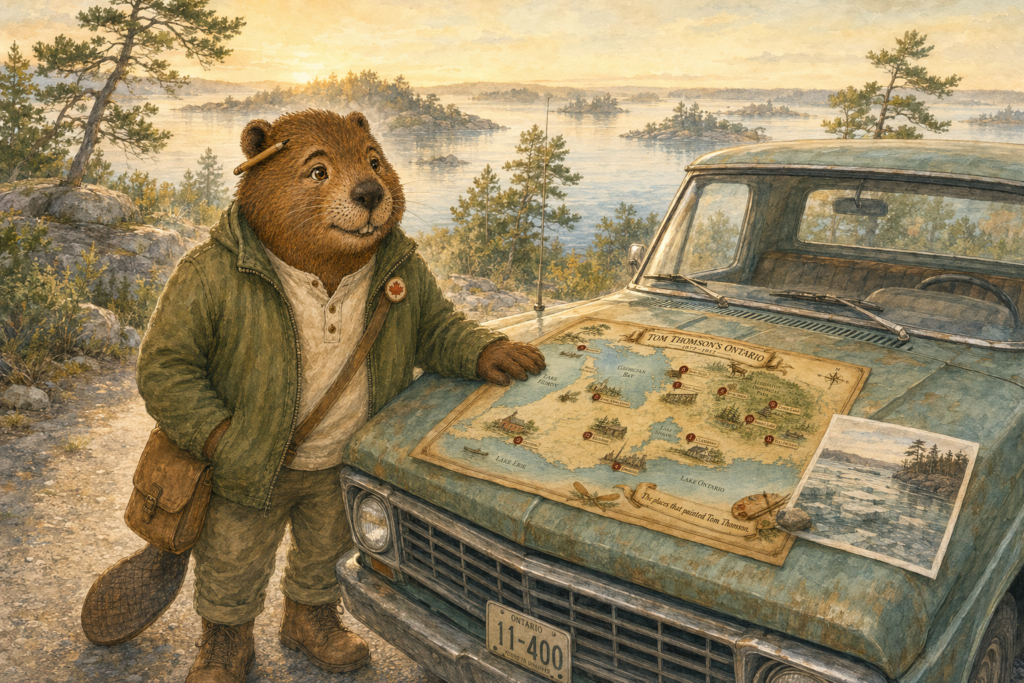
This week Castor explores one at a picnic table in Parry Sound, Ontario. Twelve red dots. The small towns that made Tom Thomson. Castor drives from dot to dot.
On Monday morning we hand you the same map — Tom Thomson’s Ontario. But interactive. An interactive travel guide. We started building them a few weeks ago.
Some of you will drive it. Most of you will not. You can spread the map on your laptop on the kitchen table and drive it in your head. That is a real trip too.
Tom Thomson’s Ontario is the newest of these interactive travel guides. Five others from Ontario and Alberta — Stratford & Mennonite Country, Wellington County, Bow Valley Parkway, Kananaskis Country, and Smith-Dorrien Trail — are collected on the Guides page.
We will build more soon.
If there is a town you have been wondering about, write to Castor. He will ask his cousin there. Happy discoveries. — The 1000towns team
‘Dear 1000towns —
“How many small towns does it take to make one Canadian?”
That was the first thing Cousin Parry Sound asked me.
I laughed. She didn’t.
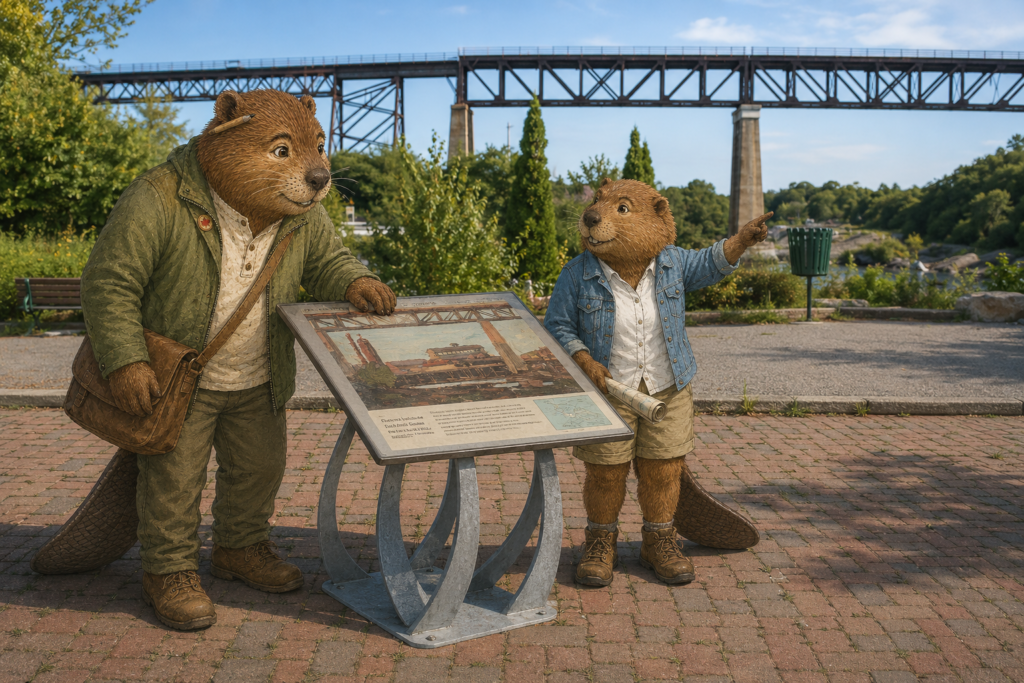
We were sitting at a picnic table at the Seguin River Parkette in Parry Sound, Ontario. The old Chippewa III was tied up nearby. The trestle bridge above the river had been standing there since 1907.
“That’s a big question for a Saturday afternoon,” I said.
“It’s a July question.”
“?”
“A hundred and nine years ago this month, Tom Thomson didn’t come back from Canoe Lake.”
✦ ✦ ✦
Tom Thomson was one of Canada’s best-known landscape painters. He was thirty-nine the summer he vanished. He had been painting seriously for only five summers. In that short time he made more than four hundred sketches and about fifty canvases.
Three years after his death, seven of his friends would form the Group of Seven. They always said there would have been no Group of Seven without him.
On the morning of July 8, 1917, he paddled onto Canoe Lake in Algonquin Park and did not come back. His body was found eight days later. The coroner ruled it an accidental drowning. A century of books has argued otherwise.
Most people know how the story ended.
Cousin Parry Sound wanted to talk about the whole map. She reached into her canvas bag and unfolded a map across the picnic table.
✦ ✦ ✦
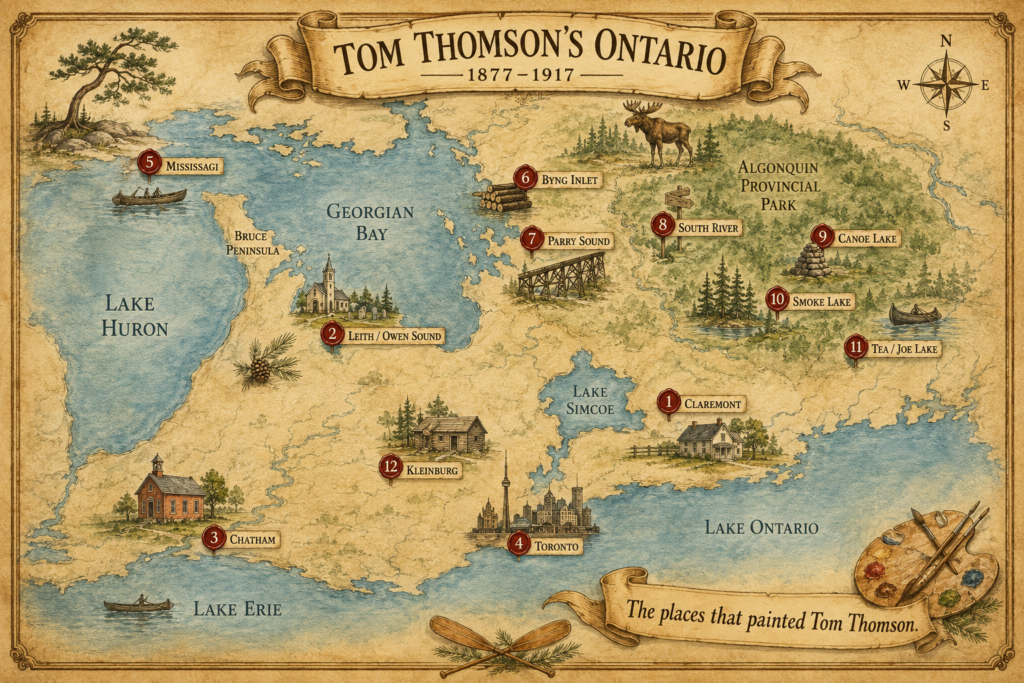
There were red dots scattered all over Ontario. Most of them were places people drive through without thinking twice.
Leith. Claremont. South River. Byng Inlet. Smoke Lake. Tea Lake. Joe Lake. Mississagi.
She tapped her finger on the dots.
“The places that painted Tom Thomson.”
I smiled. “You mean the places he painted.”
“No,” she said. “The places that painted him.”
Then she stood up. “Go find out.”
✦ ✦ ✦
We walked over to the Artist’s Station. The town has placed reproductions of two Tom Thomson paintings exactly where he painted them in July 1914 — one here at the parkette, one down at the waterfront.
You look at Trestle at Parry Sound. Then you lift your eyes to the real trestle bridge above the river. For a moment, they almost become the same picture.
Almost. The bridge is still there. The river still bends. Only the trees have grown taller.
A cloud moved. The trestle went dark.
I realized: the bridge wasn’t really Tom’s subject. The light was.
✦ ✦ ✦
The second station is a thirty-minute walk down the waterfront, past the entrance to the North Shore Rugged Trail at the Salt Docks. Its panel shows Parry Sound Harbour. I stood beside it and looked. The boats have changed. The docks have changed. The islands are still the same islands.
Neither painting matches the view exactly. They aren’t meant to.
They are asking you to look twice.
✦ ✦ ✦
“How many of the dots have you visited?” Cousin Parry Sound asked.
I started counting. “More than I thought.”
✦ ✦ ✦
The first dot I remembered was from yesterday. Owen Sound.
Cousin Owen Sound met me at the Tom Thomson Art Gallery. He is retired now. Before that he spent thirty years as a docent there. He walks with a slight limp. He wears a canvas jacket even in July.
We stopped in front of a small painting of pine trees beside a lake. Rain had begun outside. He looked through the gallery window. Then back at the painting.
“The rain,” he whispered. “It’s in the painting too.”
I hadn’t thought to look for it.
✦ ✦ ✦
That afternoon he drove me north to Leith.
If you blink, you miss it. A church. A cemetery. A few farms. And one of Canada’s quietest pilgrimages.
Cousin Owen Sound parked by the church.
“He grew up here.” He nodded toward it. “Two months old when the family brought him from Claremont. Rose Hill farm, just up the road. Fished in Telfer Creek. Sang in this choir. Drew caricatures in the hymn books, they say.”
He was quiet for a moment.
“He came home to Leith one more time.”
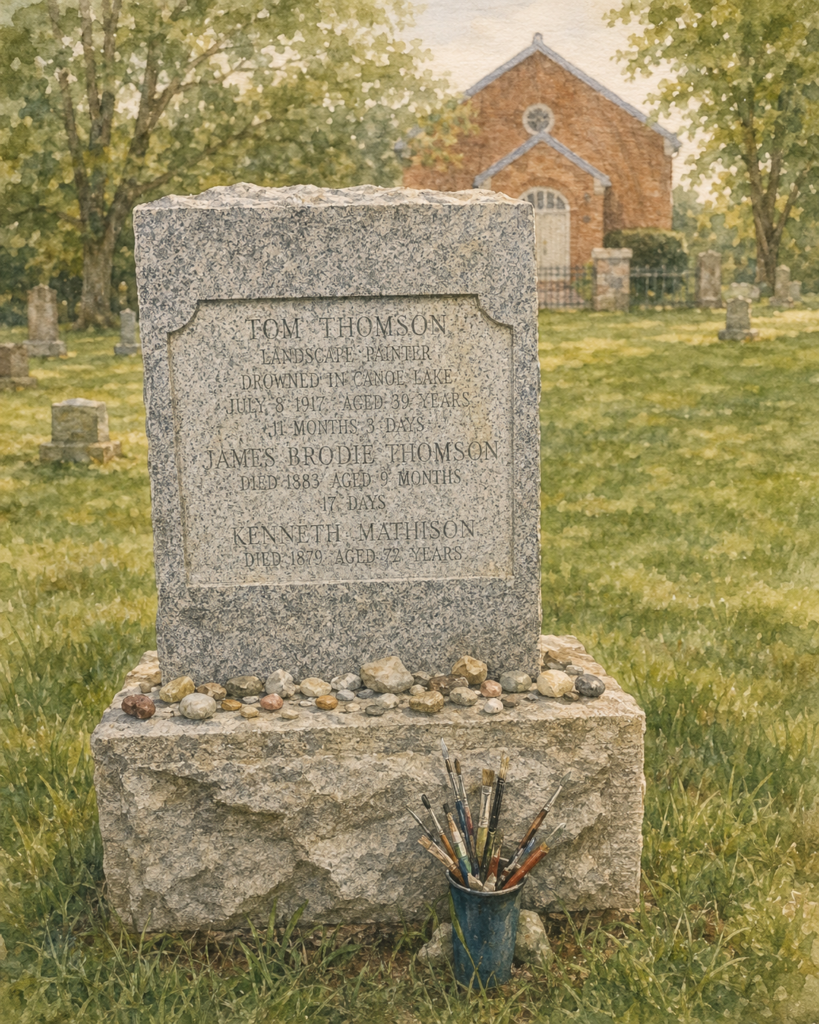
Tom Thomson is buried there. The stone names him honestly.
Tom Thomson. Landscape Painter. Drowned in Canoe Lake, July 8, 1917. Aged 39 years, 11 months, 3 days.
Below him, two others: a nine-month-old brother, an uncle who died before Tom was born.
There were small stones along the base of the monument. At the front, a blue tin cup held painters’ brushes and pencils — bristles worn, handles used.
Some stones come from Algonquin. Some from Killarney. Some from forests hundreds of kilometres away. Some brushes come from painting studios that saw work finished only that morning.
Someone picks up a stone on an ordinary walk, or lifts a brush from a working set, and one day leaves it beside the grave of a man they never met.
Cousin Owen Sound shrugged. “I don’t think they’re bringing stones. Or brushes.”
He looked at the little cup for a long moment. “I think they’re bringing thanks. And leaving one behind.”
Thomson had taught this country to notice small things. The country was quietly bringing him small things back.
That thought followed me all the way back to Parry Sound.
I looked at the map again that evening. Leith no longer looked like a village. It looked like gratitude. One red dot had changed.
* * *
Another dot reminded me of Claremont, east of Toronto. I had been there last summer.
People know Claremont because Tom Thomson was born there in 1877. He left when he was only two months old.
Cousin Claremont teaches art at a high school in Pickering. On weekends, he looks after the small Tom Thomson display at the Claremont Public Library.
We walked down a quiet country road.
“Tom’s house is gone,” he said.
“What would Tom remember if he came back?” I asked.
He looked along the road for a moment. “The road,” he said.
“Isn’t that sad?” I asked. “What is a village for if the person who made it famous left before he could remember it?”
He smiled. “No. A village isn’t here to keep people. It’s here to start them.”
✦ ✦ ✦
Another red dot reminded me of Kleinburg. Last fall I spent an afternoon at the McMichael Canadian Art Collection.
Behind the gallery stands a wooden building simply called the Shack. It was Tom Thomson’s studio in Toronto, where he turned the little sketches he painted in the north into larger canvases. In 1962 the entire building — walls, floor, woodstove and all — was moved here from behind the old Studio Building on Severn Street in Toronto.
You can still walk inside. It is hardly bigger than a bedroom. A bed. A woodstove. One window looking out toward the pines.
A mother stood beside me with a little boy. He pointed at one of Thomson’s sketches and whispered something. She smiled and whispered an answer.
I couldn’t hear either of them. It didn’t matter.
Somebody was teaching somebody else how to notice.
✦ ✦ ✦
That night I sat with the map at the table. Claremont wasn’t a birthplace anymore. Leith wasn’t a cemetery. Parry Sound wasn’t a bridge and harbour.
Dots had changed under my eyes.
✦ ✦ ✦
I left Parry Sound early Sunday morning. The map was on the seat beside me.
South River — the gateway to Algonquin. Smoke Lake. Tea Lake. Joe Lake. Those were the dots waiting for me today.
Farther west was Byng Inlet, where Tom Thomson painted the timber country of Georgian Bay.
Farther north was the Mississagi Forest Reserve, where an early sketching trip in 1912 helped change the direction of his art.
I wouldn’t reach those places this weekend. But they belonged on the map.
✦ ✦ ✦
The farther north I drove, the quieter Ontario became. The towns grew smaller. The roads narrowed. The forests edged closer to the highway.
Beyond South River I stopped making notes. The clock on the dashboard seemed less important. I rolled the windows down. The wind smelled of pine, warm rock, and sunlit water.
For the first time that weekend, I stopped trying to understand the map. I simply followed it.
✦ ✦ ✦
People often say Tom Thomson found himself in Algonquin. That isn’t quite right. By the time he first paddled these lakes in 1912, most of the map was already behind him. The wilderness simply gave him enough room to keep looking.
I reached Canoe Lake just after lunch.
Most visitors come because of what happened here on a July morning in 1917. The story of Tom’s death is told so often that it almost hides another one.
He spent years living here first. Working. Fishing. Sketching. Watching. Learning. That matters more.
✦ ✦ ✦
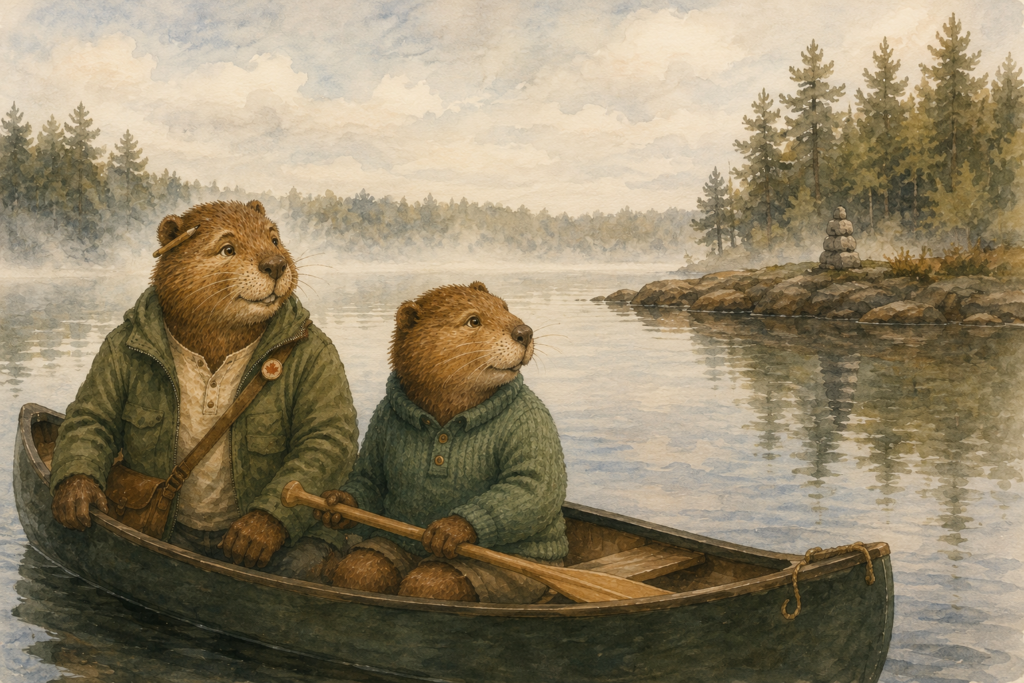
Cousin South River was waiting near the dock. She wore an old green sweater despite the July sun.
We paddled without speaking. The lake did not seem to mind.
After a long while I asked her: “Why do people still come?”
She rested the paddle across the canoe. “They’re coming because they’re hoping to see what he saw.”
✦ ✦ ✦
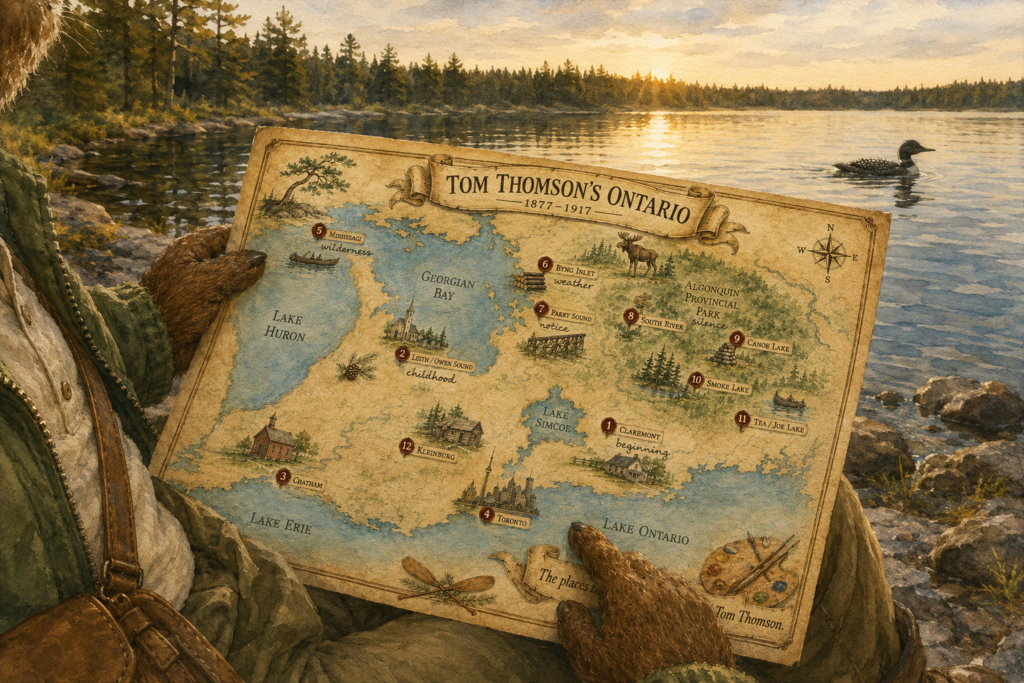
I stood on the shore and unfolded the map one last time. Yesterday it had looked like a collection of places. Now it looked like a portrait.
Not of Tom Thomson. Of Canada.
Claremont. Leith. Parry Sound. Byng Inlet. Mississagi. Algonquin. No one place had made him. Together they had.
I folded the map. Across the lake a loon called once. Nobody answered. It was enough.
✦ ✦ ✦
Everybody remembers Tom Thomson. Very few people remember the small towns that made him.
Perhaps countries don’t learn to see themselves in their capitals. Perhaps they learn in places like these. One small town at a time.
— Castor
P.S. Maybe that’s why I keep travelling. Not to find famous places. To discover the ones quietly painting the rest of us.
The map Cousin Parry Sound handed Castor at the picnic table is now an interactive travel guide on 1000towns.ca. Every red dot — Claremont, Leith, Owen Sound, Parry Sound, South River, Byng Inlet, Smoke Lake, Tea Lake, Joe Lake, Mississagi, Algonquin — with paintings, roads, stops, and everything Castor didn’t have time to fit in this letter.

Summer 1976 — Grandfather Henri, reading Barnabé’s July 1926 pages.
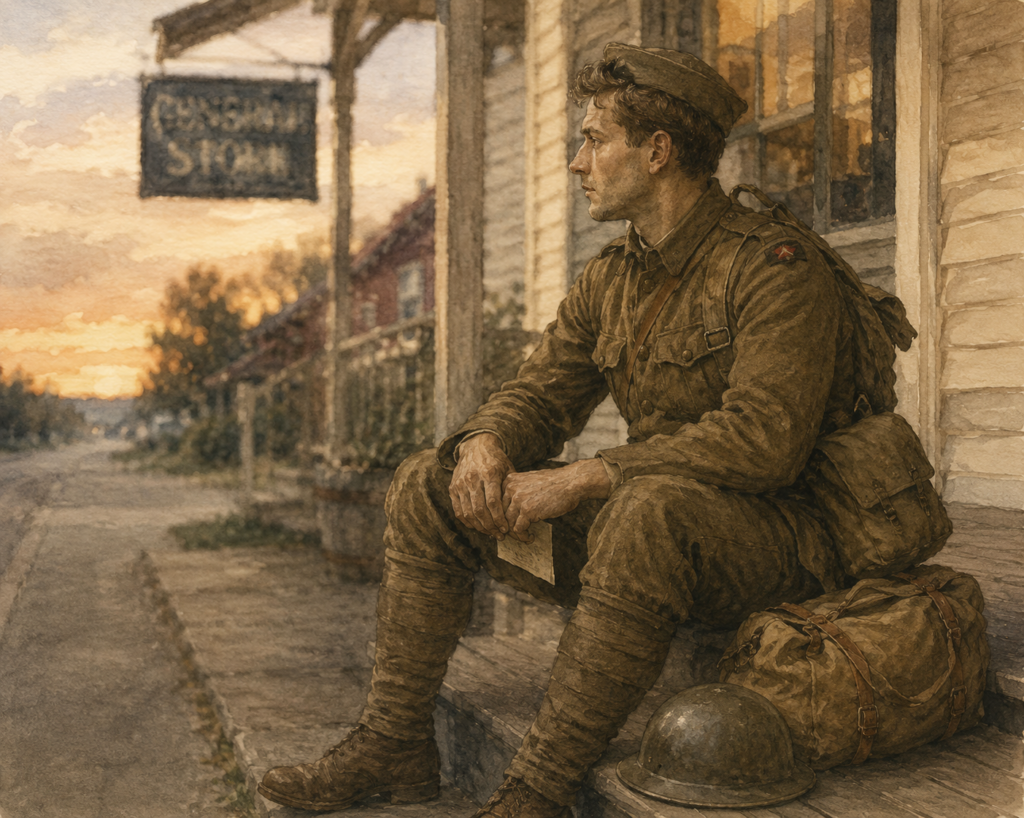
Grandfather Barnabé was already an old beaver in the summer of 1926. He wrote in his notebook that month about the return of the human boys.
Six hundred thousand Canadians had served in the First World War. One in four came home wounded — to a country that, in most places, did not know what to do with them.
Farm boys who had survived Vimy Ridge and Passchendaele stepped off trains into towns that were, Barnabé wrote, “devastatingly, deafeningly quiet.” They needed medical care nobody could yet give them, and, above all, somebody who did not need them to explain.
So they began finding each other. In the small Ontario village of Belle Ewart, the returning men gathered around Trombley’s store. At first, Barnabé wrote, these were just “clubs for men who did not need to explain.”
Not every small town welcomed everyone. Barnabé — whose own family had traded with Red River Métis families for generations — wrote about Métis veterans who did not always find a warm welcome. Instead of fading away, they organized. They fought to establish the St. Laurent Legion Branch No. 250, on Lake Manitoba. It still stands — the only fully Métis Legion in Canada.
On July 17, 1926, a special Act of Parliament chartered all those small, scattered clubs into one organization. What Canadians called it was simpler: The Legion.
Barnabé closed his entry with a line I have thought about all week.
“A country is what it builds after everyone has gone home.”
— Henri

July 15, 2026 — Red Point, Prince Edward Island.
An oversized mailbox stood at a crossroads on the eastern shore of the Island for thirty-three years — real enough to hold your mail, big enough to be the sign that told you you had arrived. This month the Basin Head Fisheries Museum, a few kilometres up the coast, brought the mailbox indoors and gave it a shelf.
Some towns build statues to remember themselves. Red Point mailed one. Then framed it.
July 16, 2026 — Ogema, Saskatchewan
Fourteen small volunteer-run museums across south-central Saskatchewan have banded together as the South-Central Museums Association. Grain-elevator relics. Homesteaders’ diaries. School desks from one-room schools that closed forty years ago. Each museum on its own is one volunteer short of a lost story. Together, a better chance.
Henri would have understood.

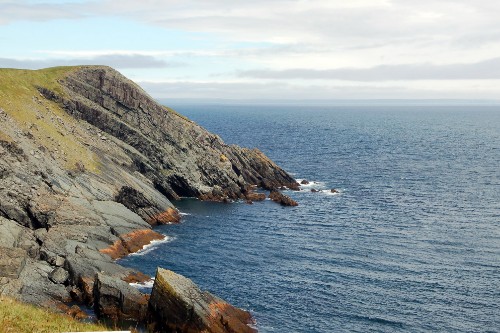
→ Cousin Trepassey (Newfoundland and Labrador) wrote from just up the coast — about something that has been sitting quietly in a rock for five hundred and sixty-five million summers. At Mistaken Point — the wave-battered cliffs a short drive south of Trepassey, at Portugal Cove South — the shale holds the imprints of some of the oldest complex life ever found on Earth. Fern-like fronds. Disc-shaped creatures with no mouths, no eyes, no backbones. They lived in a shallow sea long before anything on Earth had learned to swim.
When they died, they sank to the seafloor and stayed there. The seafloor became a cliff. The cliff became Newfoundland. Cousin Trepassey says a hundred and twenty people live in the village those cliffs belong to.
Ten summers ago this month, UNESCO made it official — a World Heritage Site. Thousands of visitors a year now come out to that end of the Avalon. The cliff, Cousin Trepassey says, does not seem to mind at all.
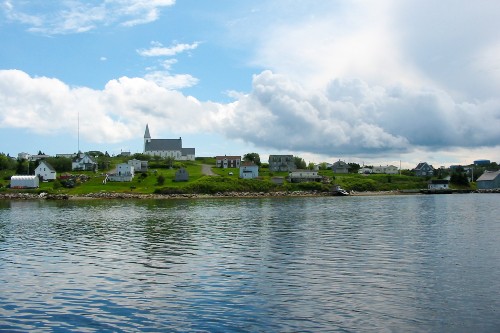
→ Cousin Canso (Nova Scotia) wrote from the eastern edge of the province — about a song a town of seven hundred and forty has been keeping alive for thirty summers. Stan Rogers wrote Northwest Passage in the early 1980s. It is a ballad about the doomed Franklin expedition, sung a cappella — his own voice tracking itself in harmony. It is also, quietly, a song about anyone who has ever been alone in a car at night with a map on the seat beside them.
Two years after he wrote it, Rogers died in an aircraft fire on a runway in Cincinnati. He was thirty-three.
Every July since 1997, Canso has held the Stan Rogers Folk Festival in his memory. This year was the thirtieth. It closed yesterday. Cousin Canso says a town of seven hundred and forty is a strange place to keep a national anthem alive. He says nobody in Canso has ever found it strange.
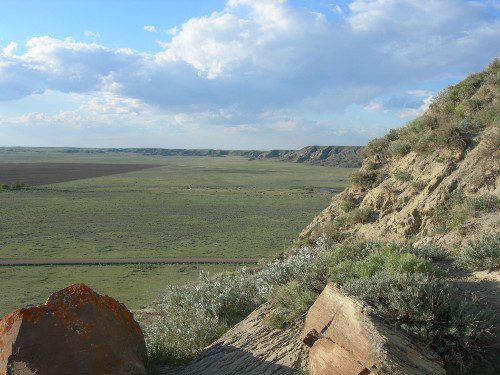
→ Cousin Bengough (Saskatchewan) sends word from a small prairie grid town that sits on the tabletop above the Big Muddy Badlands — that broken country of ravines and sandstone cones on Saskatchewan’s southern edge, once used by Wild West outlaws as a hideout on the long ride south. Bengough is the gateway to that landscape. Highway 34 comes through. The grain elevator watches over everything.
For one weekend every July, the population multiplies tenfold. The Gateway Music Festival closed yesterday after a three-day run — its twentieth. Sam Roberts Band and Glass Tiger headlined. There were fireworks. There were pancake breakfasts. There was a mechanical bull. An entire town became a stage. Cousin Bengough says three hundred residents pulling off a festival for thousands is the sort of prairie math that only makes sense if you were raised on it.

→ Cousin Altona (Manitoba) has news of a whole festival this week. You may remember her from two weeks ago, in The Things We Make Too Big — she was the cousin who told us about the giant reproduction of Van Gogh’s Sunflowers that has stood beside Highway 30 in Altona. The tallest easel of its kind in the world. Vincent, tilted toward the prairie sun.
This week the town put the whole prairie behind him. Altona held the Manitoba Sunflower Festival, one of the province’s longest-running town festivals. There was the signature parade. There was a Queen Quest. There was a midway. There was live music in Centennial Park. Cousin Altona says the easel is still standing. She says Vincent, at long last, has come to stay.
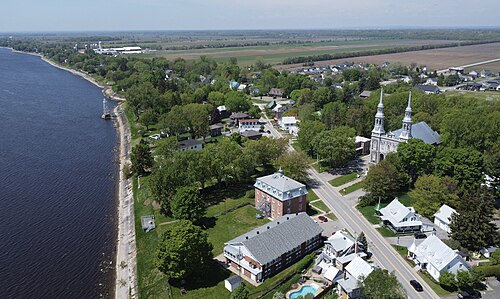
→ Cousin Champlain (Quebec) called to share the story of a village of sixteen hundred that has offered to bring home a statue of the man it was named for.
Samuel de Champlain — the seventeenth-century French navigator who mapped much of eastern Canada, founded Quebec City in 1608, and put a great deal of this country on paper before it had a name. He has been commemorated for over a century by a statue in Orillia, Ontario. When the town began looking at options for the monument’s future, the village of Champlain, one of the oldest French settlements along the St. Lawrence, stepped forward with an offer to give it a permanent home.
Cousin Champlain says a village that has carried a man’s name for four centuries is a good place for his memory to be kept.
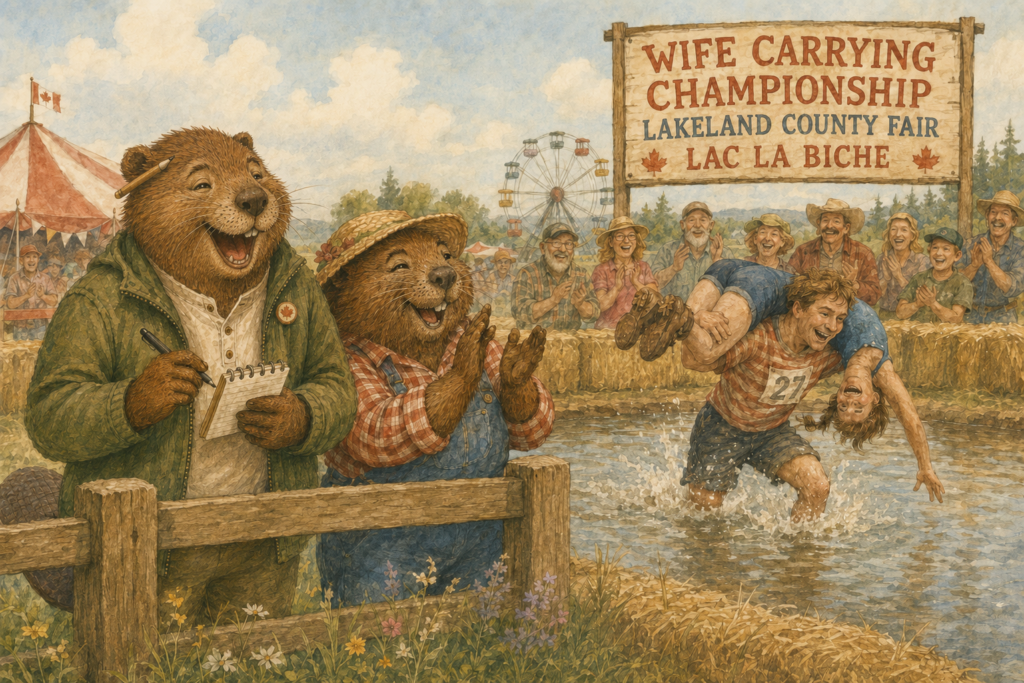
Here is how it works.
One person hoists another person onto their back. Piggy-back is allowed. Fireman’s carry is allowed. The preferred hold is the “Estonian carry” — passenger upside down, legs around the runner’s shoulders. Do not ask me who volunteered to invent that.
The pair then races two hundred and seventy yards over hay bales and through a knee-deep water pit. If either of you drops the other, you are disqualified. If you finish first — with your partner still on your back — you win the partner’s weight in beer, five times their weight in cash, and a berth at the North American championship in Maine.
This is a sanctioned athletic event. There are rules. There are judges. There is, somewhere, an actual rulebook.
I asked Cousin Lac La Biche whether this was really Alberta’s idea of a Saturday afternoon. She said yes, and if I had a better one, I should mail it to her.
So I hesitated before including it to my letter. Then I remembered that a country of jack pines and wildfires and drowned villages also needs, on the same July weekend, a hay-bale obstacle course and a bag of money the size of a spouse.
This is also what small towns are for.
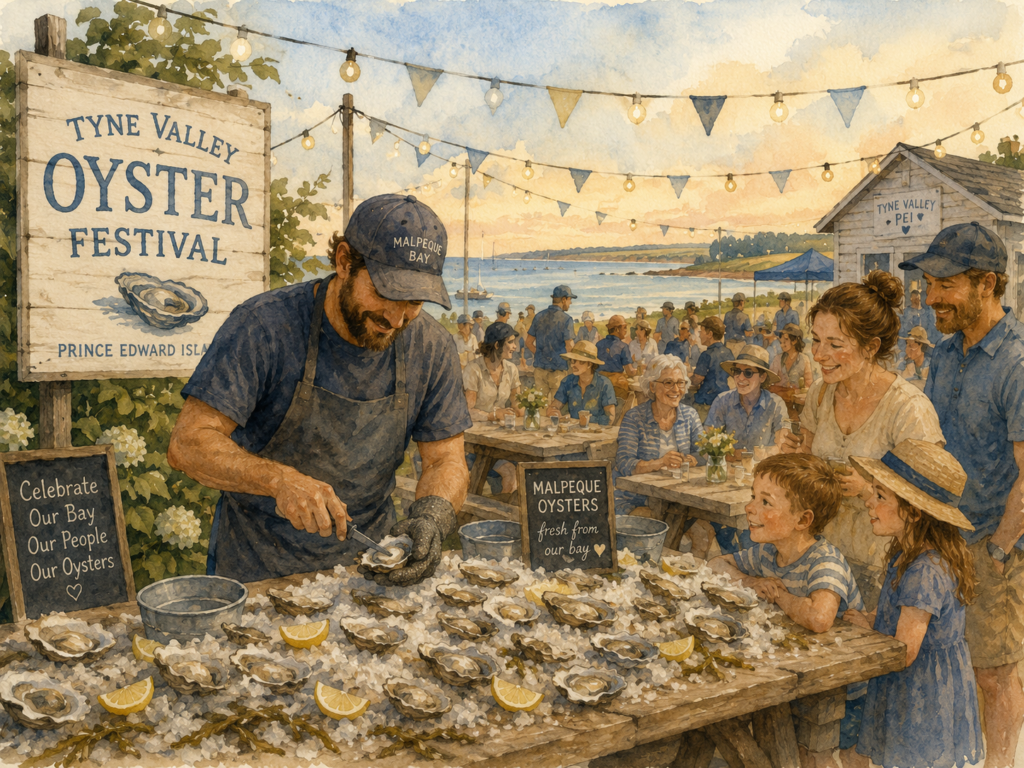
Cousin Tyne Valley called to remind me — before the weekend — of one small fact: a great oyster is older than any great chef who ever served one.
Malpeque Bay, the cold, quiet body of water on the north side of Prince Edward Island, has been growing oysters for as long as the island has been standing. Mi’kmaq families were harvesting them here long before there was a Prince Edward Island. In 1900, one crossed the Atlantic to the Exposition Universelle in Paris and quietly took gold. It has never quite given the title back.
Cousin Tyne Valley says the reason is the bay itself — the calmest in the Maritimes and, most days, the cleanest. She says an oyster raised in it grows slowly, grows small, and grows dense. She says it arrives on your plate tasting like the sea on a good day.
From July 28 to August 2, Tyne Valley — a village of about two hundred on the shore of that bay — will hold the Tyne Valley Oyster Festival. The whole week of oyster suppers, live music, and shucking competitions where the local champions open bivalves faster than most of us can read the menu. For these days, the smallest village on the north side of PEI will quietly become the centre of the bivalve universe.
Cousin Tyne Valley says the trick is not to be shy. Eat the first one with a squeeze of lemon. Eat the second one with nothing at all. By the third one, she says, you understand.

One week ago I wrote to you from Duncan, British Columbia, about the fifteen-metre stainless-steel axe at Nackawic, New Brunswick — and about Cousin Nackawic’s grandfather, who spent his life in the woods before the Mactaquac Dam flooded the old village.
I said the axe “isn’t really about the trees. It’s about the people who swung the smaller ones.”
A reader from Nackawic wrote back. Her name is Denise Hoyt. She was six when the flooding came. Her words, not mine:
“I was about six when the Mactaquac Dam was being built and people were being moved from what would be flooded area. My parents had to move their home and rebuild a business. Culliton was the little community that is under the Nackawic Stream including the railroad bridge and car bridge. By the way the two bridges are still standing. The stream that ran under, I could walk across it without getting my feet wet in the summer. It is now the Nackawic Stream. My mother had many pictures and scrapbooks on the old and new Nackawic. A lot of pictures are on the Nackawic website.”
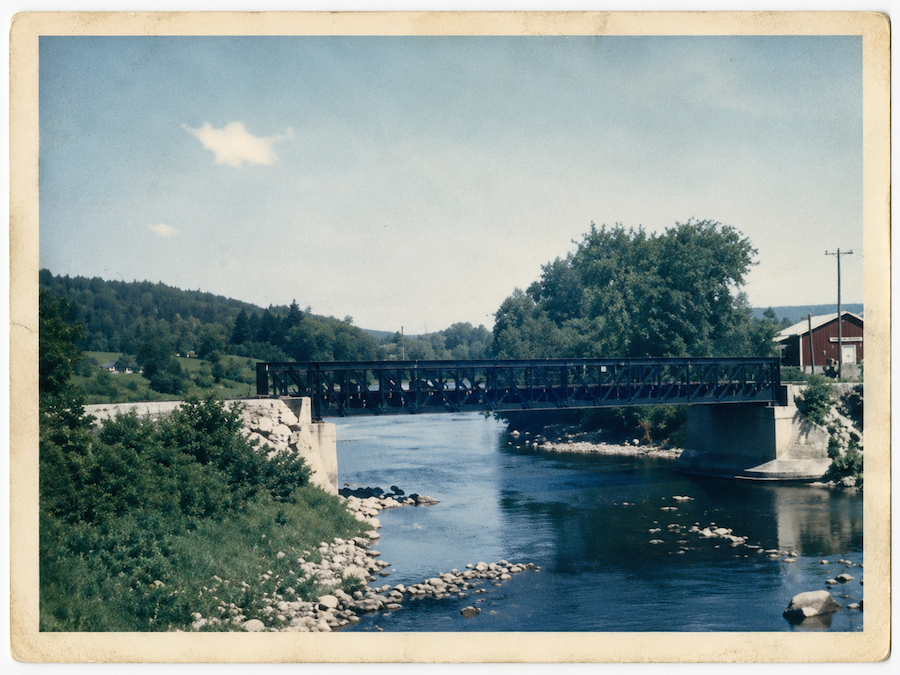
Culliton is under the water. Both bridges still stand over it.
Another reader from Nackawic — Theresa Lavigne — wrote to add the other half. The axe stands for the mill too. For the pulp and paper workers who kept the fibre going for generations.
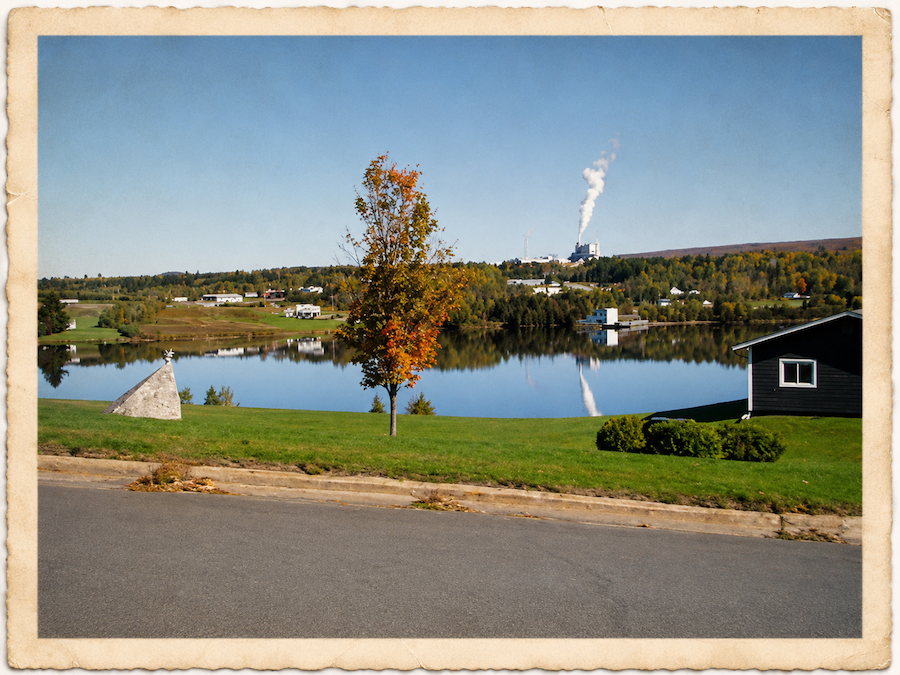
The axe is about all of them. The men who swung the smaller ones. The women who packed the scrapbooks for the move. The kids who watched a village go under.
If you were in Culliton or grew up hearing the story of it — write to me. Castor has a soft spot for stories like this one. Thank you, Denise. Thank you, Theresa.
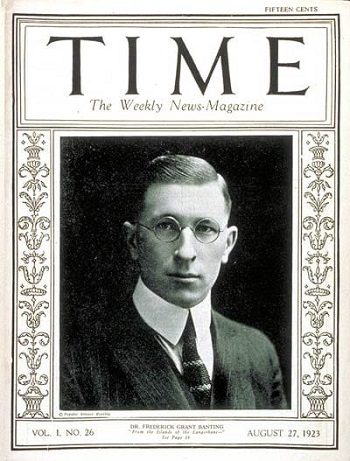
It was July 27, 1921. A hot Wednesday morning in a Toronto laboratory. Frederick Banting and his young assistant Charles Best successfully isolated the hormone insulin and showed, for the first time, that it regulated blood sugar. Every diabetic person today is alive because of what those two men did that morning.
Banting was born in Alliston, Ontario — a small farming town in Simcoe County, an hour or so north of Toronto, in what was then, and is still, potato country. He was the youngest of five. He grew up on the family farm, milking cows before school and drawing anatomy sketches at night. He originally wanted to be a small-town doctor. His parents wanted him to be a minister.
He served as a medical officer in the First World War, was wounded at Cambrai, came home with the beginnings of a private practice in London, Ontario, and then — one October night in 1920 — read a journal article about the pancreas that gave him an idea. He wrote it down. He took it to J. J. R. Macleod at the University of Toronto the following spring. Macleod let him have a laboratory for the summer.
It was a small laboratory. The elevator smelled of dogs. The equipment was borrowed. It was, in every practical sense, a very small-town operation running inside a big city. The team was two men in their late twenties, a graduate student, and — later — a biochemist named James Collip who figured out how to purify the extract for humans.
On January 11, 1922, a fourteen-year-old boy named Leonard Thompson at Toronto General Hospital received the first human insulin injection. It failed — the extract had not yet been purified enough. Twelve days later, on January 23, after Collip refined it further, a second dose saved his life. Word spread across the world in weeks.
In 1923, Banting and Macleod won the Nobel Prize in Medicine. Banting quietly split his half of the prize money with Best, feeling that Best had earned it. Macleod split his half with Collip. It is the only Nobel in history that four scientists effectively shared.
* * *
Banting never took a fee for insulin. He and his partners sold the patent rights to the University of Toronto for one dollar each. “Insulin does not belong to me,” he said. “It belongs to the world.”
He remained tied to the farm in Alliston for the rest of his life. He painted, badly, alongside members of the Group of Seven who became friends. He gave the University of Toronto every royalty he could have kept. He died on February 21, 1941, in a plane crash off Newfoundland while carrying wartime medical research to Britain. He was forty-nine.
The Sir Frederick Banting Homestead — the farm where he grew up, just outside Alliston — is a National Historic Site. On July 27 every year, someone puts fresh flowers on the porch.
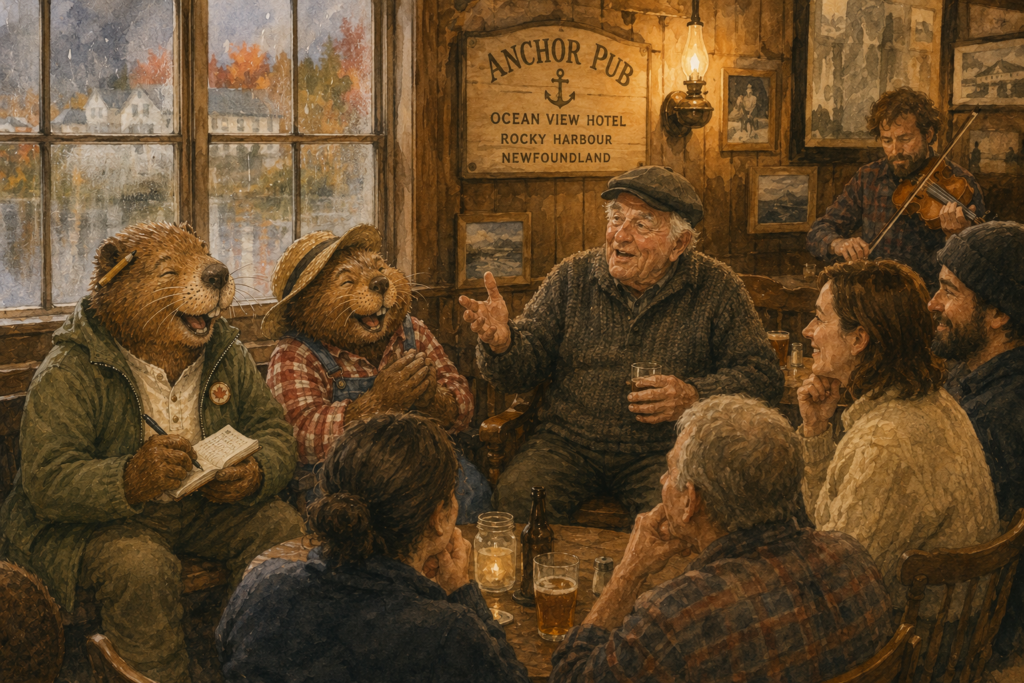
Storytelling, I sometimes think, is the oldest craft on the island. Older than the fishing gear. Older than most of the roads. If you have ever sat late in a Newfoundland kitchen — a cup of something hot on the table, the wind pushing at the window — you know what a proper story sounds like.
This month, that oldest craft has been asked to do a modern job.
Rocky Harbour, a Gros Morne–edge outport of about a thousand souls, has just received provincial funding for its annual Storytelling Festival — three days of tales, songs, and recitations, October 15 to 17 this year, in pubs and community spaces along Main Street North.
The money — five thousand dollars from Newfoundland and Labrador’s Department of Tourism, Culture, Arts and Recreation — is small on paper. On a Gros Morne winter’s balance sheet it is not small at all. The program that funded it exists for exactly one thing: the shoulder season.
Every rural tourism town in Canada understands the shoulder season. High summer is loud. Fall is quiet. Winter is very quiet. In an outport whose visitor economy depends on a national park, a quiet October is a hungry October.
So Rocky Harbour is doing what small places do best. It is offering something you cannot get anywhere else — an evening in the Anchor Pub with a fiddle in one corner, an elder in the other, and a story so old it does not need a program.
The festival relies on local storytellers and a handful of guest tellers from around the Great Northern Peninsula. There are no headliners. The tales are of the outports and the fishery, of shipwrecks and ghosts and the strange things that happen on quiet nights on the coast. Admission is by donation or at a modest ticket price.
* * *
I have been thinking about this. A village of a thousand, in a country of thirty-eight million, is quietly betting that its oldest art form can keep its lights on a little longer each year.
Grandfather Henri’s notebook closes, above, with a line his own grandfather wrote in July of 1926. I keep coming back to it.
“A country is what it builds after everyone has gone home.”
It sounded to me like a description of a small-town Legion in November.
This week it sounds like a Rocky Harbour pub in October.
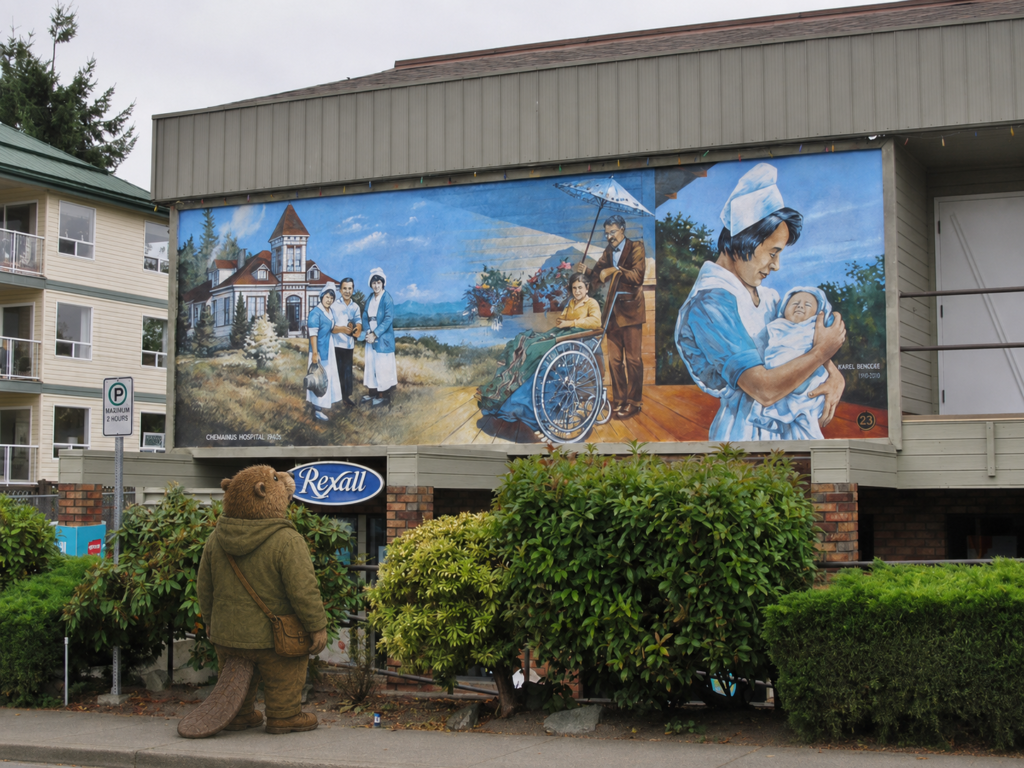
Last week’s puzzle: Which Vancouver Island town beat the loss of its sawmill by painting itself into an open-air gallery?
Answer: Chemainus, British Columbia. When the sawmill closed in 1983, the town commissioned a series of large historical murals on its downtown walls. Today, there are more than four dozen. Tourists come specifically to walk the walls. The mill has never reopened. The town has never looked more alive.
The trestle at Parry Sound will still be standing tomorrow morning. Somewhere in Alliston, someone will be putting fresh flowers on the Banting porch. Somewhere in a small-town Legion — Belle Ewart, St. Laurent, and eleven hundred more — the lights will be on tonight.
Somewhere in the country, someone will be holding up a painting to a view.
That, I still think, is what a painter does for a country. And a doctor. And a Legion.
I’ll write next week from somewhere else. Got a town in mind? Write to me. I’ll ask the cousin there. – Yours in maple,

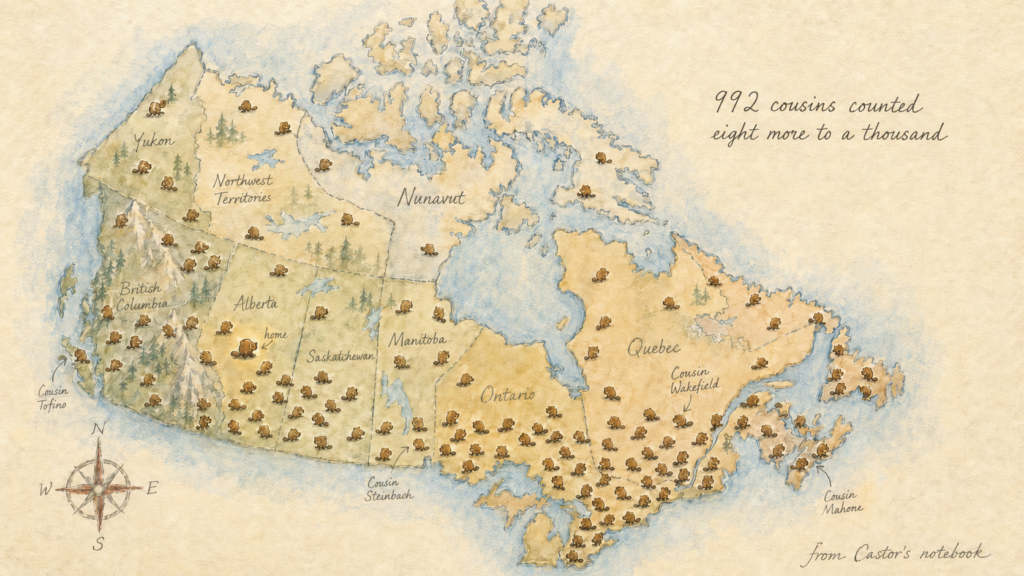
P.S. 992 cousins counted. Eight more to a thousand.
More from the road this week
Castor, Alberta — population 876, where the streams east of Red Deer kept the family in dam-builders for generations.