
Castor's Letter · No. 12
→ These days, Castor follows fire and flood to the towns that open their doors. → A caribou feast for a thousand in Cambridge Bay. → A hometown that turned Nickelback into a walking tour. → And news from seven provinces and three territories besides.
By Castor · Monday, July 20, 2026 · 11 min read
Towns Castor mentioned this week
The watercolour illustrations in Castor’s Letters are made with a mix of original photography, editorial design, and AI illustration tools, curated by our team. Words and editorial decisions are entirely human.
Nobody plans to become somebody else’s shelter. Somebody always ends up doing it.
Every year, somewhere in Canada, another community hall unlocks its doors, another kitchen puts on a kettle, and another small town quietly becomes somebody else’s neighbour.
That is how small towns work. Not with a plan. With a reflex.
This week, Castor follows smoke north to Sioux Lookout, Ontario, and finds that the real story isn’t the wildfire.
If there is a town you have been wondering about, write to Castor. He will ask his cousin there. Happy discoveries. — The 1000towns team
‘Dear 1000towns —
I am in Sioux Lookout, Ontario, on a Wednesday afternoon. The sun is a copper coin. The air smells like a woodstove that will not go out. Every few minutes, another small aircraft climbs into the smoke north of town.
A few minutes later, one comes back out. Sioux Lookout calls itself the Hub of the North. On weeks like this, it isn’t a slogan. It’s a job.
The province is on fire. A few dozen wildland fires are burning in the north, most of them out of control. Earlier this week, a freight train on the CN line shot a phone video of itself being swallowed by flames. The video was difficult to watch. But it crossed the country in an afternoon.
Toronto, nearly two thousand kilometres south of here, briefly had the worst air quality in the world.
It was breathing the same air I am breathing now.
✦ ✦ ✦
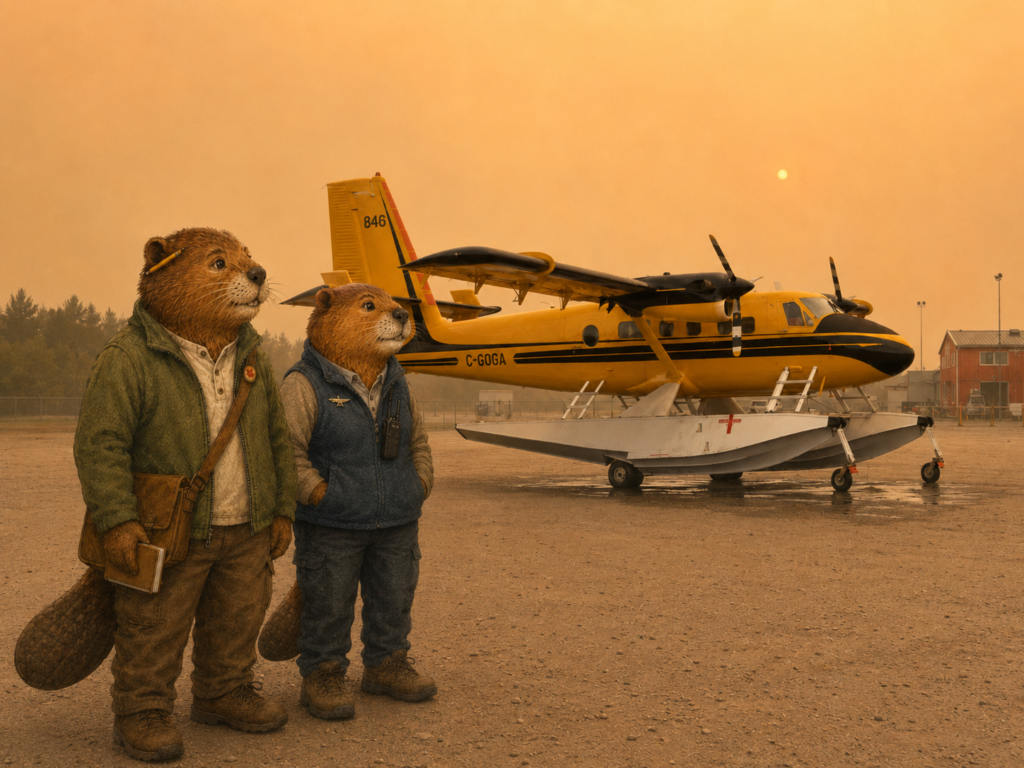
A Twin Otter comes down through the smoke and lands on the runway across the tarmac.
It is a small Canadian plane on floats. The province keeps six of them here in Sioux Lookout during fire season. They are waterbombers. The pilot flies down onto a nearby lake, skims water into tanks built into the floats, lifts off, and drops it on the fire. Then he turns and does it again.
I appreciate an aircraft named for an otter.
Grandfather Henri used to say a beaver and an otter never trust each other quite, but they always know where the other one is. Between them, he said, they keep the water in the country working.
Henri would have grumbled about the plane’s name — a machine borrowing the family name. But he would have understood what the plane does. It takes water from a lake and drops it on a fire.
It is a beaver’s kind of job. Done by an otter.
Cousin Sioux Lookout is beside me. He has been at this all week.
He says the planes come and go all day, out to communities most of us have never heard of — Bearskin Lake, Cat Lake, Pikangikum, Sandy Lake, Weagamow. A dozen more further north. Those towns have no roads. Sioux Lookout is how they touch the country.
✦ ✦ ✦
But enough about otters. I want to tell you about one kitchen.
✦ ✦ ✦
Three summers ago, in the fall of 2023, wildfire came for Yellowknife.
The city was ordered out. Nearly twenty thousand people left — most of them south, some to wherever they had family or an offered couch. Among them was a woman named Heather Nakehk’o. She is a chef.
The village of Fort Simpson, five hundred kilometres to the west, took her in. Fort Simpson is smaller than the city she came from — about twelve hundred people. But they had space and warmth and time. The crisis was in Yellowknife, not there. So they opened the door.
She stayed as long as she needed to. She was fed. She was housed. She went home when it was safe.
She did not forget.
✦ ✦ ✦
This summer, everything went the other way.
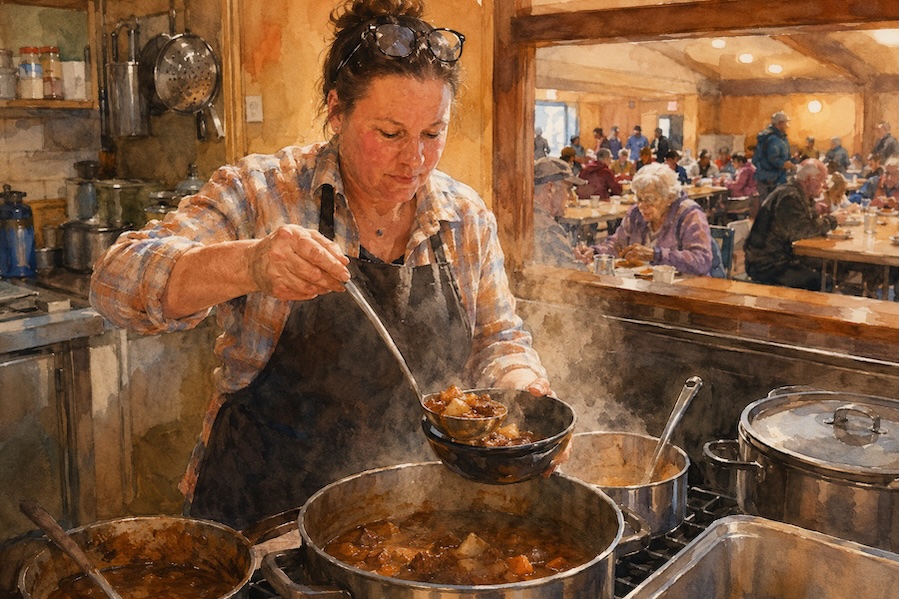
The Fort Simpson evacuees flew into the Yellowknife Multiplex. Heather Nakehk’o was there before them. She was in the kitchen.
She has been standing over a pot of moose stew. Not for herself. For the elders who took her in three summers ago.
The moose was flown down from Fort Good Hope by a hunter named Lawrence Manuel. Four Indigenous governments donated caribou, bison, and fish. Home cooks are making the plates.
When someone asked her why, she said:
“It was my community that took care of me. It just feels good to be able to do it in return.”
✦ ✦ ✦
I have seen this before. Sooner or later, fire or flood arrives somewhere in this country. The names change. The pattern doesn’t.
This year, the flood arrived in Manitoba’s Parkland Region — one hundred and seven millimetres of rain in a day, whole municipalities of farms turned into water.
Fire arrived in British Columbia’s Fraser Canyon, in Quebec’s Montérégie, in Saskatchewan’s north.
It arrived last year too. In Jasper. In La Ronge. In Denare Beach. In the Red River Valley.
It will arrive next year. Somewhere. Someone else’s town. Someone else’s basement. Someone else’s evacuation notice on someone else’s door.
The fires and the floods keep asking the same question. We cannot stop them. We can slow them. We can prepare for them. We can rebuild after them. But we cannot make them stop coming.
What we can do — what small towns have always done — is help each other.
✦ ✦ ✦
Then I realized I had been writing this same letter all summer.
Last December, when the arena in Taber, Alberta blew up three days before Christmas, twelve neighbouring towns called within twenty-four hours to offer their ice. Coaldale. Bow Island. Picture Butte. Brooks. Cardston. Fort Macleod. Taber’s hockey kids have been driving thirty-five kilometres east to skate ever since. A grandmother in Sundridge, Ontario — two thousand kilometres away, in a village of a thousand — sent Taber fifty dollars and a note that said, “we know.”
In the summer of 1980, when a young man on one leg was running across country, a small Ontario town called Hawkesbury organized a crowd of several thousand and a banner: WELCOME TERRY YOU CAN DO IT. He had been running for seventy-seven days. Nobody had noticed him quite that way yet. Hawkesbury was the town that started noticing.
I have written to you every week about a place that opened a door somebody else was walking through. Not because I was looking for a pattern. It is just what small towns do.
✦ ✦ ✦
My grandfather Henri used to say that every small town has a community hall. I think he was almost right.
Every small town has a community hall waiting for someone who does not live there yet.
That is what Heather Nakehk’o is doing at a stove in Yellowknife tonight.
It is what Fort Simpson did for her three summers ago.
It is what Coaldale and Cardston did for Taber last winter.
It is what Hawkesbury did for Terry Fox before anyone else did.
It is not a plan. It is not a policy. It is a stove that stays on.
✦ ✦ ✦
Back at the Sioux Lookout airport, the tarmac has gone quiet for the evening. The Twin Otter is tied down for the night. Tomorrow morning, it will go north again.
The orange sun is still hanging in the smoke. Cousin Sioux Lookout closes the gate for the night.
“We’ll open it again in the morning,” he says.
I believe him.
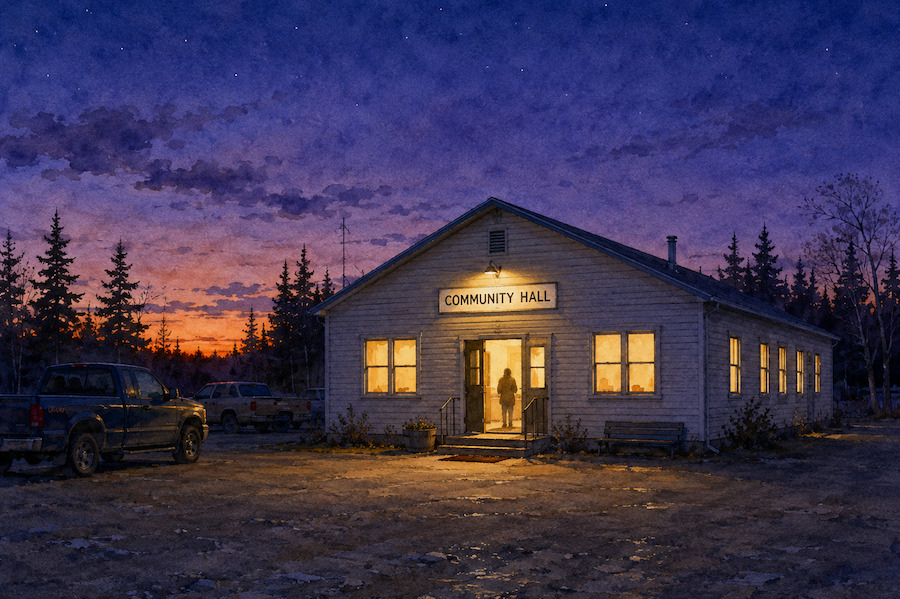
Somewhere tonight, another community hall is leaving the lights on.
Somewhere in Yellowknife, Heather Nakehk’o is putting on a fresh pot.

October 1968 — somewhere on the CPR line east of Regina.
“I stopped in a town of two hundred people to fill the truck. There was a small museum in the old station house next to the pumps — open Wednesdays and Sundays, a volunteer at the counter.
I told her I only had ten minutes.
She said ten was enough. She said the history of a small town is not big. It is just important. Those, she said, were different things.
I stayed forty.”
— Henri

July 15, 2026 — Red Point, Prince Edward Island.
An oversized mailbox stood at a crossroads on the eastern shore of the Island for thirty-three years — real enough to hold your mail, big enough to be the sign that told you you had arrived. This month the Basin Head Fisheries Museum, a few kilometres up the coast, brought the mailbox indoors and gave it a shelf.
Some towns build statues to remember themselves. Red Point mailed one. Then framed it.
July 16, 2026 — Ogema, Saskatchewan
Fourteen small volunteer-run museums across south-central Saskatchewan have banded together as the South-Central Museums Association. Grain-elevator relics. Homesteaders’ diaries. School desks from one-room schools that closed forty years ago. Each museum on its own is one volunteer short of a lost story. Together, a better chance.
Henri would have understood.

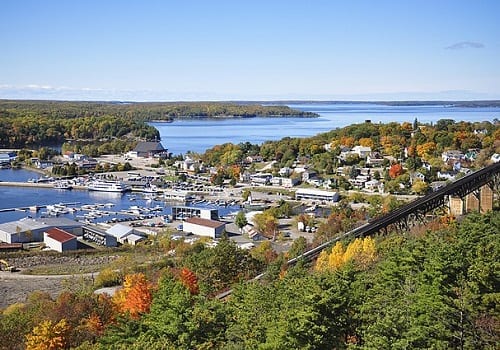
→ Cousin Parry Sound (Ontario) wrote about a hometown kid on a bigger stage. On July 12th, a nineteen-year-old singer-songwriter from Parry Sound made his debut at Country Thunder Saskatchewan — one of the largest country music festivals on the prairies. The road from a Georgian Bay town to a main-stage festival slot runs through a lot of small bars. Cousin Parry Sound says everybody at the community centre back home is going to know his name by Monday morning.
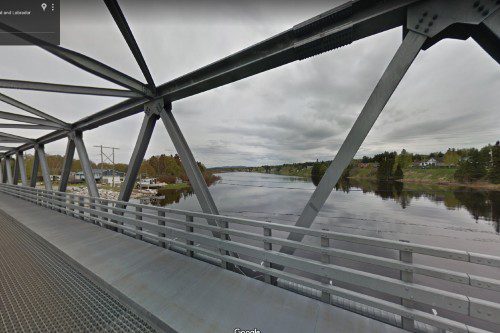
→ Cousin Deer Lake (Newfoundland and Labrador) sent a pint of jam. The Deer Lake Strawberry Festival opens July 17 and runs through the weekend — one of the longest-running festivals in the province, in a town of about five thousand on the island’s west coast. Berries, brass bands, church-hall suppers. Cousin Deer Lake says the strawberry season on the west coast is short enough that the festival is a way of catching it before it goes.
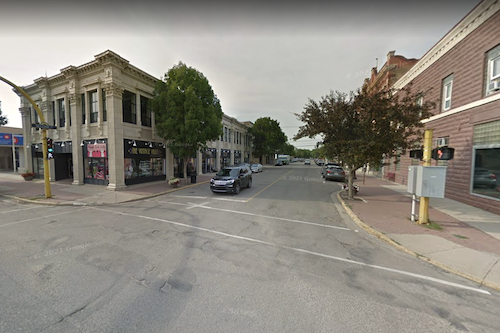
→ Cousin Yorkton (Saskatchewan) wrote about a door. The historic Yorkton Brick Mill — a heritage building the prairie city keeps because it remembers the industry that built the town — has just received a $40,000 RBC Barrier Buster grant to install accessibility upgrades so that visitors of every ability can get inside. Cousin Yorkton says heritage that can’t be reached by everyone isn’t fully shared. She says the new ramp will be in before Christmas.
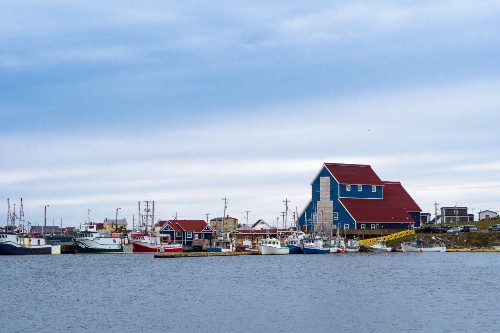
→ Cousin Bonavista (Newfoundland and Labrador) sent an exhausted note. Off Trinity Bight, tour operators spotted a humpback whale trussed by its own panic — caught in two gill nets, “its head tied to its tail,” said Julie Huntington of the Whale Release and Strandings Group. A volunteer crew took hours and a toll on their gear to cut it loose. When the whale was finally free, “the whale didn’t know that it was free,” Huntington said. “It just didn’t move like a whale.” Cousin Bonavista says the crew is unpaid, seasick, and quietly heroic.
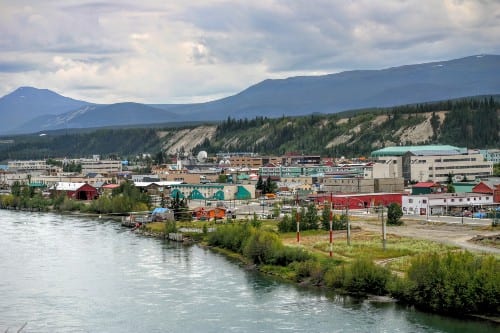
→ Cousin Whitehorse (Yukon) wrote about flower-pounding. At the Mount Lorne Community Centre, up the highway from Whitehorse, the Yukon Plant Festival runs July 18 and 19. Sold out in its first year. Nearly doubled for the second. Workshops in flower-pounding — mashing Yukon blooms into fabric to make natural prints — botanical printing, flower-essence remedies, and edible-plant walks through the boreal forest. Sixteen presenters coming from Atlin, Dawson City, Haines Junction, and Whitehorse.
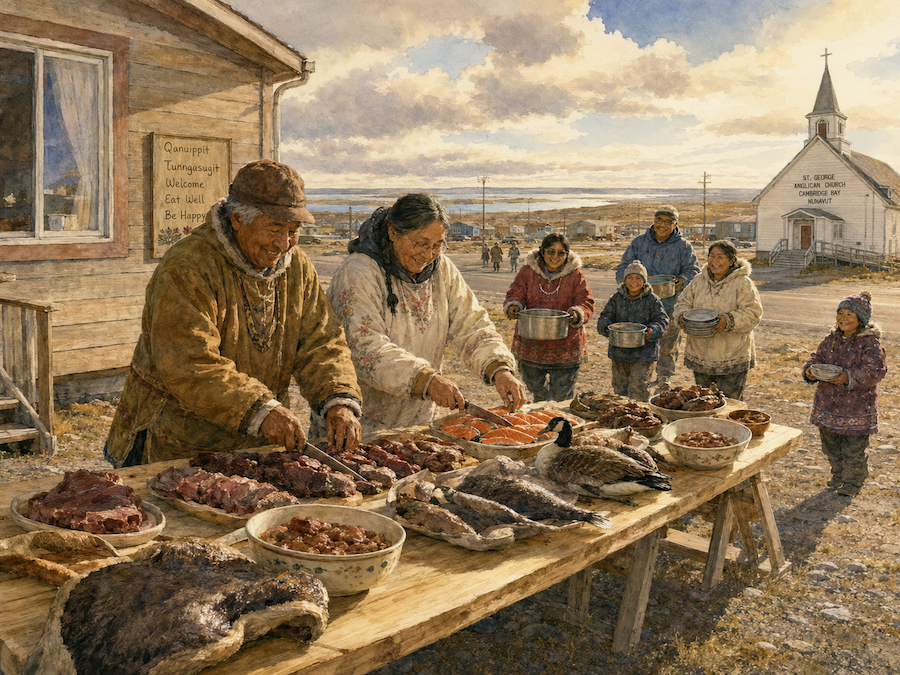
On Nunavut Day this year, William Palvialok laid out a country-food feast on the ground outside his home in Cambridge Bay, across from the Anglican church. He is sixty-eight. He and his wife, Annie Agligoetok, have been doing this on Nunavut Day for more than twenty years.
This year they cooked for a thousand people.
Palvialok will tell you the caribou live farther away every year. This past season he drove his machine as much as eighteen hours over the tundra, once going all the way to Baker Lake, to bring home enough meat for a single day. The feast costs three to five thousand dollars a year in fuel, flour, and supplies. Until this year, William and Annie had paid all of it themselves.
Last year, for the first time, they cancelled.
So this year they did something they had never done. They asked.
The local Co-op sent flour. The Northern store sent soup mix and potatoes. The childcare society and the community justice office sent supplies. Researchers from the High Arctic station up the road signed on to serve. And hunters far outside the Arctic, who had seen the feasts on Facebook over the years, mailed large cooking pots to Cambridge Bay from Ontario, from British Columbia, and — one album of photos suddenly reaching further than anybody expected — from Wisconsin.
There is no delivery truck to Cambridge Bay. Everything comes by plane or barge. Someone in Wisconsin put a pot on a plane so that an elder in Nunavut could feed his neighbours.
“It brings the community together,” Palvialok told the reporter. “My spouse and I love to see all the happy faces.”
He is becoming an elder, he says. The trips are harder.
“But I’m still acting like I’m twenty years old,” he said, “because I love to do it.”
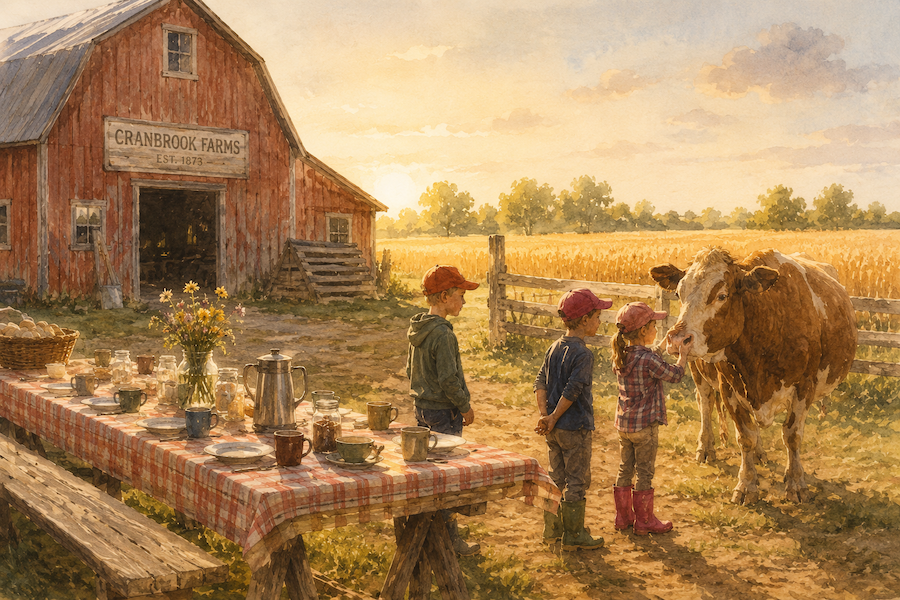
I have a soft spot for farms that open the barn doors and serve breakfast in the same room where the animals eat. Everything on the plate is from within a walk of where you’re sitting. Somebody down the road grew it. Somebody down the road can tell you exactly which field.
Brussels, a small farming town in Huron County on the North Maitland River, is holding Breakfast on the Farm on Saturday, July 25th, at Cranbrook Farms.
Farm-fresh breakfast served in a barn. Interactive exhibits. Farm tours. Meet the cows. Meet the farmers who look after them. Meet the horses. Learn where the food on your plate actually came from before it was on your plate.
Cousin Brussels says Breakfast on the Farm has become one of the summer’s quietly popular Ontario events. She says kids come away knowing three things they didn’t know when they arrived. She says the parents usually do too.
She says park in the field, dress for hay, and go hungry.
✦ ✦ ✦
P.S. — Also this week • Baie-Saint-Paul, Quebec • Le Festif! • July 23-26
Buskers, stilt-walkers, and brass bands filling the same downtown streets where, forty-two summers ago, a small troupe of young performers started the fire that would become the Cirque du Soleil. I wrote about that in our July 6th letter. I am thinking about the drive.

One week ago I wrote to you from Duncan, British Columbia, about the fifteen-metre stainless-steel axe at Nackawic, New Brunswick — and about Cousin Nackawic’s grandfather, who spent his life in the woods before the Mactaquac Dam flooded the old village.
I said the axe “isn’t really about the trees. It’s about the people who swung the smaller ones.”
A reader from Nackawic wrote back. Her name is Denise Hoyt. She was six when the flooding came. Her words, not mine:
“I was about six when the Mactaquac Dam was being built and people were being moved from what would be flooded area. My parents had to move their home and rebuild a business. Culliton was the little community that is under the Nackawic Stream including the railroad bridge and car bridge. By the way the two bridges are still standing. The stream that ran under, I could walk across it without getting my feet wet in the summer. It is now the Nackawic Stream. My mother had many pictures and scrapbooks on the old and new Nackawic. A lot of pictures are on the Nackawic website.”
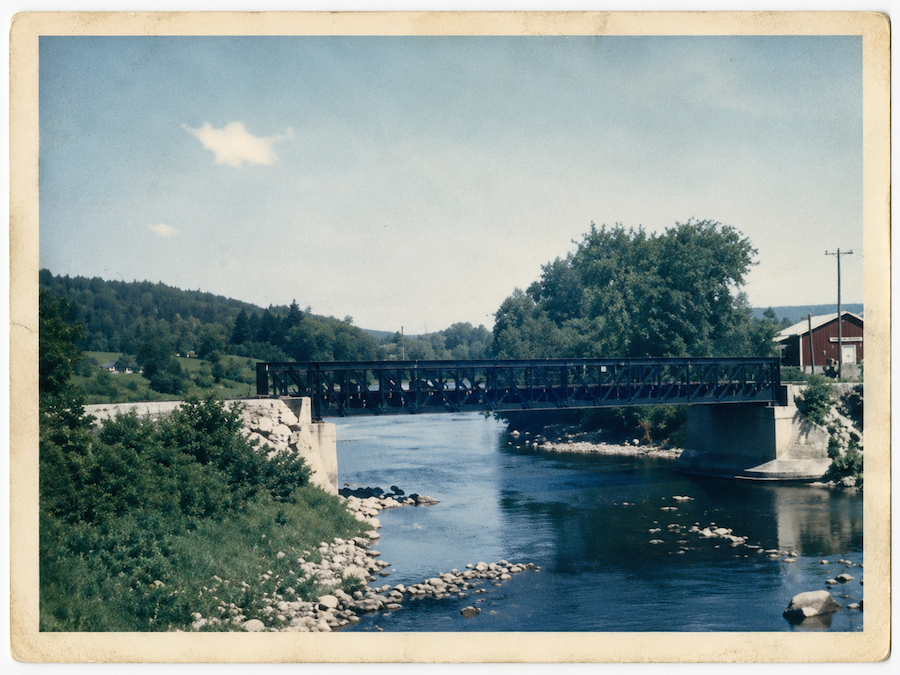
Culliton is under the water. Both bridges still stand over it.
Another reader from Nackawic — Theresa Lavigne — wrote to add the other half. The axe stands for the mill too. For the pulp and paper workers who kept the fibre going for generations.
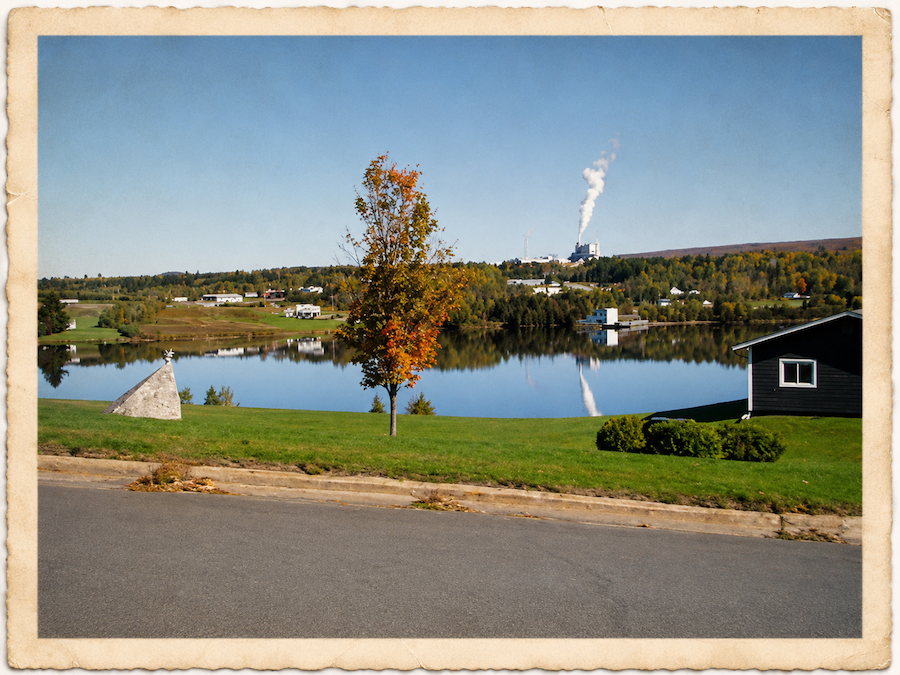
The axe is about all of them. The men who swung the smaller ones. The women who packed the scrapbooks for the move. The kids who watched a village go under.
If you were in Culliton or grew up hearing the story of it — write to me. Castor has a soft spot for stories like this one. Thank you, Denise. Thank you, Theresa.

It was in Hanna, Alberta — a town of about twenty-five hundred people better known for coal, cattle, and the round-house on the old rail line — that Chad Kroeger, his brother Mike, and their schoolmate Ryan Peake formed Nickelback in 1995.
You are permitted to have an opinion about their music. The country has a lot of them.
What Hanna has done is more interesting.
Rather than shrug off the ridicule the band attracts, or apologize for it, or ignore it, the town has leaned all the way in. There is now a self-guided hometown tour that threads visitors past the school the band members attended, the local jobs they worked before they were famous, and the specific spots that appear in the Photograph video. Each stop is marked with a small QR code. Scanning the code unlocks a story told by the band themselves.
A row of Nickelback album covers is painted across the entire long side of the town’s curling rink.
In a town of twenty-five hundred, the joke has become an economy.
Cousin Hanna says the joke is also, quietly, a form of loyalty. She says the band never denied where they were from, and the town figures it can’t do less than the band did.
The full walking-tour details, and the town’s own take on the story, are on 1000towns: Home Town of Nickelback →
I was in Percé, Quebec, one summer, on the tip of the Gaspé Peninsula.
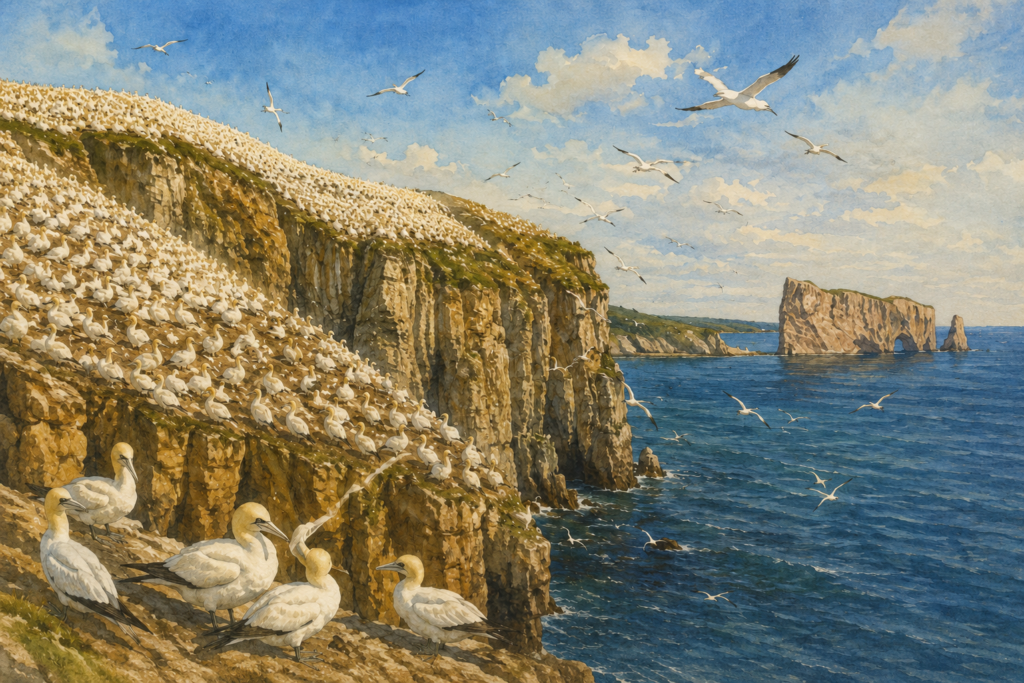
Everyone comes to Percé for the Rocher Percé — the enormous pierced rock a few hundred metres off the beach — but everyone who has been will tell you the rock is not the biggest thing that happens there.
Fifteen minutes offshore, by boat, lies Île Bonaventure. On the far side of the island, the cliffs turn white.
They turn white because they are covered in northern gannets. Roughly a hundred thousand of them, nesting so densely on the ledges that from a distance the rock looks painted. It is one of the largest and most accessible northern gannet colonies on earth.
You can walk out to within a few metres of the roar. The birds do not much notice you. They notice each other, the wind, and the ocean below them. Every once in a while one of them lifts off the cliff, drops toward the water, and disappears with a small white splash. Every once in a while one of them comes back.
I stayed longer than I meant to. I did not take a photograph. The photograph would not have been the point.
I have thought of that afternoon every summer since — usually when I hear a gull cry, and it is the wrong bird.
A puzzle this week. The answer is in next week’s letter.
Write to me if you have a guess. I’ll keep score.
The Sioux Lookout airport will be open again in the morning.
So will Heather Nakehk’o’s kitchen in Yellowknife.
So will William Palvialok’s, in Cambridge Bay, one Nunavut Day a year, for as long as he can drive his machine.
I’ll write next week from somewhere new.
Got a town in mind? Write to me. I’ll ask the cousin there.
Yours in maple,

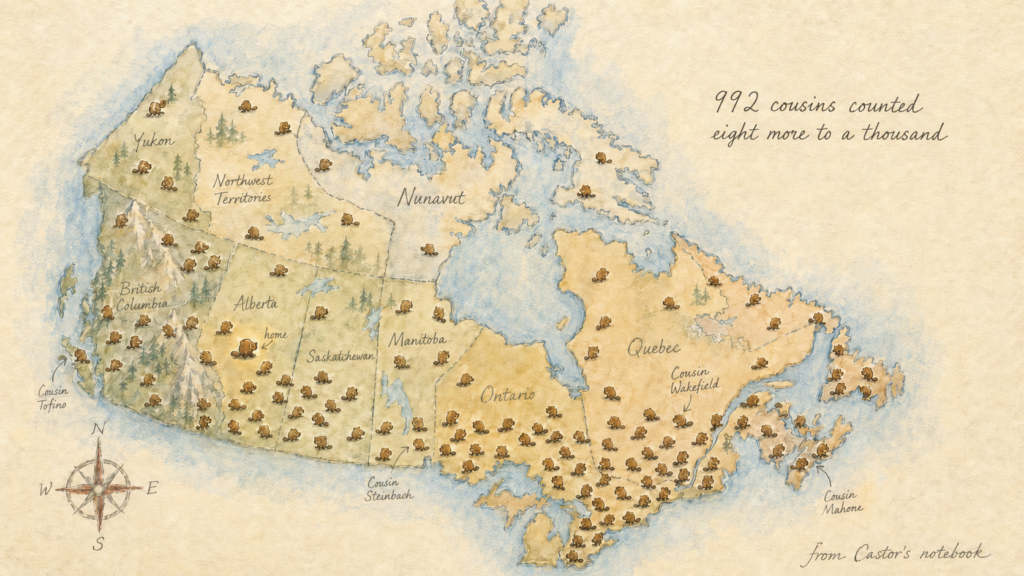
P.S. 992 cousins counted. Eight more to a thousand.
More from the road this week
Castor, Alberta — population 876, where the streams east of Red Deer kept the family in dam-builders for generations.